

I’m fixing a hole where the rain gets in
And stops my mind from wandering
Where it will go
—Lennon/McCartney
Once you’re back home you can patch the punctured inner tube. You’ll be less pressured and can do it in an unrushed, orderly fashion, which will assist in you doing it correctly and avoid having to repatch the tube.

Is The Tube Salvageable?
Not all tubes can be patched and not all tubes are worth patching. If the puncture is large i.e. a long gash or the tire deflated due to an explosive failure, it’s not worth patching if it’s even patchable at all. What can cause your tire to explode? Overinflating your tire is one way: the pressure is just too great for the tire and it can’t hold the tube in place. This can happen due to overpumping. A common way this happens is inflating your tire at a gas station air pump. These pumps put out very high pressure and your tire is at the proper inflation level very quickly, more quickly than you realize. It’s generally very hard to overinflate your tire with a regular a frame pump. But some floor pumps today can pump up to over 160 psi, which is quite high. Absolutely respect the tire pressure range recommended for your tire. Another way you can explode your tire is if the inner tube wasn’t entirely inside the tire, i.e. part was trapped under the bead. A tire casing failure can also happen leading to an explosive release. This can happen if your tire is very old, you’ve worn the rubber down to the casing, or you’ve damaged the casing. Sometimes the tire sidewalls get damaged by abrasion or by riding your tires underinflated. This causes the sidewalls to flex excessively and fray. An exploded inner tube results in a long tear or hole that cannot be patched.
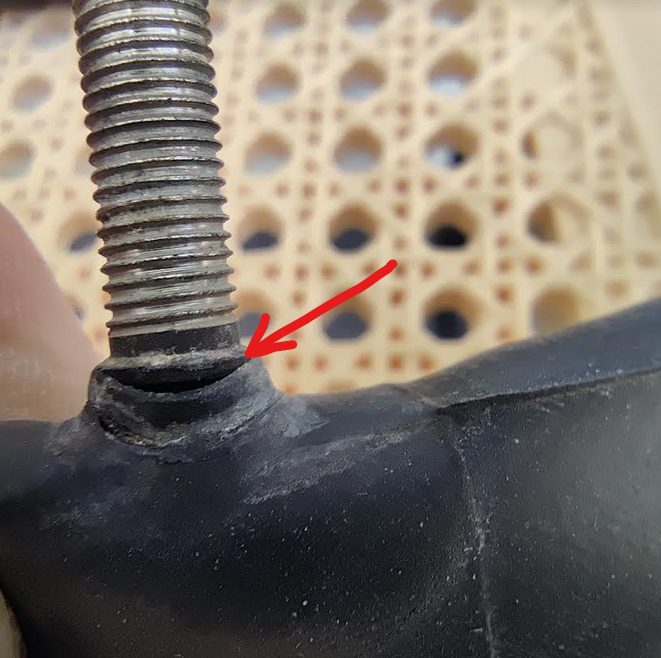
Another inner tube that cannot be patched is if the tube failed at the valve. It’s not possible to put on a patch when it’s too close to the valve hole.
Some tubes are probably not worth patching. If your tube already has a lot of patches on it, you’ll want to consider if it’s time to toss it and just put a new tube in your saddle bag. That said, tubes can take as many patches as there is space. Patches adhere best when they are attached just to the tube. If the new puncture is close to an old patch such that you’d have to put the new patch on top of an old patch, these patches often don’t adhere as well as directly on the tube. You can try it but the patch may eventually fail.
Assuming you do successfully patch the tube, I recommend that you reinstall it in the tire and take the previous spare tube out to use as your spare again. This is so that your spare is always a “clean” tube with no punctures in it.
Patching an Inner Tube.
Although you located the hole in your tube while on the road, you’ll probably need to do it again once you’re at home. The first time was so you could locate the hole in the tire and remove the piece of glass or thorn before installing your spare. This time you need to find the hole in the tube again in order to patch it.

Gently pump up your tube and then listen for a hiss or feel the tube for any leaking air exactly as you did while on the road. Once you’ve located the hole again, use a Sharpie or ink pen to mark the pinhole this time. If you can’t feel or hear the leak, then the next step is to fill a wash basin with water, inflate the tube to a few pounds of pressure, close the valve tightly, and then submerge the tube in the basin to look for bubbles from the leaking air. Starting at the valve submerge just a section and look for bubbles. Note that bubbles of air sometimes are attached to the tube simply from dipping the tube under water. These are not from a leak. Of course you won’t know if that’s the case. So if you see bubbles on the tube, it could be from that or a very slow leak. So brush the bubbles away and see if new bubble form. If they do, then you have a leak. Other times it’s quite obvious where the leak is because bubbles will be rapidly expelled. Now note where the bubbles are coming from, remove the tube from the water, wipe it dry, and mark with spot with a Sharpie.
Another possibility, which should be obvious when you’re inspecting the tube, is that you have incurred a ‘snake bite’ puncture. This happens when you hit something with a sharp edge such as a pothole or a rock. The tire completely compresses at the rim with such force that it cuts through the tube in two places, one directly under the other on the tube. This will look like two small cuts very close together. If you’re lucky, the two punctures are very close together and you’ll be able to cover them both with one regular patch. If they’re further apart, you may need to use two patches. Some patch kits includ oval as well as circular patches. The former are for longer cuts or for snake bite punctures. Repairing snake bite punctures calls for the same procedure with the added precaution of covering the larger area completely with glue.
But don’t stop now. You want to inspect the entire circumference of the tube because there may be more than one puncture. So keep pushing the tube under water section by section repeating this procedure. If you find another puncture, mark it. Then dry off the tube.
A failed patch.
Occasionally an old patch will fail. This is rather common with glueless patches but it also happens with regular patches. The patch didn’t completely vulcanize to the inner tube and eventually it can fail. Usually this is due to putting the patch on before the glue has set enough, waiting too long for the glue to set before applying the patch, the site not being adequately or completely covered with glue, or insufficient pressure being applied to the patch to get it to adhere. It may work temporarily but a hasty or inadequate patch job may eventually fail. If you find the leak is coming from under an old patch, don’t try to put a patch over the patch! Vulcanizing glue doesn’t do a very good job on a patch and the second patch will very likely fail. Instead remove the old patch and then repatch the site. This may be difficult but it’s doable; you’ll have to completely remove any residue of the old patch and the glue for this to work. Follow the same instructions below after you’ve cleaned the site completely.
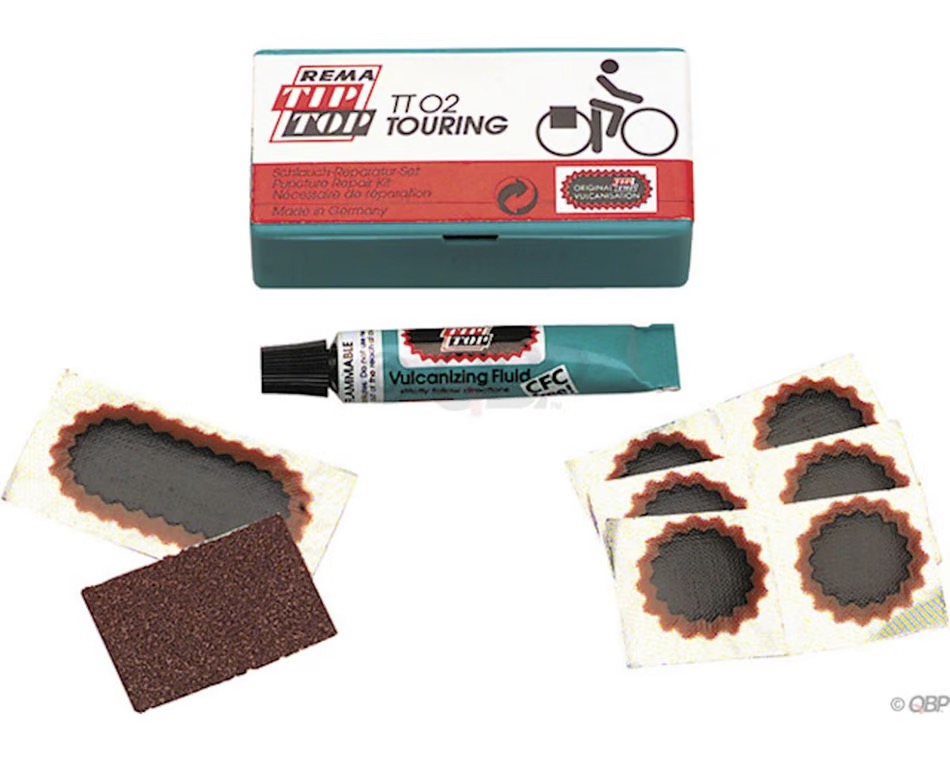
Patching a tube.
You’ll now need to follow the instructions for patching the tube, which are almost always the same for butyl or latex:
- If there is any dirt, liquid, or oil on the area around the puncture, you’ll want to clean it all off.
- Use the included sandpaper to roughen up the area around the hole for the entire area the patch will cover. You don’t have to rub too hard. But you do want to have ‘fresh’ rubber. If it’s a latex tube, you’ll want to go easy on it because they are highly elastic. Some patch kits don’t include sandpaper but instead a small metal rasp to roughen up the inner tube surface.
- Use the tube of glue; if it’s not open yet, you’ll want to puncture the sealed opening with the point in the cap. Then apply a layer of glue to the area around the puncture. Be sure to cover an area larger than the patch. It doesn’t need to be a lot of glue—just smear it with the mouth of the tube as you apply the glue; if you put down too much it will mean you have to wait longer to let it dry. Do not blow on the glue to attempt to get it to dry ‘faster’—it won’t and the moisture from your breath hinders the bond.
- Now wait for the glue to dry until it just stops being tacky. At this point you’ll apply the patch. If you wait too long and let the glue overdry the patch may not adhere well, so don’t go away and then come back.
- Patches have a covering over the sticky side that you’ll have to peel off before you apply the patch. Rema patches have metal foil. Rema Tip Top patches also have a thin, peelable covering on the top of the patch. If you’re using Rema patches, you can leave that peel on the patch; just remove the foil backing. When you’re ready to apply the patch, peel off the backing and put it over the puncture with the puncture in the center of the patch. If the patch is on any part of the tube that didn’t have any glue applied, it won’t stick there and acts as a weak point. After the tube is reinflated that part of the patch may start to pull away from the tube and may lead to a ‘tunnel’ forming from the edge of the patch to the puncture causing a leak. If you do have a dry spot, you can try to quickly apply just a tiny bit of glue there and pressing the patch down firmly.
- Now press down very firmly over the entire surface of the patch using the blunt end of a tire lever or a spoon to press down and roll over the entire patch taking particular attention to the edges of the patch. Take your time. Check that the entire edge of the patch is sealed to the inner tube surface. You might be tempted to try to inflate the tube to see if the patch is leaking. Don’t! Just visually inspect it. The purpose of the glue is to vulcanize the patch with the butyl or latex rubber; essentially the patch is becoming part of the tube rather than being adhesively attached. If the vulcanization is not finished, then inflating the tube may allow the patch to tear apart from the tube.
There is one thing to be cautious about: tubes intended for smaller tires such as 20-, 23-, and sometimes 25-mm tires are slightly harder to patch than for larger tires. When you’re patching a tube, ideally you want the area being patched to be completely flat when you press down on the patch. For bigger tubes this is not a problem because the area to be flattened is bigger than the patch. But tubes for smaller diameter tires, when you press them flat on a table, are actually not as wide as the patch. So the patch is going to curl around the tube. When you apply the patch and press on it, you will have to roll the tube slightly to press on the two edges that curl under the tube. Do this carefully yet forcefully. That curling makes it harder for the patch to attach to the tube. Fortunately most patches have a feathered edge so they are thinner at the edge of the patch than in the middle. This makes it easier for the patch to curl around and to vulcanize with the tube.
If you are using a larger oblong patch to cover a bigger tear or a snake bite puncture, it is almost impossible to apply the patch to a small diameter tube since these patches are generally thicker and won’t curl as easily. If you can, apply the patch longitudinally to the tube. If you can’t because of the dimensions or location of the puncture(s). you may find it hard to get the patch to adhere and seal adequately. - If you are going to install the tube back into your tire, you can start doing that now. If you are using Rema patches, you can leave the clear backing on the top of the patch in place; you don’t have to remove it. If you do remove it, I recommend that you then dust the area with talc ie. ‘baby powder’. This is because any exposed glue can actually start sticking to the inside of the tire. The backing helps prevent that. If the glue does stick to the tire, it’s not a problem. But it does prevent the tube from moving easily inside the tire and you may find that when you have to remove the tube the next time you have a flat, you’ll have to peel the tube out of the tire.
- You can store the repaired inner tube as your spare. But I recommend that you reinstall the patched tube and remove your original spare so that it remains pristine. (Obviously if your spare was patched before, there’s no reason to do this.)
It is possible that your patching will fail. Perhaps you didn’t cover the whole area with glue, you didn’t press the patch with enough force (it doesn’t require much though) or over the entire surface of the patch, or the glue was too old. If the surface of the tube was contaminated, it’s also possible for the vulcanization to fail. So it’s important to keep it clean and dry before you attach the patch and glue.
Finally your tire may still leak because your tube actually had TWO holes and you only patched one. If you’ve ridden through a patch of glass or thorns you may have found one puncture but didn’t inspect further for another hole when you got home. So don’t skip that step above. This can also happen if you incurred a snake bite puncture but didn’t notice that and covered only one of the two punctures.
What if my patch fails?
Sometimes despite your best efforts your patching fails. If you stick the tube into a basin of water, you probably will see a leak coming out from under the patch due to insufficient glue, waiting too long to apply the patch, not waiting long enough before applying the patch, or not pressing firmly enough. This is often due to rushing a repair. It’s important to be orderly and patient in patching—don’t rush it! If you want, you can attempt to repair the puncture again using the same procedure. Most patches will tear off easily (but some don’t!) and you can start over again. Just make sure to remove as much of the glue and tidbits of the edge of the patch from the tube before your second attempt. Note that sometimes the patching seems to have been successful. But the tire is flat the next day. If it’s not due to another leak you didn’t discover, it’s usually because it took time for the air pressure to force out and tunnel to the edge of the patch. The remedy is the same: make sure you have the area completely covered in glue and to wait the appropriate time before applying the patch and pressing firmly and completely.
Why patch?
You don’t have to patch a punctured tube. There are butyl tubes that are quite inexpensive and you may find it less hassle just to toss the punctured tube and get a virgin tube for your repair kit. This is especially true if you buy tubes in bulk quantities to save money. If you prefer using extralight butyl tubes or latex tubes, you may find it too expensive an option to toss them right away.
About patch kits.
Patch kits include a small tube of glue and several patches usually in two sizes, circular and oblong. These kits often sit in your saddlebag, get jostled around, and they will age. Although the glue is inside a sealed metal tube, it still can slowly lose solvent and become useless if left alone long enough. You can check the tubes occasionally to see if they are dried out. If you press on an unopened tube and it collapses, it’s probably lost solvent and is suspect. Get a replacement tube of glue for your patch kit. Why are you concerned about this? Because sometimes circumstance will force you to attempt a patching while you’re out riding such as when you have multiple punctures and don’t have enough spare tubes with you. Of course the first option if you’re riding with friends is to cadge a spare tube from someone else. But that’s not always possible. Another is to flag down a passing cyclist and ask for their spare tube. But unless they are Good Samaritan types they are not going to give up their good tube to you.
Note that once you puncture and open a glue tube it will now dry out faster as the solvent can more easily escape. Check a previously opened glue tube more often to see if it has dried out. If it has, you can buy a separate tube without having to spring for an entire patch kit.
Glueless patches.
You can also purchase patches that don’t need glue, so-called ‘glueless patches’. These are patches that have a special adhesive on the patch and you can apply them directly to the tube without using any vulcanizing glue. These are usually sold with the caveat that the repair is temporary only and not permanent. Because you’re not using vulcanization to attach the patch, this glue bond is not as strong and often will eventually fail. But these patches are useful and quicker to apply so much so that you can effect a quick repair albeit temporary while still riding. The basic idea is the same: use the small piece of sandpaper to roughen the area around the puncture, remove the backing from the patch and apply, then press firmly.
If you’ve cleaned the tube surface well and pressed firmly on the patch, these glueless patches may last indefinitely. But a good percentage of the time they fail within a relatively short period, a few days or weeks. This is because the adhesive isn’t strong enough to withstand the pressue in the tube and air eventually tunnels out to the edge of the patch and escapes. If you need to replace a glueless patch, they are fairly easy to tear off. Then replace it with a regular patch.
A note about patching latex tubes and TPU tubes.
Latex tubes are patched exactly the same way as butyl tubes. However there is one characteristic of latex tubes that makes this slightly more difficult than with butyl tubes. Latex rubber is stretchier than butyl rubber. This resilience provides the unparalleled comfort that latex tubes are known for. This stretchiness makes inflating a latex tube outside of a tire difficult sometimes. No tube has completely uniform thickness and with latex this means that areas of the tube that are thinner or more flexible will expand and balloon before the rest of the tube. You will end up with one section looking like a sausage and the rest of the tube barely having any pressure. This may happen when you are inflating a latex tube to look for the puncture site making it difficult since the site could be anywhere on the tire and the pressure may not be enough to make the leak obvious. If you can’t find the puncture site, you may have to submerge the tube in a basin of water to look for bubbles.
Ordinary patch kits will not work with TPU tubes because TPU is not a kind of rubber. Brands of TPU tubes make their own patch solutions and they may not be compatible with other TPU tubes. For example, Tubolito and Rene Herse patch kits are different. You will have to refer to the company that makes your TPU tubes for advice on patching.
Removing your spare from a tubeless tire.
If you installed a spare tube in a tubeless tire while on the road, you’ll find that it’s a mess when you get home because of the sealant now coating everything. If you flatted your tubeless tire because all the sealant dried up and there wasn’t any to seal a puncture, then your spare luckily is not going to be a mess. But if there is still sealant in the tire, your spare is now covered with it. Most sealants are water soluble and will wash off. You can also let it sit on the workbench until dry and then you can peel the dried sealant off later on and then pack up your spare again.







 The Chain Letter