Wildcat Canyon: “Alright Mr. DeMille, I’m ready for my close-up.”
Wildcat Canyon has been left to languish after half the road collapsed during a storm in March 2023. The problem is that it’s a county road and there’s been insufficient money to do a repair. Federal money is supposed to be coming to Caltrans and the county had said that construction will begin this spring and maybe be completed by fall. Keep in mind that construction schedules are works of fiction.
But I’m not grumbling about Wildcat being closed for this long. Why? Because it’s been closed to cars, not bikes, and since closure it has been heaven to ride. I wish the county would never repair this road! Initially when it failed everybody diverted to alternate routes including cyclists. Well, one of those alternate routes is Lomas Cantadas/El Toyonal, which goes by our house. For about a week there were cyclists(and cars) thronging the road. This road, if you don’t know, is part of the Berkeley Hills Death Ride and for good reason: it’s 3.5 miles long and most of it is 10+% grade with significant chunks above 12% and a maximum of about 18% in at least two locations. So most cyclists don’t like to ride up the road. The only other nearby alternate route is to use Highway 24. (Yes, cyclists may ride on the shoulder of 24 from Orinda to Fish Ranch Road.) Then someone realized that the road failure on Wildcat left just enough roadway for bikes to get by and no one was doing any enforcement. All the bike traffic has since returned to Wildcat. A day or two after the collapse I rode out Old El Toyonal to take a look at the closure, went by the barriers (my bad), and saw that about half the road was still in place. The only hassle was having to lift your bike to go around the K barrier at the bottom. Sometime after the initial closure the K barriers and obstructive fencing were moved to make it easy for bikes (and motorcycles) to get by.
Since then Wildcat has become a sanctuary of peace and quiet. Prior to the closure Wildcat was a cut-through for cars wanting to avoid the Eastshore Highway (i.e. I-80 by Berkeley), the jam on I-580, and the back up on 24 up to the Caldecott Tunnel. If you made the mistake of cycling on Wildcat during a commute period, you were in for a series of close passes some on blind curves or the impatient driver sitting right on your ass telegraphing the message that if you didn’t get out of his way right now you were going to get fucked. Because it’s curvy just like Redwood Road, it’s also a casual speedway for sports cars and motos. For now it’s our private Idaho. Although not exactly: motos ignore the closure signs and routinely take Wildcat now that the K barriers have been moved and even some cars are still using the road from Inspiration point to Old El Toyonal. The latter are probably associated with the Orinda Horse Association, which has its stables right at the turnoff to Old El Toyonal. It’s unnerving to be blasting down Wildcat and suddenly come upon a car!
Despite being “abandoned” Wildcat is kept in shockingly good condition. Initially debris from the dense oak tree cover just rained down on the road willynilly with no car traffic to push it out of the way. Riding it was a bit of an obstacle course but nothing compared to Planet of the Apes or even Old Scenic Road to Martinez before it was reopened. Has a sweeper been run on Wildcat during the closure? I haven’t seen one but I have no other explanation for why it isn’t knee deep in debris. Some regular upkeep must be going on even if it’s a “closed” road. Recent storms knocked down some old oaks on the road and they’ve been quickly and mysteriously cut up and moved to the side. Nonetheless you still have to be attentive to random tree branches on the road as well as the copious piles of horse manure deposited by the OHA members, who no longer have to cling to the narrow dirt shoulder and can use the road full-on (until they encounter a moto or a car).
Riding Wildcat is almost like being on a BLM road except that it’s paved. Without the roar of cars it’s like being in a forest all by yourself except for the occasional fellow cyclist. The old oaks turn the road into a tunnel of sorts although you can look to the east and peek through the trees to catch a glimpse of Briones Reservoir and the hills surrounding all that EBMUD land, which since the December storms are now approaching peak green.
For bicyclists Wildcat is a significant paved road to get between Berkeley and Contra Costa. Those on the other side take Wildcat to do the Three Bears or head further afield east to Diablo or south to Pinehurst. It’s part of the Pinehurst Loop that goes up Pinehurst, Skyline, Grizzly Peak, and back to Orinda. If you’ve done the Fall Social ride, you’ve taken Wildcat from Phil’s up to Inspiration Point and dropped down to do the Three Bears and then returned the same way. It’s a nice, fast descent and the way back to Berkeley is a challenging climb sure to burn your legs and lungs but without the scary steep grades you’d find on 24 or El Toyonal.
These days I’ve been enjoying Wildcat a bit differently. I’ve been riding my mountain bike up El Toyonal and then dropping down Old El Toyonal to Wildcat and up to Inspiration Point. Then I head onto the Nimitz Trail in Tilden Park. It’s a short ride between eight and fifteen miles depending on how far I head out the Nimitz. It’s a good ride for clearing out my head since it’s peaceful and quiet and with essentially no traffic and it doesn’t take long to do the ride. If you don’t live near Wildcat, you obviously can’t avail yourself so easily of its tranquility. Of course having to travel to Wildcat from further away, e.g. San Francisco, would defeat the purpose in that you’re dealing with all the hassles of transiting to Wildcat and probably losing more repose than you’re gaining.
In the meantime Wildcat is still closed but perhaps not for very long. If we are lucky, it will still be shut for the Fall Social next October. But for now I’m taking advantage of this boon from nature.
Our tour was not self-supported by any means. (For more information about self-supported touring in Japan, speak to David Shiver or Phil Bokovoy.) There are several companies in Japan that provide supported cycling tours. These are usually van supported tour so one’s luggage is hauled from stop to stop and varying degrees of on-road support are offered. We’re lazy so we have opted for package tours that have specific itineraries, van support, and all hotel/inn bookings handled by the tour company. In addition the company we have used, Cycling Japan, which by the way is Japanese owned and run, can provide rental bikes both regular or e-bikes (along with spare batteries if you burn through one during the day). They provide road bikes, hybrids, or touring bikes depending on your preference and they set them up according to your measurements.
Whether to bring your own bike or rent one. Taking your personal bike overseas is an undertaking unto itself. If you take your own bike, you will have to haul it in addition to your other luggage. Airlines have gone back and forth on whether to charge for bikes as oversize luggage; check airlines for the latest policy. If you plan to do any additional traveling while you are overseas after your tour, you will either have to find a way to stash your bike such as left luggage or you’ll end up hauling it with you even though you don’t need it. Sometimes it is possible to ship your bike to your start destination. If so, you need assurance that it will not only arrive intact but on time. (The same goes for flying with your bike. Airlines lose bikes occasionally and yours may not arrive on time.) If you want to use your e-bike, you will not be allowed to pack the lithium battery packs in your stowed luggage—it’s illegal. You will then have to take it with you into the cabin and there are limitations on the battery size and the number of batteries that can be brought onboard.
Renting a bike means you’ll shed the burden of packing, hauling, and unpacking your bike. But you may get a rental bike that is not to your satisfaction. When you take your own bike, you have a bike you’re familiar with and set up just as you want. Since Roger uses e-bikes exclusively, he has to rent one. Before going to Japan I had never rented a bike and had always brought my own touring bike that is kitted out the way I prefer. The first time we went to Japan with Cycling Japan I decided to try a rental because it would make the travel logistics so much easier not to lug a bike around. I’ve been fairly satisfied with their bikes even if they are more modest—but not always!—than what I would ride at home. Cycling Japan does a good job of fitting the bikes after you arrive. The other major positive is that since we are renting the bikes from the tour company, they assume the responsibility for maintaining the bikes while on tour whether that be providing fully charged battery packs, repairing flats (!), or fixing something major. On our first tour in 2016 my rental bike bottom bracket failed just before lunch one day; Kenichi swapped it out for a new one during lunch. Yes, they carry spares of everything including a fully functional road bike just in case someone’s needs repair that can’t be done immediately! Another time my freehub died just as we arrived at a ferry port. While waiting, Dai tried to fix it but couldn’t. (The pawls turned out to be shot.) So he just swapped in a spare rear wheel. If these incidents had happened with my own touring bike, I would have had to hunt for a bike shop to do the repairs. (Do not delude yourself thinking that nothing wrong can happen with your own, carefully maintained bike. We’ve seen broken derailleurs, shot shifters, broken saddles, broken seatposts, you name it, on other people’s “carefully maintained” bicycles.) If you do bring your own bike, at least have it tuned up or checked over by a pro (= not you) before you pack it.
The fitting adjustments are done on the first day of the tour, which is a non-riding day. I’ve learned over subsequent trips exactly what else I need to bring to Japan to make my rental bike work better. You are encouraged to bring your own saddle and pedals since those are highly personal contact points on the bike. Cycling Japan’s bikes have front and rear lights. But I bring more powerful lights because of the tunnels as well as a bell to use when I’m dealing with traffic. Although they provide a large rear saddle bag, I also bring a handlebar bag to carry my camera, snack food, supplies, as well as an additional place to stow clothing. By the way, in Japan brakes are set up English style, i.e. the left hand brake lever controls the rear brake and the right hand lever controls the front brake. This is the reverse of what we’re used to.
An advantage of a package tour is you’re relieved of making a lot of decisions such as where to stay, where to eat, and how far to ride or which road to take and all the associated research involved in making those decisions. Although you may not know the nittygritty details in advance, you do know the general architecture of each day and have an idea of how easy or challenging the route will be as well as the sights you might see along the way. The disadvantage is that you’re also limited to a set route and spontaneity is severely reduced. If you want to go somewhere else on a day, you’d better be able to figure out a route to your hotel/ryokan for the night! On the other hand you’re availing yourself of the company’s expertise and experience in crafting a rewarding experience. Never underestimate the value of locals’ knowledge. Another disadvantage is that because we are traveling with predominantly English speakers, we tend to cluster together rather than being forced by circumstance to interact with Japanese people. The few opportunities we have been afforded to speak directly with locals have been because they spoke some English; those interactions we cherish. Of course if you speak and understand some Japanese you’ll be able to interact more freely and likely have a much more rewarding experience while on tour. Another disadvantage of a set tour is that you’re on a schedule so even if you’d like to linger longer at a particular town you can’t. Certainly for a first-time visit to an area of Japan a tour is a great introduction and you can in the future plan to go back to explore in more depth the areas that caught your fancy.
A package cycle tour is not like riding at home. At home you can take a day off when you like or skip a day because it’s raining or unpleasantly hot. On most package tours that are point-to-point the best you’re going to be able do is maybe ride in the van. But that may not always be possible. You wake up every morning knowing you’re going to be riding regardless of the weather or how tired you feel. Unlike Northern California most of Japan can be rainy at almost any time of the year. Every tour we’ve done there has had some rain, sometimes very light all the way to torrential, all-day maelstroms. So you’re likely to be riding in the rain at some point whether you like it or not. Regarding weather summer in all but Hokkaido can be insufferably hot and humid. But even Hokkaido is getting hotter in summer due to climate change. The best times to visit Japan to cycle are spring and autumn although winters from Kyushu south to Okinawa are milder than on the northerly islands of Honshu, Shikoku, and Hokkaido and comfortable for touring.
Roads. Roads in Japan are generally in better shape than in the Bay Area. Road maintenance is serious business in Japan. Earthquakes and monsoonal storms do tremendous damage to roads whether it be by landslides, collapses, or overflowing rivers wiping them out. So there always seems to be road maintenance going on. Even in the rural areas road failures seem to be addressed quickly. Whereas county road budgets here always seem to be impoverished, Japanese fund maintenance to the extent that even potholes are rare.
Cycle on the left with traffic.
Vehicles use the left side of the roadway as they do in the UK, Australia, and New Zealand so you’ll be cycling on the left side as well, i.e. close to the left edge of the roadway. This can be initially disorienting for Americans and one can forget which lane to use when turning at intersections—turn left and stay to the left, turn right and also stay to the left! If you use a cycling mirror, you’ll need to switch it to the other side of your helmet/eyeglasses/handlebar in order to see the traffic behind you. Traffic laws as well as general expectations of cycling behavior are slightly different in Japan. For example there is no right/left turn on red: all vehicular traffic waits until there is a green light before turning. Cyclists turning right are expected to make ’square’ turns: wait for the green light, proceed through the intersection to the corner, then wait for the green light before going to the right.
Stop!Peds only (but often ignored)Multi-use path.
No surprise: road signage is different in Japan. The main difference is the stop sign; in Japan it’s a red triangle rather than an octagon. But occasionally you’ll see “STOP” on the road surface. Informational signs are mainly in Japanese but city names are usually also in Roman characters. Most other signs are standard. You will also see a sign allowing bicycles to ride on sidewalks as well at not allowing bicycles. But the latter are often ignored as long as you’re respectful of pedestrians.
Because Japan has a very long history its roads are similar to what you’ll find in Europe: an extremely fine and dense network of tertiary roads. These roads are used mainly by locals and local delivery trucks and businesses; people traveling point to point and larger delivery trucks instead stick to the main roads. It is not uncommon to be on a road so isolated and narrow that two cars can barely pass each other—and these are small, narrow Japanese cars! It almost goes without saying that these roads are lovely to ride on. Of course to get to these tertiary roads you inevitably have to take the major roads and many coastline roads are pretty heavily trafficked especially near the bigger cities. Roads in Japan are often narrower than what our Highway Code would require. Lanes are usually narrower and the presence of a reasonable shoulder is hit-and-miss. Bikes are expected to ride on the left edge of the lane if there is no shoulder; the idea of “taking the lane” is indeed foreign in Japan—drivers do not expect you to be in the middle of the lane. That said we’ve had exactly one incident in the thousands of miles we’ve ridden there when a driver seemed so uptight about being behind a line of cyclists that he sped up furiously to pass us even when it was patently unsafe to do so; in other words he did what would be have been matter-of-fact here!
Tunnels are common in Japan.
Tunnels. If you ride in Japan you’re going to be going through tunnels. Along the coast tunnels are cut through bluffs over which no road could be constructed. Given that we’ve cycled on 15%+ grades on coast roads—similar to the rolling hills on the San Mateo coast—that’s saying something. Their benchmark for when it’s too-steep-better-dig-a-tunnel seems a lot higher than here. Tunnels vary in Japan from short galleria like you’d find in the Alps to long and dark with dismal or no lighting. Tunnels are the “short cut” so expect to encounter trucks. No matter how much I tell myself that Japanese drivers are better and more considerate than US drivers I still am unnerved when I hear the roar of a diesel engine behind me in a tunnel. So I’ve made sure to use powerful lights to be seen as well as to see the pavement and warn oncoming traffic of my presence.
Driver behavior. Driving behavior in Japan is unlike anything we have encountered in Europe and certainly here at home: drivers actually observe the speed limit. And the speed limits in Japan are lower than they are here. Typically the speed limit is 60 KPH on arterials and 40 or 30 KPH on ‘residential’ roads. Drivers also are much more patient waiting behind cyclists before making a pass. Turning at red lights is illegal and cars observe this law making it much safer for pedestrians and cyclists. When passing automobile drivers seem to have a good sense of the ‘edges’ of their car and pass with a sufficient gap. Cars and trucks are overall smaller than in the US and even Europe and they’re going more slowly than we are used to.
Cycling on sidewalks is common.
How do locals cycle? Riding a bike on the sidewalk is very common in cities. That said those cyclists are usually running errands and going very slowly (less than 10 MPH). Cyclists occasionally do ‘salmon’ although to a lesser extent than here. We only occasionally have seen Japanese recreational cyclists and that’s usually on a Saturday or Sunday when they have time for a ride. Do Japanese cyclists obey the letter of the law? Nope. They’ll turn at a red light as long as it’s clear. They also cycle ‘salmon’ in cities. But in general they are respectful of car drivers and don’t engage in provocative behavior; in return drivers don’t mete out punishment passes and attempt to terrorize cyclists.
January One equals Resolution Ride. We lucked out and had a break in the storms for the roads to dry out and a more or less dry day to head up. This year not only did Valley Spokesmen and Grizzly Peak head up but Marin Cyclists decided to send over a contingent—I guess Tam gets boring when you live in Marin. It was cold, as usual, about 40F or so at the start. But there was no wind to speak of so it didn’t feel super cold unlike in some past editions where we were swamped by huge gusts swirling around Diablo.
This year it was Stephen, me, Ian, Alan, and Dilan who did the nasty. The rest of you were cowering somewhere warm while i ciclisti con coglioni primped and pranced up the Devil Mountain. Ian of course took off right after the entrance on North Gate and we saw him only as he was descending while we were still climbing up. This year’s special treat was my husband Roger’s decision to participate but by car, i.e. haul a bunch of Johnny’s doughnuts and some java up and meet us at the Junction so we could refuel before the final push to the top.
It’s been a tough month for Roger and me. We did a most excellent cycletour in Japan in November only afterwards for us to come down with a nasty, gut wrenching cough and sinus infections that just wouldn’t end. We were both sick for a month. Consequently we did no riding in December. So what better idea than to go up Diablo to open up the new year?
Roger was the smarter since he could participate without killing himself. I, of course, of the nothing-ventured-nothing-gained mindset decided to cast my fate to the wind and head up despite the near certainty that this was not going to have a happy ending. And you know we always like happy endings. Well, as David says, “Bad cycling is still better than no cycling!” At least I had the sense to take the bike with the lowest possible gearing and to ride up casually rather than frenetically.
So that meant I hung out with the Kool Kids and got to hear them gossip about ALC, ALC personages, ALC history, ALC plans, and a lot of family stories that strangers really shouldn’t know about. Dilan and Stephen converse endlessly and at length about any topic so long as it’s ALC related or has high quality salacious gossip!
Turning donuts on the road our way.
Most folks go up South Gate but I’m not sure why except maybe they live closer that way. North Gate is always quieter and in my opinion more scenic especially when rains have painted the grassy hills green again. This year was no different—we hardly had any company. Roger met us at the Junction with the goodies. Thank heavens, Johnny’s apple fritters are the cat’s meow! He got a dozen donuts including chocolate covered custard donuts, maple bars, and also glazed donuts. I wanted to eat them all. I snarfed a fritter like a cat eating a mouse as well as a cup of piping hot coffee. A maple bar later I was ready to get back on the bike and maybe barf a bit before heading up. Always tastes good the second time!
But above the Junction things rapidly went south for me. Alan, Dilan, and Stephen were plodding ahead and I was content to be the tail of this group when the leg cramps hit and it was game over. I made it up above Juniper but I couldn’t shake the cramps despite trying all the tricks of the trade. And it was starting to sprinkle. So I turned around and headed down and let the others carry the DSSF flag to the summit. I ended up cutting the ride even shorter and descending North Gate rather than to Danville for lunch. I was cramping even while descending. It sucked.
But hey, nothing ventured, nothing gained. And I gained a great start to 2025 even if the only resolution I made for this year—get to the top of Diablo—was broken practically before it started!
The years fly by and 2024, the club’s 42nd year of existence, is now one for the books. The club quietly does what recreational cycling clubs do: offer bicycle rides and club events for fellow LGBTQ cyclists, their family members, and allies to congregate and have fun. In the case of some challenging rides that might mean a bit of Type 2 fun though. Sometimes the club goes through periods of innovation that alter the direction of the club and sometimes those innovations become “traditions” until they become tired and dwindle away. Some of those innovations continue to today including the annual club picnic, which began shortly after the birth of the club. Mountain biking exploded and had a big club coterie in the late ‘80s and throughout the ‘90s but has since dwindled away with now just a meager presence on the ride calendar. What will 2025 bring? Surely it will be more of the same. Hopefully there will be some new events and rides that spark interest and can carry us into the future.
A “normal” winter. 2024 began with a “normal” winter after the deluge we got in 2023 when so many Bay Area roads were washed out and destroyed. Some of those roads weren’t repaired and reopened until 2024! We had the usual rain-outs of club rides but compared to 2023 it was nothing.
Will Bir. This is foremost on my mind thinking about the past year: Will Bir’s death from a heart attack while riding in the Presidio. Following David Sexton’s death in 2023, Will’s was another savage blow to the club. Will was a longtime club member whose involvement and dedication to the club was unquestioned. Will did it all and always with a smile on his face and usually while whistling. I’m going to miss him.
The return of the Ride Leader Appreciation Dinner. We hadn’t had a RLAD since January 2020. Then the Pandemic hit and we put it on hiatus for four years until this past spring at il Casaro on Church Street. It was great to gather with the club cyclorati and celebrate their club spirit. It’s the only goody the club offers to its members who volunteer to lead rides or host a club event at their house. Hopefully we’re back on our usual annual schedule and we’ll have one this spring for 2024 volunteers.
Tunnel Tops Park. The annual club picnic returned to San Francisco with some trepidation. A summer picnic is SF can either be a windblown fogfest or, if we’re lucky, a grand sunny day. We lucked out in 2024 and got the latter. Even better we held it at a new venue, Tunnel Tops picnic area in the Presidio, and it was a great choice with fantastic views, a cheery crowd, and a new, clean picnic area! A great turnout as well. It was also Will Bir’s last club event before his passing.
Pizza Night, the Marin Pizza Run. In our neverending quest to have more fun and food together we held two new events this past year. Pizza Night at Little Star Pizza on Valencia was going to be the first of several casual dinner gatherings but it turned out to be our only one last year. We had a great turnout, Little Star wasn’t crowded, and the pizza and conversation were fabulous. Hopefully we’ll have more of these in 2025! The other new event was the Marin Pizza Run held at Janet’s house in Marin. What better than a ride followed by even more tasty pizza! A fabulous jaunt out to China Camp and then camping in Janet’s beautiful backyard with slices from Cafe Verde Pizza on a gorgeous sunny day.
The Pride Ride. For many years the club was an annual presence at the SF Pride celebration with a parade contingent and a booth. But both vanished due to lack of enthusiasm—it’s a lot of work to put that together. Instead it was replaced by the Pride Ride, which has morphed into our biggest club event usually bringing out about 50-90 riders. This year was no exception with a big turnout, more donuts and coffee, and a beautiful sunny day.
Injuries. Being club president is an accursed position and maybe cursed, period! Both David Goldsmith, our past president, and current president Jeff Mishler ended up with chronic injuries in 2024—in David’s case yet again—that kept them off the bike most of the year. We hope to see them both on a ride after their eventual recoveries!
For me 2024 had three special club rides.
Old Haul Road. I finally got to ride Old Haul Road. I led it but no one other than Roger wanted to come along, which turned out to be fine. Old Haul has been on my list for a long time. I moved away from the Midpeninsula 40 years ago and it hasn’t been easy to get back to Coastside to do it. It was a complete delight: a broad, tree swaddled avenue into the redwoods on a beautiful dirt road. I’m definitely going back but next time it’ll be part of a long mixed terrain loop.
Pedaling Paths to Independence. This metric century in February has become one of my faves—it’s a small event, it’s relatively inexpensive, and it’s got beautiful terrain. But in 2024 I hadn’t been riding due to health issues and so I did this ride with almost zero miles and thus a great deal of trepidation. Fortunately David Goldsmith was also game and he hadn’t been riding much either and we sort of rode it together supporting each other. (Jeff Mishler was the other Spoker who did it. But he was killing it and we saw him only at the food stops.) Despite a slew of technological mishaps I went against my bullheaded nature and did the ride with restraint, which allowed me actually to complete the ride without dying or cramping. (I got the cramps in the car while driving home!) It was probably the slowest century I’ve ever done but it was no less enjoyable.
Pescadero loops. I did these loops three times last year. It’s another revelation thanks to David Goldsmith. Now I drive to Pescadero to skim the cream off the top instead of schlepping all the way from Palo Alto or San Francisco. It’s never not beautiful, always quiet, and I’m hooked on stopping at the Loma Mar Store for good grub! I especially like doing the loop up Haskins Hill rather than going down Highway One.
“Two of us riding nowhere/Spending someone’s hard-earned pay”
In early November Roger and I went to Japan for a cycling tour, our seventh there. After many years of making pilgrimages to the European continent for our cycling vacations, in 2016 we decided to head to Japan for a taste of something perhaps different. We’ve been hooked ever since.
Japan has a long history of cycling despite being off the radar as a cycling destination. Yet Japan has a huge cycling industry and cycling is a part of everyday life there even more than in the US. If you are old enough, you may remember when ten-speed bicycles began to gain traction in the US in the early 1970s. We were flooded by bicycle imports. Yes, we had Raleighs from England and Peugeots and Motobecanes from France. But they were quickly followed by Bridgestone, Miyata, Nishiki. Fuji, Panasonics, Sekai, and many others—all Japanese made. Plus component manufacturers Suntour and Shimano as well as a host of other producers such as Nitto, Tange tubing, MKS, and Araya started selling their wares to compete with Campagnolo, Huret, Universal, and all the other European brands.
Downtown Hiroshima
In Japan everyday people cycle to work or to run errands as well as cycle for recreation. People of all ages ride bikes including the elderly. Bicycles are deeply integrated into everyday life in Japan. Inexpensive bikes for everyday life, “momochari” are everywhere. Cities have dedicated bike parking near train and transit stations. At the other extreme keirin racing is very popular and high-end bicycles are still made by Miyata, Bridgestone, Fuji, and several others although they tend to outsource the actual manufacturing these days to China or southeast Asia.
What is largely unknown outside of Japan is the incredible countryside full of back roads and narrow lanes that are wonderful for cycling and make Japan worth a visit. This isn’t to say that everything cycling is hunkydory in the land of the Rising Sun. Arterials near big cities can be congested hellholes for bicyclists and most roads have no shoulders. But the liberal use of multiuse paths and sidewalks by cyclists is mitigating. In most other respects road infrastructure is much friendlier to cyclists than even the Bay Area’s. Speed limits are low compared to the US often no higher than 40 KPH on main roads and 25 KPH on residential streets. In addition to being driven more slowly cars as well as trucks are smaller and narrower making the inevitable pass less anxiety producing and safer. More importantly driver attitude is much more tolerant of cyclists and sharing the road, and drivers are very familiar with how to handle encounters with cyclists. In general Japanese culture values patience and politeness and it shows on the road. Tolerance for drunk driving is very low; the blood alcohol level for getting jailed is only 0.05% compared to 0.08% here. And taxis are everywhere if you need a lift home after a night of carousing.
Nagasaki to Hiroshima
We cycled from Nagasaki to Hiroshima over eleven days. It’s the second time we’ve done this trip. Two years ago immediately after Japan reopened to foreign tourism we rode this route. We felt like we had Japan all to ourselves and the absence of foreigners was immediately apparent. It was uncrowded and quiet. Autumn is also a great time to cycle in Japan. The oppressive summer heat and humidity are gone and if you time it right, the fall colors are exploding. We decided to go back not only because we enjoyed this part of Japan so much but because Roger fell ill with the flu shortly after we arrived and missed about half the tour. Thanks to the fantastically capable Japanese medical staff, who diagnosed Roger’s ailment and gave him a startlingly effective antiviral, his symptoms resolved one day later (!) and after recovering his strength he was able to complete the second half. We went back so that Roger could properly enjoy the entire route.
Our trip was a supported tour by Cycling Japan whom we’ve used every time so far. Although cycling on one’s own is possible, having guides to help us navigate not just the roads but also the language and culture have been essential since neither of us speaks nor reads Japanese. That said using Google Translate on phones it’s possible to get a lot of basic communication done albeit awkwardly. Unlike in many European countries the use of English has not made significant inroads into Japanese tourism infrastructure except in the biggest cities such as Tokyo and Osaka and even there it can be sketchy. Much of Japan’s tourism especially out of the big cities is internal tourism so hotel and ryokan staff expect Japanese. At the more isolated country towns it’s solely Japanese.
The Japanese guides not only assist with interpreting and translating but also convey cultural information that we tend to overlook or are completely ignorant of. Here’s an example: traditional Japanese inns—ryokans—have Japanese rooms, i.e. futons not beds, low tables and no chairs, and tatami mats covering the floor. One should never wear shoes in the ryokan let alone the rooms and one shouldn’t roll one’s suitcases on tatami. Tatami mats are expensive despite appearing to be spartan to Westerners. Wearing shoes or otherwise abusing them makes them look ugly and harder to keep clean. Another example is proper behavior in the onsens. Onsens are hot spring baths that are commonly found throughout Japan. There is a specific protocol in using the onsen that all Japanese know but is opaque to foreigners.
Nagasaki
–courtesy Encyclopedia Brittanica
Our trip was jokingly called the “atomic bomb tour”. For most Americans Nagasaki and Hiroshima are one of the familiar city names other than Tokyo, Kyoto, and Osaka due to the US atomic bombings of those two cities that directly ended the Second World War. Of course other than historical remnants that have been preserved there is no sign of the bombings almost 80 years ago. Nagasaki is set on a beautiful inlet surrounded by tall hills. Part of the city goes steeply up the hillside and provides scenic views of the bay. Does that sound familiar? The population is only 400,000; it’s a big city but it doesn’t feel like it. Hiroshima on the other hand is huge with about 1.2 million residents. It too is a port town but set on the Seto Inland Sea, which is replete with hundreds of small to medium sized islands. Hiroshima feels big, more like NYC than SF and has a distinctly fashionable and urban feel. Nagasaki is on the western side of Kyushu, the southernmost of Japan’s four main islands, and Hiroshima is on the western side of Honshu, the main island. To get from one to the other we rode 500 miles taking in a lot of rural areas and coastal roads, took a tiny ferry to get across a bay, and walked under the ocean to get from Kyushu to Honshu. Japan is not flat by any means; it’s mountainous and cutting across the center of its islands always involves going over passes. We did something like 45,000 feet of climbing on our tour with most of those climbs being reasonable, i.e. less than 8%. But there were quite a few spikey, short climbs especially on rolling coastal roads hitting 15% or more. Low gears are essential! The climbing would have been even more challenging except of Japan’s propensity to carve tunnels through mountains rather than turn ancient goat trails into ridiculously steep roads. Every day involved going through tunnels. That’s both a blessing and a bane—the tunnels make it easier to get over the mountain but some of them are long, dark and poorly illuminated. Oh yeah, and the trucks go through the tunnels too. In the US this would be a recipe for disaster and either bikes would be forbidden to ride in a tunnel or we’d have to use a separated walkway. But in Japan drivers are more patient and not speeding. So after having gone through many tunnels in our travels there we have more confidence that we’re going to make it out alive at the other end.
Our trip would take us through Nagasaki, Saga, and Fukuoka prefectures on Kyushu and then through Yamaguchi, Shimane, and Hiroshima prefectures on Honshu. But before I go into any trip details, there are some things about Japan that make it different from North America or Europe.
Recently I capitulated to nostalgia and rode on some old wheels shod with 23 mm tires again. (I did it before.) These tires are actually narrower—22.4 mm when pumped to 90 PSI, which today seems like an absurdly high pressure. I used to think that 23 mm tires were too heavy and slow and I preferred 19 or 20 mm tires, which you can’t even get anymore. Do you remember when road bikes all came with 23 mm tires? Do you even pay attention to the width of your tires? If you’re new to road cycling, you’ve probably never even seen 23 mm tires. Tire width is esoterica only wheel nerds obsess about and you likely don’t give it a second thought. Odds are you’re riding 28 mm tires or wider since that’s the trend these days in road bikes. (You can look carefuly on the sidewall of your tires for something like “622-28”, the “28” indicating the nominal width of the tire when inflated.) Not that many years ago a 28 mm tire would have been considered enormous and many road racing bikes of the 1990s and early Aughts couldn’t fit anything bigger than a 25 mm tire, which was the widest size tire racers would use. The “standard” size was 23 mm.
In the past five years I have rarely ridden anything less than a 27 mm tire. This trend started when I got some Hed Belgium rims in 2012. These were heretically wide road rims for that era—21 mm internal width when the going trend was 17 or even just 14 or 15 mm. (Today we’re edging up to 23 and even 25 mm internal width!) I put nominal 25 mm tires on them and the extra width of the rims caused the tires to balloon out to 30 mm measured width. They were and continue to be the most comfortable road wheels I own. (Gravel and mountain bike wheels are another matter.) These are supremely plush yet fast wheels. Mind blown. Until then I ate only at the table of “skinny, pumped rock hard, light” so those Hed wheels were a revelation. Putting those HED wheels on any bike would improve the ride as long as the frame could accept that big and wide of a tire. Now I’ve become so used to wider tires that when I look at those wheels with 23 mm tires, they look scary thin; even 28 mm tires are starting to look “narrow” to me! Thanks to Jan Heine and Grant Peterson for debunking the old malarkey that skinnier meant better because faster. It turns out comfort can make you faster too.
23 mm tire compared to 42 mm tire
I then began to experiment with different kinds and sizes of wheels and tires. I’ve tried 32 mm, 35 mm, and 42 mm tires as well as 650b rims. Each width is more comfortable than the other if a tad bit heavier. 650B wheels are heavier but they provide a Cadillac ride that puts a smile on my face most of the time. I haven’t looked back. The only “downgrade” I’ve played around with is 26 mm Rene Herse tires, which I’ve mentioned in the past. (These tires expand to about 27 or 28 mm in actual width.)
Going back to 23 mm tires for a week was a regression. But I couldn’t help it: the old bike that has these tires won’t take anything bigger than a 25 mm tire. So it’s stuck with skinny tires. Anyway my recollection was that the bike was fast and comfortable and I fondly remember many a ride zipping down roads at high speed. In particular I remember one fast ascent up Mt. Diablo, a club ride where I got schooled by Erik Leung. So I had to take a trip down memory lane hoping to relive those fond, or perhaps imagined, sensations of thin, light tires.
What was it like to ride an old bike with 23 mm tires now? To be honest it was a bit of a letdown. The wheels still felt sprightly and wickedly nimble—that much had not changed. They are fast. But the ride quality was comparatively awful: near constant vibration, juddering, and bouncing around whenever the asphalt was heaved or cracked. Perhaps roads are worse today than they were 25 years ago. Scratch that: roads ARE worse today. Counties cannot keep up with road maintenance because asphalt prices are much higher today, road budgets are cut, and road maintenance is partially funded by gasoline taxes, which are diminished by the explosion of electric car use. Torrential winter rains that wash out roads and increase pavement failures don’t help. The bike frame itself is quite compliant and not at all stiff and rigid like a carbon frame. But so much of the ride quality is due to the narrow tires. I used to think those sensations meant “excellent road feel” (= good!) when it’s really just being bounced up and down over every little bump in the pavement and feeling every little divot and crack. Those skinny tires pumped up to 95 pounds pressure were like riding on rigid Conestoga wagon wheels. My hands were aching so much that I thought I didn’t have gel gloves. But I did. The ride quality is not very forgiving. But that was what we were told back in the day how fast wheels were supposed to feel and we sure drank the Kool-Aid.
You’re not losing much by moving on to fatter tires. There is no doubt that they are heavier: there is more rubber and more casing. They do not spin up as quickly and that sublime feeling of “instant” acceleration that a light rim and tire give is muted by the extra mass. In exchange fatter tires make up for that minor buzzkill by providing a much more comfortable ride. It’s not exactly smooth but the jarring, shocking hits are replaced by subdued bumps. And the reduced bouncing actually makes for a faster ride. With 23 mm tires there is a constant benumbing vibration from every type of pavement save the smoothest of asphalt.
Yet skinny, narrow tires like 23 mm still have their allure. On smooth pavement they are addictive—they hum and flow and feel great. And if they’re 23 mm tubular tires (with silk casings), then they are like crack cocaine. Because they’re lighter they are absolutely amazing to spin up. And climbing on them is the cat’s meow because they accelerate easily with every pedal stroke. If I lived in a place with good roads like Switzerland, I’d ride 23 mm tires all the time. I don’t foresee local roads getting better with time, only progressively more awful. So 23 mm tires and their ilk have become for me a special use case. Or just a nostalgic visit to a previous era. With a harsh reality check.
For everyday riding here in the Bay Area a 28 mm tire is more comfortable and more functional. Those big volume tires allow lower inflation pressure and give a “magic carpet” ride while still being moderately light enough to feel a bit nimble. Plus, they’re less likely to incur a pinch flat when you hit that occasional monster pothole you didn’t see.
I don’t see myself going back to 23 mm tires as my regular ride; if anything I’m heading in the other direction and eyeing 32 mm tires for everyday use. The tires are indeed heavier due to more casing material and rubber. But that can be mitigated by using TPU tubes. And they are just excellently comfortable. Oh, and the other tire in the pic above is 42 mm wide. It’s like riding on a magic carpet compared to the 23.
But for the occasional ride—especially if I know the roads are of good quality—I’ll rock 23 mm tires for a trip down memory lane.
Do you ever pay attention to the club ride code? No, it’s not some code of conduct á la Velominati (“HTFU”) and no, it’s not like the (Boy) Scouting Code of Conduct where, for example, you promise not to possess any booze, fireworks, or porn. Every Different Spokes ride listing has what amounts to sage advice to the ridelorn, a pocket summary of how difficult or easy a club ride is as rated by the ride leader. A ride listed as 70-4-D is very different than a 25-1-A!
Go The Distance Each ride has a Distance-Terrain-Pace rating so that you know what you’re getting into, you know, kinda like that hankie thing (“Let’s see, he’s got a blue hankie in his left pocket—ah, he’s into randonneuring!”). In our previous website when you listed a ride you were prompted to enter something for distance, terrain, and pace. Jerome’s template actually didn’t prevent you from entering text such as “sorta short” or “hella long” for Distance. But I don’t ever recall anyone ever doing so—we all thought you had to enter a number. Putting in text would have defeated the purpose of the ride code, which is to transform something subjective into something “objective”—your “short” may be someone else’s “way too long” but everyone understands miles (and maybe even kilometers too). But our current website is more open-ended: we no longer have specific fields for distance, terrain, and pace—you have to remember to include the information when you create a ride listing. In that respect it’s less user friendly even if you can now enter any text you want for Distance. But a number is the most helpful. (But see below.)
Mechanical map wheel
Hard Numbers While the Distance part of the ride code might seem like a fact, it too is sometimes just an estimate (or worse, wild speculation). Prior to the Internet we would use road maps—AAA was a godsend—to estimate the mileage. Do any of you remember map wheels? These were like mini-mechanical cyclometers. (How many of you even remember the first mechanical cyclometers?) A map wheel is a ‘ruler in a wheel’: you rolled the small wheel on the tip of the tool along the route on your map and it measured the distance in inches, which you converted to miles according to the map legend. Sometimes we drove the route to get the mileage or consulted books like Grant Peterson’s Roads to Ride. Estimates on mileage could be anywhere from spot-on to being off by several miles. Ride leaders were encouraged to err on the high side since almost no one liked to do more miles than advertised. The Internet has made estimating route distances a lot easier with tools such as Google Maps, MapMyRide, and RideWithGPS. Using these tools you can hit the mileage spot-on almost all the time.
The ride code presumes a ride has a defined route and a definite distance. But what if you like to do open-ended rides, riding as long as you want (or get forced by circumstance to endure)? You may start a ride with no definite route: you’ll just ride where you feel or as long as you feel. Ride leaders may prefer to talk to whomever shows up on their ride and work out a consensus on the route. Our previous website presumed your ride had a defined length (more accurately, it presumed the ride leader would give it a definite length). The current website is less constraining and you can clearly put down a number or leave it as a text description, eg. “Probably about 60-70 miles depending on how I feel” or “We might go to X, Y, or Z and we’ll decide at the start”, because we no longer have a numeric field for distance; it’s just text embedded in the description of the ride. If you’re the kind of ride leader who likes to meander rather than “follow the dotted line” or your style is more spur-of-the-moment, now you can with a clear conscience post this kind of ride on our website.
Terrain Terror Things are less clear when it comes to Terrain and Pace. Terrain is rated from one to five, with one being “mostly flat, easy grades, suitable for beginners” and five “many steep hills and climbs, for strong riders”. Including a terrain ranking intuitively makes sense: a ride’s difficulty or ease is correlated not just with length but with how hilly it is. But hilliness has at least three components: the total elevation gain, the steepness or grade of an elevation gain, and where the elevation gains takes place during the ride. Two rides with the same elevation gain can feel quite different if the overall steepness of the climbs is not the same; a steady 5% grade even if longer may feel a lot less stressful than a shorter one with a 13% ramp. Yet If you’ve ridden up Mt. Hamilton, you would likely agree that its relatively tame 5% grade gets wearisome after eighteen miles.
Making matters even more complicated is the nature of the climbs: for example, a ride that has all the elevation gain in one climb often feels less hard than a ride with the same gain split between two climbs. There is just something psychologically challenging about having to do that second climb even though it’s physically no harder than doing it all at once. Going over La Honda to San Gregorio and back is about 1,700 feet each way and it always feels more draining to me than just going up Mt. Diablo, which is quite a bit more. Is it losing your “climbing rhythm” or your body having to get revved up to climb again after the descent? It’s the same amount of calories burned regardless of whether it’s one 3,400-foot climb or two 1,700-foot climbs. Where the vertical gain happens also seems to affect how difficult it feels. A ride with a big climb towards the beginning and a long flat section afterwards feels easier than a ride with the reverse order. That shouldn’t be too surprising since we are often fresher at the beginning than at the end of a ride. In addition the most recent part of an experience tends to color our recollection, so a final climb may make the ride seem harder than it really is.
Even the road quality has a significant impact on the difficulty of a ride. Climbs on dirt or just an uneven surface literally are harder than the exact same grade with smooth pavement. But our ride code doesn’t include that except to indicate whether the ride is road, dirt, or mixed. Yet all of this is folded into just one number for Terrain. The point of the terrain rating is to provide guidance on the level of climbing difficulty for a ride. But a single number has to encompass several variables and so it will never be able to do it justice. Ride leaders may need to explain in detail what riders will confront such as the number and type of steep climbs and where they will occur.
Although there isn’t a requirement to include total elevation gain for a ride listing, tools such as MapMyRide and RideWithGPS routing can generate a close approximation for a known route. Of course if you’ve ridden the route in advance with a cycling computer such as a Garmin, then you already have that number. The total elevation gain in combination with the Terrain rating can provide a good estimate of the overall level of difficulty for a ride.
Pace Posers If the Terrain rating is vague, consider Pace. Just about every cycling club in theory and practice ends up using a subjective pace rating. For example, what exactly is “moderate” or “touring” pace? It’s really based on one’s perceived exertion. As your conditioning increases what was moderate before feels easy now. (One hopes.) Then try to interpret that across a wide range of cycling ability in a club and you have a virtually meaningless rating. Your “moderate” might be another member’s “easy” or “strenuous”. In an attempt to make the Pace rating more interpretable a Spoker in the distant past thought there should be average speeds for each rating. You probably had no idea there actually were “objective” speeds for each Pace rating, did you? In the previous website it was hidden away; if you just looked at the Ride Calendar you had the Terrain and Pace ratings at the bottom, and for Pace it was just Leisurely-Moderate-Brisk-Strenuous. If perchance you looked at the “About Our Rides” section you would see a hyperlink to Pace and Terrain that took you to the detailed ride key. There you would see, for example, that Leisurely mean an average speed of 5-7 mph and a moving average of 8-10 mph. As helpful as this is to provide objective speeds for different paces, most cyclists have no idea of their typical riding speed, which one presumes is their most comfortable pace. It also presupposes that you have some objective means of measuring your speed, i.e. a cyclometer, and that you pay attention to it.
Grizzly Peak Cyclists has an interesting take on pace. In order to find rides with a pace you can keep, riders are asked to “calibrate” their pace by doing the Three Bears loop at your regular riding pace and then compare your time against a table. For example, if you can do the loop in 1 hr 40 min this is what GPC calls “Touring” pace. Presumably this is also how ride leaders advertise their ride pace, ie. they do the Three Bears to learn their “normal” speed and then use that in their ride listings. I like their attempt to ground the pace ratings in something objective that any rider can then use. But I wonder how many GPC members or ride leaders actually go through the motions to calibrate their pace. My suspicion is that they just show up on a club ride and see how fast the ride is under that specific ride leader and make note; if a ride leader usually lists rides as “moderate” and you can’t keep up, then you know that you shouldn’t attend that ride leader’s rides because they’re too fast for you. So it is with Different Spokes: if you aren’t familiar with a particular ride leader—not that we have so many—you check them out to see if you can keep up or if they lead rides too slow for your taste. Of course, ride leaders also improve or lose their conditioning just as you do. So next month’s “moderate” may feel like “strenuous” or “leisurely” to you. Even with calibration pace rating is still relative and ever changing!
A mitigating factor in pace is group size. A larger group is going to have more variation in ability to keep the pace. So slower/faster riders are likely to have others to ride with and not get left alone regardless of the posted pace. So even if a rider strictly speaking isn’t holding the listed pace, the ride will still be social. The Pace rating is supposed to be the pace that the ride leader(s) plan to follow, not what other riders may choose to do.
And there is nothing to prevent ride leaders from adjusting the pace to match the participants’ wishes. I’ve certainly led B-paced rides where all the participants were capable and preferred a faster pace and we ended up going faster.
Promises, Promises For ride leaders listing a pace and keeping to it are two different things. Just because a ride leader advertises a “B” pace doesn’t mean it actually turns out that way. In the early days of the club there were frequent admonitions to ride leaders and riders to keep to the advertised pace: ride leaders should lead a ride at the pace they announced and participants should take note of the pace and either adjust to the listed pace or if too strenuous then give that ride a pass. “A” pace riders who showed up at “C” pace rides risked slowing the group either by bringing the average pace down or by inordinate waits at regrouping points. Slower riders typically didn’t have the greatest time because they felt pressured to keep up and may have ridden harder than they liked; the faster riders may have been irked because the ride was supposed to be a “C” ride but ended up being something slower.
A few years ago Roger and I led Social A rides. They weren’t the same as Aaron’s Relaxing Rides but they had the same goal: to offer a club riding opportunity for slower or casual cyclists that also took in a serious dose of yakking. While “animals” may like to ride in a breathless state, this is not conducive to easy conversation. And while you may want to get in your HIIT workout on a club ride, the point of the Social A and the Relaxing Rides was to get some cycling in and enjoy human company rather than get in an anaerobic workout. The Social A rides differed from the Relaxing rides in being “avid cyclist” length rides, about 25-45 miles typically, rather than short city jaunts. What I learned from leading these rides is that it is oh-so-easy to intend to do an A pace and another thing to do it in actuality. Yes, the pace was “slow” and many of the attendees could go faster, and we definitely had riders who took off. I had to actively monitor my cyclometer and force myself to slow down in order to keep to the A. I’m sure it’s the same with B and even C leaders: just because a certain pace is perhaps your most comfortable one that doesn’t mean you can’t go quite a bit faster when you are motivated. Keeping to the advertised pace is sometimes not so easy!
Asking ride hosts to “keep to the listed pace” can be a discouragement. Ride leaders aren’t employees required to do their “job” according to work rules. They’re getting in their weekend fun time too and they want to ride however they ride. If they want to go fast or slow at any moment, why should it be of concern? Well, it does have an impact on the participants, specifically whether they feel welcomed or not and a part of the party. Being dropped and riding alone is probably not what they thought they were getting into.
I must admit that my thinking has evolved over the years. I used to be pretty libertarian: if you came on one of my C or D rides, then I presumed you did a self-evaluation as to whether you could keep up or not. That was your responsibility and not mine. I wasn’t merciless but I also wasn’t concerned if you got discouraged (because I was going either too fast or too slow for you). That was your problem, not mine. I now think about the impact this has on the club as a whole. Riding with others is, whether we realize it or not, a shared task that everyone on the ride engages in. We do have a responsibility to know our abilities but once we’re on the same ride then we’re in it together. For me leading a ride is not about me riding indifferently to those around me—it’s the one time I down-prioritize how I want to ride and put the group first. That’s easy for me to do because I have the luxury of being able to do lots of rides during the week in whatever way I like. So occasionally leading a Different Spokes ride at a preset pace that I don’t feel like doing at that moment is not a big deal.
Crashing The Party In the early days of the club fast riders frequently showed up on slower rides and slower riders showed up on brisker rides (maybe unwittingly). Part of it was the newness of the club as well as not knowing how to interpret the ride code since it was so vague. Also faster riders would think it wasn’t a problem to show up on a slower ride. That would be true if they indeed kept to the advertised pace. But a couple of things tended to happen. If enough fast riders attended, they were in essence hijacking the ride: seeing them bolt down the road affected the behavior and expectations of the other riders especially if the ride leader tried to keep up with the fast riders—sometimes unconsciously—and the ride ended up being faster. I and a few others would crash slower rides thinking we’d just do the same ride faster and start with the group and maybe have lunch with the group too (if we didn’t get tired of waiting). I don’t think we ever thought how our actions affected everyone else. I don’t ever recall a ride leader reprimanding me for this behavior but they probably should have.
Secondly some people soon got the impression that this was the normal situation, i.e. all our rides were “fast” and all the club members were “fast”! Over the years I’ve heard over and over, “Oh, Different Spokes is for fast riders” when really it was only a small part of the club, the so-called “animals”, who were blazing off the front. In the Bike-A-Thon era this unfair reputation probably did not affect membership because so many in the community wanted to support the club. (We had hundreds of members who never showed up on a ride and just wanted to support the club.) But I wonder if part of the decline in the club post-BAT was partly due to our unfortunate reputation.
Mind The Gap It also works the other way: slower riders can hijack a ride. It takes a pretty callous ride leader to ignore a group of slower riders who aren’t in a position to say, “Go on, we’ll be fine!”. Perhaps they don’t know the route or it’s their first Different Spokes ride. Our ride leaders are put in a difficult situation when the ride really needs to split into two groups. If the leader stays back, then those who came expecting a certain speed might get turned off. If the leader follows the advertised pace, then the risk is discouraging the slower riders and of them not getting the camaraderie they clearly want. Even if ride leaders discussed this at the beginning, e.g. “Hey everyone, this is a B-pace ride so you should be able to keep a moving average of 10-12 mph”, the reality is that hardly anyone would know what that means. Most of the time you only find out after you’ve started the ride and someone starts to lag behind. Furthermore lots of riders can keep a “C” pace on the flats but then slow down considerably when it’s hilly. Even when they pay attention to the objective pace listing, how are they to figure out how fast they’ll actually be able to ride if they don’t know the terrain? Having led Social A rides, I’ve heard enough stories from A-pace cyclists about attending a Jersey Ride or another club ride and having to race to keep up, usually failing to do so. I suppose if they didn’t understand the ride code one could say it was their own fault. But you can’t really fault them because the ride code is so imprecise, vague, and ignored in practice, and they’re looking for companionship on rides too. It’s just unfortunate we usually don’t have more rides to offer to casual, novice, or slower cyclists.
Even longtime members who should “know better” attend club rides regardless of the listed pace and I’ve come to the conclusion that it’s just human nature. Most cyclists ride alone most of the time and we LGBT cyclists get to socialize with our own ilk infrequently. So naturally we’re drawn to any club ride no matter the advertised pace. When the club was bigger we had 130-150 rides per year. But now that we’re quite a bit smaller we have maybe two-thirds as many rides. Although riding together is perhaps the best way to be welcoming, there are other ways to welcome and include all riders when they can’t keep up such as more frequent regrouping, checking in with slower riders, or advising them about other ride possibilities such as the Short & Sassy rides. And perhaps that is what ride leaders need to think about when some riders need to keep to a different pace: the attitude we display rather than the pace itself.
Hostesses With The Mostestest Despite ride leaders being called “leaders” they actually don’t need to be at the front. Even before cycling computers, RideWithGPS, Komoot, etc. the club encouraged ride leaders to provide paper maps and/or cue sheets. Anyone who could read a map could go as fast or as slow as they preferred and still stay on route. Ride leaders didn’t actually need to “lead” or be at the front at all.
More properly ride leaders should be called ride hosts. David Gaus is a perfect example because he almost always is either in the middle or even at the back rather than the front. As a host he posts the ride, shows up to ride it at the advertised pace, and gives direction when necessary. If there are faster riders he’ll make sure they know where to regroup to wait for the rest. He’ll even ask for a volunteer to lead one of the two groups and he often leads a ride by being the sweep—yes, you can do that! If a ride has more than one leader, then as long as they don’t mind riding at different paces they can accommodate riders who are slower or faster than the listed pace.
Size Matters When a cycling club is large enough to support enough rides at different paces, riders will usually self-segregate. But when the club is small—as we are—then the sole club ride on a weekend is the only opportunity for Spokers to ride together, so they may come out regardless of the listed pace. Clubs like Western Wheelers or ACTC, which have over a thousand members, have the luxury of offering several rides at different paces, lengths, and terrain types on a typical weekend. In the early days of the club it seemed like there was such hunger for socializing among LGBT cyclists that mixed groups were more the norm. Of course that led to some conflicts. Rides would split up sometimes with unhappy consequences and that led to a steady mantra for ride leaders and riders to “keep to the ride code!” in order to avoid disappointment. The idea was truth in advertising: no one likes to be sold a false bill of goods. Every time a ride deviated from the listing increased skepticism of the ride code.
The smallness of our club combined with trying to reach out to as many riders as possible led to another tendency: rides got listed as B pace no matter how fast they actually were. Why did ride leaders pick B? Besides the vagueness of the ride code I think it was partly modesty, partly wanting to get a good turnout, and perhaps a good dose of social pressure. Lots of people think their normal riding pace is “moderate”. Interestingly without anyone saying anything it became a common understanding that listing B rides was the “Goldilocks” choice: there were usually better attended and the ride wasn’t slow and it wasn’t fast—it was just “right”! Except they often weren’t. They were sometimes C or D pace. I think it was the Den Daddy way back in the day who coined the term “the animals” for the Spokers who liked to ride fast. So if you didn’t ride like a slowpoke and didn’t ride as fast as “the animals”, then you must be in the middle and hence a “B” rider. If you led a B ride and you got a good turnout, guess what pace you’re likely to list your next ride? I recall a club ride listed as a “B” where we were pacelining uphill on Foothill Boulevard in Palo Alto at over 20 miles an hour. That was an eye opener for me.
Swept Away Although it’s not a formal part of the Ride Code, indicating whether or not you have a sweep or how you’ll manage to keep the group together can make a ride listing more informative and allay concerns in advance. If you don’t have a sweep or your ride is not a no-drop ride, then instead explain generally how you will handle regrouping and waiting for slower riders. At the beginning of the ride the ride leaders can go into detail on where and how often they intend to regroup.
What it ultimately boils down to is that the ride code is merely proffered guidance and there is no hard guarantee that the ride will turn out exactly as the ride host intended (if their intention is even clear). Hopefully no one goes away terribly upset or disillusioned. After a while ride hosts become known quantities and those that continue to attend rides learn with whom they can or prefer to ride. In other words if you know the ride leader, you’ll know how they ride and if you don’t, then you take your chances. Although it certainly helps to provide the most accurate guidance, ride hosts need to remember that it’s ultimately about having a good time, which depends not just on the ride itself but also on the quality of human interaction during the ride. And don’t forget: if you want clarification you can always contact the ride leader! The ride listing is a short summary of their intention and you can always ask them to elaborate.
We had a very nice time on Stephen’s second climbing series ride in Marin and had driven back to the East Bay across the Richmond-San Rafael Bridge. We usually head home via the Richmond Parkway instead of taking I-580 to I-80 south. That may seem counterintuitive: going north is way out of the way plus it’s on a surface arterial rather than an expressway. But the Eastshore Freeway becomes impossibly jammed during the day and consequently taking the less direct way to Orinda is actually faster and less stressful.
After you exit I-580 in Point Richmond, you go underneath the expressway and start heading north through Richmond towards Pinole. If you’re familiar with this road, you know that much of the western side the Richmond Parkway is mostly Chevron property and there are only a few gates to exit the facility onto the Richmond Parkway. So several of the lights are really T-intersections.
We stopped for a red light at Barrett, which comes in from the right; there is no street from the left, just a gate into Chevron. The Parkway is two-lane each direction and we were in the right (#2) lane northbound. Another car was to our left in the #1 lane. As we sat there waiting at the light, two cars came speeding up behind us and swerved into the bike lane and went straight through the red light without even slowing down. I estimate they were going about 40 MPH.
People gonna do what people gonna do.
You may recall that club member David Sexton was killed by a hit-and-run driver while cycling in Richmond on his way to Napa in last summer. This was probably how he was killed as David was a careful cyclist. He probably had a green light and saw no traffic (or saw traffic and assumed it would stop) and went into the intersection only to be smashed by a car running the light.
Is this the first time we’ve seen a car run a red light? Unfortunately not. We’ve seen it several times in recent years. Sometimes it looks like the driver just didn’t see the light as was the case for a light that was mid-block for a trail crossing. A few other times drivers have looked directly at me and then sped up to go through the light. Another time a pickup truck ran a red light, which all the other cars had stopped for. The driver would have hit another car turning left across his path of travel except for that driver’s slamming on the brakes.
In this case it was clear the two cars deliberately sped through the red light. All the other cars had stopped and the miscreants had to swerve into and use the bike lane. They never slowed down.
The result of seeing so many cases of vehicular negligence, distraction, and sheer sociopathy is that I no longer assume that drivers will respect the law or rights-of-way. I generally don’t start to go through a light controlled intersection or a stop sign without a clear sense that the other users are going to stop or yield. That may slow everyone down but perhaps it’s also reducing risk to me. While we’re cycling on streets, we can’t function as if there are no understood rules otherwise we’d flinch at every intersection and everytime another vehicle came near. It’s also not conducive to a relaxing ride. So such behavior is destructive to the social fabric of our roads. Yet there is an increasingly overt savagery at work on our roads whether it’s freeway shootings, hit-and-run collisions, wrong way driving, or driving on the sidewalk. Well, we’re the mice and the cars are the elephants on the roads, and dancing with elephants is what we do every time we go out for a road ride. That might makes right on the roads, nay in general, punctures the illusion that laws mean something when in fact they are only tinsel to distract the sheep, ie. you and me, while the wolves go about their merry way devouring at will.
The police have abandoned us on the road. Enforcement is nearly impossible as the police can’t watch everyone. We don’t have the Panopticon yet (although Larry Ellison certainly wants us get there). Great, just what I want: Big Brother is watching us.
Those of you who’ve been under a rock recently may not be aware that longtime club member Will Bir passed away on Saturday August 3 while riding his bike. According to his longtime boyfriend Orlando he was found unconscious on the ground in the Presidio. Someone called 911 and the EMTs were not able to revive him. Apparently he died of a heart attack. He was only 59 years old.
Will’s sudden and unexpected passing shocked us all and has left a deep emotional hole in the club. Will has a long history with the club starting sometime in the early to mid-90s. Perhaps others have had more in depth conversations with Will and know more about his history. But from comments he’s made in passing over the years I’ve had the impression that he may have had two stints with us. He moved to the Bay Area to earn an MBA from UC Berkeley in the early 1990s and may well have joined the club at that time. I am under the impression that he moved away—or perhaps was just busy with work—and then returned later on.
Although I too have had a long history with the club, I had a hiatus from mid-1992 to about 1998 and probably only met Will when I started to cycle again; I have no recollection of him before 1992.
It’s funny what you recall about those who’ve passed away. I’ve known Will for maybe 25 years and in looking back he always appeared the same. I think he even rode the same bike, a titanium Serotta with a triple crank all this time. But the bike changed slowly and so did Will. He used to ride all the time with a Camelbak but in more recent years he ditched that for a more traditional setup. Maybe it was the mountain bike influence because I have a (faulty?) recollection that he did a stint (or maybe grew up) in Colorado. He certainly knew about Rocky Mountain Bicycle Boys. He had a preference for wearing jerseys from rides or events he had done and never succumbed to the hipster Rapha/Maap/Pas Normal plague that has afflicted so many cyclists. Unlike so many of us who go through bikes, bike fads, and equipment like junkies looking for a fix, Will was not at all about the bike and entirely about the riding.
I’ve ridden with Will too many times to remember them all. That he was a longtime regular on so many club rides is evident from the extraordinary number of photographs of him on club rides; you can see for yourself in the club’s Photo Albums area. Will liked to ride long, hard, and fast. Which was pretty amazing for someone with his build—more linebacker than gaunt, skinny cyclist. One time we were riding up Morgan Territory on a club ride. It’s a tough ride with a dauntingly steep climb. As the climb worsened below the summit, Will and I were still riding together. Usually guys as heavy as Will would not be able to climb very well. But Will was almost as fast as I and yet he outweighed me by 60 or 70 pounds! That isn’t to say he wasn’t suffering but he seemed to know his limits very well, hence the triple crank with low gears. Will was quite capable of suffering on the bike. He never seemed to go slow and never seemed to need a warm-up period. On that same ride we got down to Tassajara where it’s flat and he zoomed by me like a motorcycle. I barely was able to grab his wheel and it was all I could do not to get dropped; he had a BIG motor! It was rare that Will was behind. Always at the front. He certainly made me suffer more than once!
At some time in the early Aughts Will got the century bug, nay the double century bug, and he and Jerome ended up doing some pretty long rides. He’s got a Triple Crown jersey to prove he’d done three double centuries in one year; he also has a Triple Bypass jersey and I believe he’d done all the passes on the Death Ride. Truly a beast on the bike. He’s one of the few Spokers I know that has done the Canyon Classic up Del Puerto Canyon, a relatively obscure climb. He’s also one of the few Spokers to have gone to Mammoth for their Epic ride. The list of centuries he’s done is very long.
A couple of years ago I led a ride up Patterson Pass. Will joined and at the start we found out he was just getting over Covid and was coughing his brains out. Yet we could still ride strongly. This ride goes over Patterson Pass to Tracy and takes a little known trail along the California Aqueduct before heading back over Altamont Pass. Will knew about the aqueduct trail because he had ridden it years ago while training for a double century! He was always surprising me by his willingness to take on a challenging ride as if it were a walk in the park.
Will was impressive in other ways. I never saw Will get upset or angry. He was preternaturally calm; in fact he was almost always matter of fact. Nothing seemed to perturb him or make him histrionic. And I don’t ever recall him swearing or bemoaning his fate. There was never any drama around him. But he could get quite animated when talking about something he really enjoyed…like traveling with Orlando to Europe for metal concerts!
Will was also a regular to the Orinda Pool Party. He always brought a six-pack because he loved to drink beer as much as he liked to cycle. He knew we were a dry household; whatever remaining beers would still be there for next year’s party! But of course he would bring more. For a while there he was showing up at the OPP with a different boyfriend almost every year!
He was also a very loyal Golden Bears fan and was a regular at Cal football games.
In the Aughts Will took on being the events coordinator for the club. More than once he hosted the Holiday Party as his place in San Francisco. He also came up, planned, and led the Amador County Weekend, a three-day getaway to Plymouth CA to ride the Gold Country roads.
In recent years Will cut back on cycling and instead was spending time hiking with Orlando. A few years ago Will was diagnosed with a benign brain tumor, which he had surgically removed. I like to think that that scary event got him thinking about what was important in his life and that spending time with Orlando was more rewarding than an entire day on a long ride.
A couple of years ago I wrote about my initial experience with Tubolito tubes, very light TPU (thermoplastic polyurethane) inner tubes. You can read it here. Overall I was a bit disappointed because although being extremely light they didn’t feel supple. Consequently their ride quality was only so-so. I also didn’t appreciate the added difficulty in repairing a puncture as you cannot use regular inner tube repair patches and glue.
However I have continued to pound this wheelset and have to say that their lightness–due in part to the Tubolito tubes–is endearing. The wheels accelerate noticeably faster than my other wheels even if they are slightly more abusive on choppy pavement. On smooth pavement they are the cat’s meow. I still haven’t tried them with my preferred tires, Michelin Pro4’s, which as I mentioned seem to have the best ride quality. But that day is coming in the not too distant future as the Rene Herse Cayuse Pass tires wear out.
I have a few more comments to add about the Tubolitos. First, Tubolito has changed the puncture repair process since two years. Previously their repair kits consisted of alcohol wipes and special adhesive patches; you wiped down the puncture site with alcohol, let it dry, and then pressed the patch on and held it for 30 minutes. Yes, that’s not a typo: three-zero, 30 minutes. Clearly this is not something you do in the immediate aftermath of a puncture on the road. And after having patched Tubolito tubes several times I can say unequivocably that you’re much better off doing this at home because any pressure you apply with your fingers is just not going to cut it; you need to use a C-clamp or gerryrig something else that applies constant, consistent pressure to the patch. (I use a C-clamp.) Simply applying finger pressure will result in the patch not adhering adequately even if you’re patient and do it for the full 30 minutes.
Tubolito repair kits now include reworked patches and a small tube of Camplast glue. From what I can tell the patches now seem to be just cut out pieces of the same TPU they use to make their inner tubes. The glue is made by Rema Tiptop, the same company that makes excellent patches and glue for regular butyl and latex inner tubes. This is a special glue that works on thermoplastic urethane, ie. TPU. Now the procedure is shorter: wipe with alcohol, let dry, apply glue, wait one minute and then slap on the patch, and press for one minute. That’s much better.
And as fate would have it I got a puncture and could test this all out. Actually, I got the puncture months ago but didn’t realize it until today. Huh?
That brings me to my second point. A frustrating experience with the Tubolitos is that the tube I patched two years ago eventually developed a phantom leak. It would hold pressure perfectly—TPU tubes lose almost no air at all, even less than thick butyl tubes—and then suddenly one day the tire would be completely flat. It clearly wasn’t behaving like a slow leak. And when it would flat was unpredictable; I could go two weeks when everything was fine and the next day it was flat. Or in three days it would be flat. Of course I pulled the tube out (more than once) and searched for a leak by the usual methods and I never found one. Mystery. Also unsettling. Eventually I replaced that tube with another Tubolito tube I had.
Then I read that Rene Herse was coming out with its own line of TPU tubes and patches. Jan Heine, the head of Rene Herse, has until recently preferred light butyl tubes. He prefers them over latex tubes despite the latter’s performance benefits because he’s a randonneur and butyl tubes just hold air better over very long rides. Okay, fair enough. But why TPU now? He wanted to improve what he saw on the market; he noticed that some unexplicable failures were due to leakage at the valve. The presta valve is metal but its extension tube is TPU. A regular presta valve and extension tube are both metal. That difference in material might eventually result in a leak. So Rene Herse TPU tubes have metal extensions and valves just like on a regular inner tube. Aha. Maybe this was the source of my mystery leak! So if you’re experiencing mystery flats with Tubolito (and all the other TPU brands as well) tubes, it may be due to a simple design error. So of course I immediately ordered a set.
The tube in my rear wheel developed a slow leak a couple of months ago. I now suspected it was due to the valve/extension mismatch per Rene Herse. But the leak was pretty slow—it was faster than a latex tube would deflate naturally but slower than the slowest slow leak I’ve ever had before. I just lived with it since inflating the tire before a ride is something I’ve done for decades.
Today I decided finally to swap the tube to a new Rene Herse TPU tube. I removed the leaky tube suspecting I would find no leak. I was wrong: it had a pinhole, a real puncture, and it wasn’t the valve at all. I used the new Tubolito patch kit and it didn’t go smoothly. I followed the directions meticulously and left it alone to cure. I came back to the shop about a half-hour later to find the patch not even sticking to the tube! I thought I was in for another Tubolito “adventure”. However I repeated the process and this time it seemed to work: the patch actually stuck. So the Tubolito is back in the tire and I’m holding off on installing the Rene Herse tubes.
I’m not entirely sure why the first patch job didn’t work. But I have a suspicion. With regular patches the first step is to roughen the tube surface with sand paper before you apply the glue. The presumption is that this aids in vulcanization by having “fresh” butyl or latex rubber exposed to the glue. TPU tubes have an analogous step: wipe with an isopropyl alcohol. I presume this is to clean the TPU surface of any dirt or oily substance what would impede the action of the Camplast glue, which has to work differently than regular patch glue because this is not vulcanization at all. But that alcohol wipe is 70% alcohol and 30% water. The alcohol evaporates faster than the water, and if there is any moisture on the TPU surface the glue might fail. This is speculation. But I did do one thing differently the second time that leads me to believe moisture was the culprit. The second time I wiped the puncture site dry after using the alcohol wipe instead of waiting for it to dry. the instructions say to wait a short time—I wiped it with a clean towel to make sure it was dry before applying the glue. The other possible explanation is that the first layer of glue dried and acted as a better base for the second layer of glue. I actually don’t know which one is the real explanation.
In any case the tube seemed to be patched—we’ll see if it deflates overnight!—even if it was frustrating. After about six hours it’s still holding air fine. UPDATE: Yep, after several days I can say that it’s still leaking but even more slowly, more the way a latex tube leaks slowly.
This brings me to the final point: is this worth the hassle? Well, there’s no one answer to that question. If you’re a weight weenie absolutist, then of course the answer is yes (assuming you can’t stand tubular tires). TPU tubes are the lightest option out there except for tubbies. And like with tubular tires you’re willing to live with the inconveniences imposed by this technology. If you’re a regular cyclist, the answer is clearly ‘no way!’ The seductive allure of a whippet-like wheelset is dulled by the time suck and complicated maintenance routine. In fact it’s hard to argue against regular butyl tubes and Jan Heine may be right. Even light butyl tubes are inexpensive compared to TPU tubes and latex tubes and the repair process is simpler and no special glue or patches are required. It seems like a win-win. If you’re a princess-and-the-pea type, then TPU tubes are going to be a second choice because the hands-down winner is a latex tube with its velvet ride quality and relatively lighter weight compared to butyl. To be honest the wheelset with latex tubes and Michelin tires is slightly heavier. But god, the ride quality is the closest I’ve experienced to a high quality sewup wheelset. I can ride all day on those wheels even if they don’t zing quite as loudly. Finally, what about tubeless? As I’ve concluded before, road tubeless is a world unto its own. It has its own complicated care procedures and maintenance. If you detest dealing with flats, then this is your only choice at least in the short run. You do get fewer flats. But when you do get one it may be such a hassle to deal with that you’ll be revisiting this question and perhaps end up with a different answer. But aren’t tubeless tires lighter? That’s an open question. The tubeless ready tires are heavier because most of them have an added butyl rubber layer lining the inside plus you have to add at least an ounce (= 28 grams) of sealant, usually more.
But what about me: what do I prefer, you ask? I’m old school and I’m also old, which means I’ve patched so many inner tubes that in general dealing with flats is a minor inconvenience despite my propensity to flat often. I have my routine down for dealing with flats: practice makes perfect. Still I don’t like dealing with a flat tire when it’s raining or it’s very muddy. I like the temporary convenience of tubeless road tires. But it’s not a game changer for me. I don’t find tubeless road tires confer any advantage in ride quality compared to a light, supple tire with a latex inner tube. But I’m also a cheapskate so frittering money on $32 TPU tubes or even $18 latex tubes seems foolish. It’s not that I can’t afford them; it’s that they seem…unnecessary. I guess I’m just plebeian by disposition. You could take me to the French Laundry for an exceptional dinner and I’d appreciate it. But I am quite happy to eat at Panera too. So there you go.
Note: To my surprise the patch kits for Rene Herse TPU tubes include just alcohol wipes and the patches. No Camplast glue. Their instructions say to wipe with the alcohol wipe, let dry, then stick on the patch and press hard. That’s all. I’ll eventually end up using it and we’ll see if it works. Perhaps the adhesive they use on their patches is a better formulation than Tubolito’s.


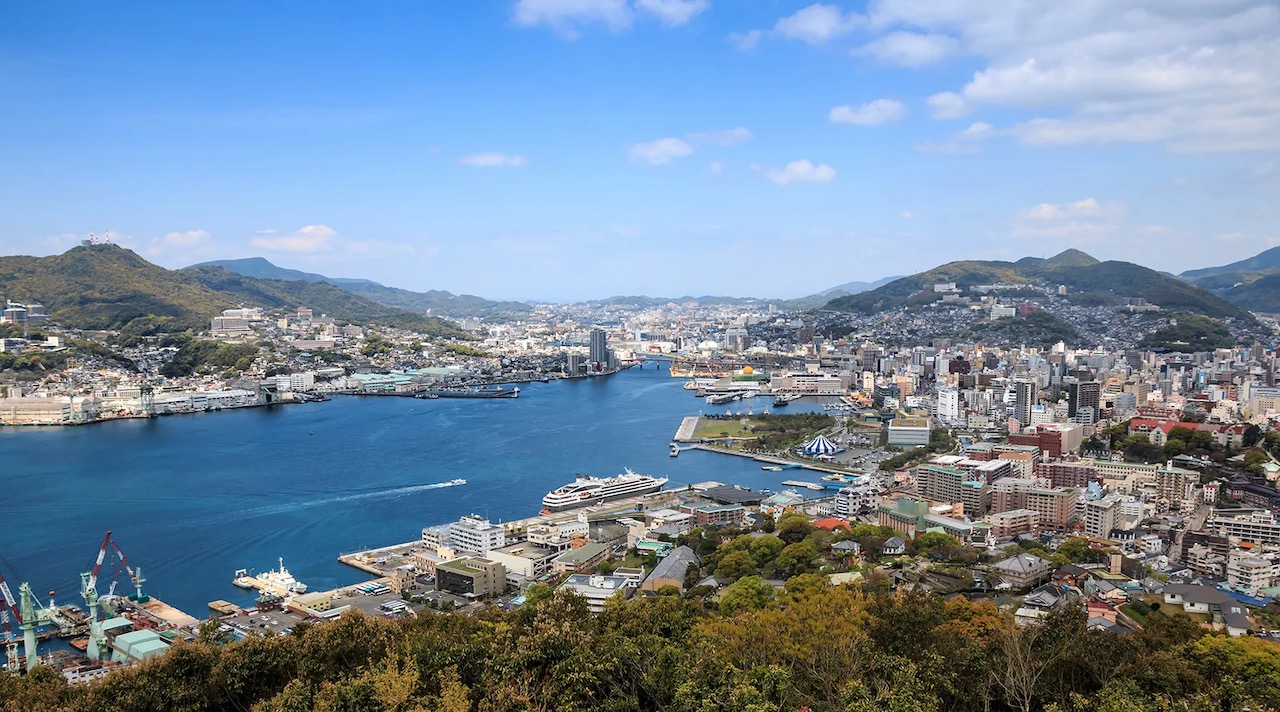


 The Chain Letter