Serving or Self-Serving?

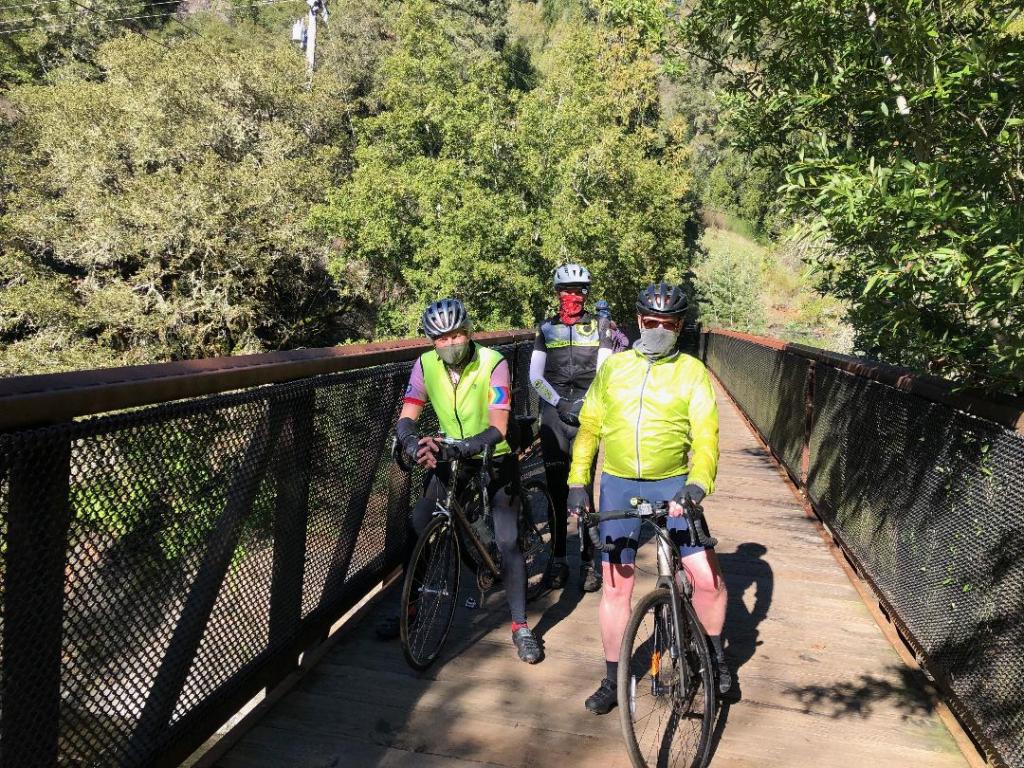
As you know we continued to offer club rides despite the winter CoViD-19 surge and the December statewide Stay-At-Home order. Some board members had a discussion about this prompted by the news that Western Wheelers ceased club rides in early January when Santa Clara County informed them they could no longer have gatherings. You may be wondering the same thing: how could a club like Different Spokes have continued to host club rides, which involve gathering, when all gatherings supposedly had been banned?

A little history: since last March every local cycling club—that I could think of—either explicitly stopped club rides or emptied their ride calendars (leading me to conclude that despite no announcement they too were not hosting rides). In June San Mateo County got a variance from the State that allowed outdoor gatherings up to 50 people. Suddenly group outdoor recreation was now licit in that county. Western Wheelers quickly reactivated club rides just in San Mateo. When Santa Clara also allowed outdoor group recreation, WW, which is based there, reopened rides in their home county as well. Thereafter other cycling clubs followed suit in their communities. (Some of those clubs were in counties that hadn’t yet allowed group outdoor recreation but some clubs did it anyway.) Several of the larger clubs in the Bay Area reopened—Fremont Freewheelers, Almaden Cycle Touring Club in San Jose, Grizzly Peak Cyclists in Berkeley, Sunnyvale Saratoga Cycling Club. There were also large cycling clubs that didn’t reopen, including Marin Cyclists, Valley Spokesmen in Dublin, Davis Cycling Club, and Sacramento Wheelmen and have continued to eschew group rides. We decided to reopen.

The restart of group cycling was initially prompted by San Mateo and Santa Clara Counties allowing it. But it really gathered steam when the State switched to the State Plan and the color tier system—ie. the State Blueprint For A Safe Economy—to give guidance to all counties. This was helpful because when each county had no choice but to implement its own pandemic plan, we ended up with a confusing patchwork or regulations. The new tier system meant that counties could just adopt the state rules instead. Some Bay Area counties eventually did exactly that including Alameda and Contra Costa whereas others continued to draft their own more restrictive plans such as Santa Clara and San Francisco.

The import of this has to do with (a) what was considered an allowed gathering in a county, and (b) how governmental bodies viewed cycling clubs. Although never explicitly stated, governmental bodies viewed cycling clubs the same as informal social groups unless they had a business license or non-profit status. Clubs without formal legal status were then subject to general restrictions on gathering. But clubs that had legal non-profit status were treated the same as businesses and hence their gatherings were subject to the regulations in the State Blueprint, which devotes the bulk of its attention to which businesses may operate and how they can operate. In other words for clubs that didn’t have some kind of business or non-profit status, their gatherings were treated no differently rulewise than just a group of friends or neighbors who were hanging out together. It didn’t matter if your club had a professional-looking website and snazzy kit: if you hadn’t bother to file for non-profit status (or perhaps your rides were not sponsored by a local bike for-profit cycling business), your club’s rides were no different than a generic gathering and hence subject to all the regulations—e.g. pod size, limited number, limited number of households, etc. Under the December emergency order their gatherings were purely social gatherings and were banned. You’d be surprised how many cycling clubs were in this situation. There was even one local cycling club that subsequently entertained the idea of becoming a religious organization/church in order to offer rides presumably because they didn’t have business or non-profit status.

In late summer and early fall, counties were allowing some social gathering either by requiring social distancing and face coverings, limiting the maximum number who could gather, requiring closed pods, or other such devices. Businesses were also required to do similar things for their patrons and employees, eg. by limiting the number who could enter an indoor business or work in a space. But the regulations for social gatherings and business gatherings were not necessarily the same with the latter spelled out both in the State Blueprint and in specific county regulations (if the county wasn’t following the State plan).

Last summer when non-profit organizations such as Different Spokes, Grizzly Peak Cyclists, or Western Wheelers looked at the State Blueprint For A Safe Economy for guidance, there was no obvious category for us. At that time the only category that even came close was Outdoor Recreation and RV Parks and we, as well as several of our fellow cycling clubs, ended up following those guidelines in terms of how we conduct our club when we’re in counties that have adopted the State Plan. San Francisco County was one of the counties that wrote its own plan and it has never clearly categorized us. The only business category we seemed to fit in is Gyms and Fitness Clubs; I’ve confirmed this with the SF Department of Public Health. One of the compliance requirements to operate in SF is to create and make available to the public a health and safety plan, which we have done. This is no different than for any other business in this category operating in SF. When the December emergency stay-at-home order was announced, all gathering outside of your immediate household was supposed to cease. But ‘gatherings’ such as outdoor fitness classes were still allowed. Why? Because the rules for business ‘gatherings’ were not the same as for purely social gatherings.

So that puts non-profit organizations such as Different Spokes in an interesting situation: our club rides are, in everyday language, certainly social gatherings. But because we are a non-profit organization, San Francisco’s CoViD-19 health orders allowed us to continue offering our “outdoor fitness classes”. We continued to offer club rides legally. But should we have?

Not only does this seem contradictory (but then again many things in the law seem contradictory to us lay folk, who don’t understand how subtle differences are finessed!) but it seems to belie common sense: if you want to stop community spread and you think it’s due to people gathering, then you should stop all gatherings, period. But a critical difference is that the allowed business gatherings are supposedly under the supervision of the business: the fitness club staff (= ride leaders) makes sure that class participants follow appropriate social distancing, masking, etc. There may be no such mandated oversight at informal social gatherings. That seems to be one of the reasons that club rides were and are okay—they’re part of a business practice and supervised according to county or state rules—and not treated like informal social gatherings where anything goes. The concern seems to be that informal social gatherings are major transmission sites because people don’t actually follow best practices for preventing infection. So they have to be squelched. Does that mean that ‘gatherings’ as part of a business operation are therefore safe? No. I’m sure plenty of businesses with ‘no mask, no service’ signs continue to do business with people who don’t or won’t wear a mask. They may not care to enforce the rules for fear of alienating their patrons; have indifferent, ignorant, or fearful staff; or they just need the money. Not too long ago I was in a supermarket where a customer was “blow holing” (had a mask on his face that didn’t cover his nose) and the woman at the bakery counter went about her business to sell him his morning coffee and bagel without ever asking him to cover up properly. At another supermarket I saw a group of employees convening in an aisle and at least two them did not have any masks. (!)

So was our continuing to offer club rides merely self-serving? My normally cynical self leans towards “Of course!” But the leaders of our pandemic rides have been dutiful in enforcing compliance with the club HASP. I had a discussion with the leader of another local club that was grappling with the same issues and we had come to a similar conclusion: people are out riding in groups regardless of the pandemic and many of those groups don’t have masks or other protocols to protect their participants. When people come on our club rides, they’re told exactly what they need to do to ride with us or they have to exit the ride. In that way our club rides are safer than the ad hoc social gatherings we see on two wheels. Think of it as a kind of harm reduction: if you think solo cycling is safe and group cycling unsafe, consider properly supervised group cycling as a lesser evil. Some clubs might be very laissez-faire when it comes to enforcing safety. But if you offer the kind of pandemic rides we do, then it’s hardly evil at all and may in fact be a good as riders internalize safe pandemic riding habits and then consider them “normal”. If the pandemic worsens due to perhaps the new SARS-COV-2 variants, then a real lockdown is surely in our near future—not the ‘lockdown lite’ we keep getting told is a lockdown but something more like what was implemented in Wuhan, Italy, or Spain last spring—and if that is the case then our rides will be shut down for realz. But so will many other businesses that have also been given a pass since the State started reopening last May.

Bike Lane, Bike Route, Bike Path, Bikeway?

I learned something recently: cyclists are not required to use a ‘protected bike lane’. Maybe you already knew that–I certainly didn’t! But I suspect most of us have little or no understanding of the difference between a bike lane, a bike route, bike path, and a bikeway. To most people those terms are interchangeable but the reality is that they are used under the Vehicle Code and by traffic engineers technically to distinguish related but different entities.

A bikeway is a general term for any path of travel that is designated for bicycle use. So it can be, for example, a lane, a ‘route’, a multi-use path, etc. But sometimes it’s used interchangeably with the term ‘cycle track’, which is generally some kind of protected path of travel for bicycles.

You’ve likely seen the near-ubiquitous signs announcing ‘bike route’. This simply announces that this path of travel—likely a street or highway—is a ‘recommended’ route for cyclists. Who recommended it? You don’t know. What makes a way recommended is totally unclear since bike route signs can be found on streets with cars and trucks travelling at high speed. Also because a street is designated a ‘bike route’ does not require any municipal entity to maintain it such as by obstacle removal or street cleaning (although they might if you complain).

A bike lane is more specific than a bike route in that it is a lane marked by signage or striping set aside for use by bicycles. Sometimes some motor vehicles are allowed to ‘use’ a bike lane such as when making a turn, and even park in it (e.g. police, ambulances, mail trucks, garbage trucks). Usually a bike lane is explicitly indicated with a sign or pavement marking, ‘bike lane’.

A protected bike lane is one that is separated from regular vehicle lanes. The separation can be as simple as an extra-wide, chevroned strip or true physical separation such as bollards, K-barriers, or even parked cars as is the case in Golden Gate Park.

In 2012 the San Francisco Bicycle Coalition convinced the City to install protected bike lanes in Golden Gate Park as a ‘trial’. (It must have been successful because they were never removed!) There were repeated incidents of drivers parking in the bike lane, which was adjacent to the curb, and not parking in the parking spots that were set away from the curb to protect the bike lane. There were the other adjustment snafus such as passenger doors being blithely kicked open forcing cyclists to move to the right as much as possible, people crossing the bike lane suddenly, and slow users in the bike lane (eg. the rental pedicars from Stow Lake) that obstructed the lane. Most of these issues have probably diminished over the years. But there are still structural issues such as the difficulty/impossibility of passing another slower cyclist when there are cars parked to your left. At the time I asked SF Bike what faster cyclists should do since my reading of the California Vehicle Code was that when a bike lane protected or otherwise was adjacent to the roadway, cyclists who were going slower than the rest of traffic were required to use the bike lane. Of course SF Bike responded that one should just use the regular lane that cars use. Say what? In any case I did try that and on the very first ride I did after that email exchange with SF Bike I was honked and yelled at by a driver ‘get out of the road!’ (By the way, another irritating structural issue is avoiding broken glass strewn in the lane—you can’t swerve right (curb) or left (parked cars) easily, if at all, to avoid it.)

It turns out my reading of the CVC was either incorrect or the law has been amended since then. Cyclists are NOT required to use a protected bike lane. Why? Because, in a bit of oxymoronic nomenclatural confusion a bike lane that is separated by a physical barrier such as parked cars, bollards, etc. is not considered a ‘bike lane’ anymore but a ‘separated bikeway’ and it turns out we may either use the ‘separated bikeway’ or not—it’s our choice.

The section of the CVC that mandates bike lane usage is here. The section of the California Streets and Highways Code that allows us not to use the protected bike lane is here.

If you read the latter, you may be wondering, “how does this paragraph allow us to skip the separated bikeway?” It’s because although we are required to use an adjacent bike lane per the CVC, a separated bikeway is not a bike lane in the eyes of the law, and the CVC paragraph above does not mention ‘separated bikeway’, ‘cycle track’ or ‘Class IV bikeway’, which are the correct terms for a protected bike lane. Interestingly there is a note that SHC 890.4 was amended in 2015, which was well after the GG Park lanes were installed. Whether the 2015 amendment was about differentiating bike lanes from protected bike lanes is unclear. But this semantic sleight-of-hand is our get-out-of-jail card.

However just because the law is technically on our side does not mean that there are no social consequences. I’m willing to bet that the vast majority of drivers don’t know this legal esoterica and when they encounter a slower cyclist (well, actually ANY cyclist) in their lane, they wouldn’t give a shit what the law says anyway, they just want you out of the way! Having a patently obvious alternative lane—the protected bike lane—and seeing cyclists not using it are likely to induce apoplectic rage and lead to diatribes about the massive ‘entitlement’ of cyclists. So it’s not enough just to let us use the regular vehicle lanes; we need driver education concerning cycling law and why some cyclists choose not to use the protected bike lane.

Bakery Loopers

First we take Manhattan…

Jeff Pekrul reports —

“We had a very nice ride to Pt. Reyes Station this past Saturday. Joan, Donald, Will, Scott and I rode from Corte Madera Town Square Park out to Pt. Reyes Station to sample the amazing baking at Bovine Bakery. It was a beautiful day—and pretty warm for mid-January—with hardly a cloud in the sky. A lot of other cyclists were on the roads enjoying the great weather. There has been barely enough rain in this very dry winter to green the hills just a little.

Stick ‘Em Up, Pardner!

After lunch we returned via Platform Bridge Road and the paved bike path through Samuel P. Taylor State Park. But instead of taking Sir Francis Drake Blvd. from the park entrance, Joan took us on a section of the unpaved Cross Marin Trail, aka Sir Francis Drake Bikeway, for a mile or two. It was muddy and most of us probably gave our bikes a bath afterwards. Joan apparently does a lot of off-road biking and her mountain bike looks like it’s made of mud. For the route back to Fairfax we took side roads through San Geronimo and Woodacre that were new to many of us and really beautiful. Before ending in Corte Madera we stopped briefly at Low Key Motors in San Anselmo to look at their cool vintage bikes.”

Happy 2021!

I’ll always remember this lousy year:

  • We cancelled more rides than we held.
  • We postponed our Pajaro Dunes ride weekend.
  • We had more virtual meetups than rides. (Well, it felt like more to me. I haven’t actually counted.)
  • We had a holiday party – but on frigging Zoom!

We did have around a dozen in attendance at the holiday party, and it was nice to see everyone.

Yeah, 2020 sucked. Still, there were members who made very valuable contributions during this time of Covid-19. Thanks, Tony, for the incredibly valuable work you did putting together the club’s Health and Safety Plan, and keeping us abreast of the requirements we’d need to meet to start riding again. Without your work, it wouldn’t have been possible for Jeff to start leading rides again last fall.

Thanks, Jeff, for getting club rides going again.

Thanks, David Ga. for organizing the virtual meetups and the white elephant exchange at the holiday party. You kept the club’s social life going during a difficult time.

Better times ahead in 2021!

David

We’re Riding! Gazos Creek and Stage Road loop.

Jeff P. led a Gazos Creek and Stage Road loop from Half Moon Bay yesterday. Here’s his ride report:

If Sonoma and Napa are the Wine Country, is the San Mateo coast the Pumpkin Country? On today’s ride from Half Moon Bay down to Gazos Creek and back via Stage Road and Purisima Creek, we saw a lot of pumpkin fields – perfect for a Halloween ride! Adding to the spookiness, it was so foggy on the coast until we reached the Pigeon Point lighthouse, that it made me think of the Legend of Sleepy Hollow, though no headless riders were seen.

It became a beautiful, sunny Autumn day with perfect temperatures. Our riding group from the past 3 weeks shrank by one, and today we just had Joan, Nancy, Scott and Jeff. At our stop at the Pigeon Point lighthouse, we took time to read the history plaque and snap photos of Whaler’s cove. We had our socially-distanced lunch stop in Pescadero, using the tables have been set up on a parking lot next to Duarte’s. We noticed that people were using the tables in the garden behind Arcangeli, so maybe that is an option for next time. Leaving Pescadero, we stopped to snap a couple photos in the creepy old graveyard, by the Goulson family plot. It just seemed right on Halloween.

The second half of this ride (Stage Road, lower Tunitas Creek, and Purisima Creek) is a personal favorite of mine. With 3900 feet of climbing, I think we all earned our pumpkin spice latte or whatever Halloween celebratory beverage we decided on for after the ride.

Ride Report: City Loop 10/17/2020

Many of us have done city loops a million times, and it normally wouldn’t occur to me to write a ride report about one, but Saturday’s city loop was special: after months and months of canceling rides, the club did our first group ride of the Covid-19 era.

Tony Moy has spent a ton of time researching the conditions under which we would be able to have a group ride. He put together a Health and Safety Plan for the club, as required by the City and County of San Francisco. We updated the club’s waiver to include some language about coronavirus. Jeff Pekrul was kind enough to volunteer to lead the ride. And, the board decided it was time for the club to start having group rides again.

So, we met on a gorgeous day in front of McLaren Lodge.

Note the nicely-distanced Spokers! For obvious reasons, part of our Health and Safety Plan is to maintain 6 feet between cyclists when we’re off our bikes. As you can see, we generally did a really good job of it.

Jeff gave a safety speech before the ride. It’s not something we normally do, but in the time of Covid-19, it’s essential. Our most important goal right now is to have rides that people feel safe going on.

Jeff P. delivering the first safety speech of the covid era (which we all hope is over soon).

Then it was time to ride.

The 6 of us left McLaren Lodge, went over to Arguello, then up to the pretty lookout:

From there, the familiar route through the Presidio, down the Great Highway, around Lake Merced, up Sloat, across Monterey, through the Mission and the Castro, over the Wiggle and back through the Panhandle to McLaren. 24 miles, around 2 hours rolling time.

A couple of observations from me:

  • It was much easier riding in a mask than I thought it would be.
  • The group did a good job distancing, and it felt safe to be riding with this group.
  • Jeff and I checked in with the riders, and they all agreed about feeling reasonably safe on this ride.
  • Alas, no pacelining, which is a lot of fun (for me) but just not very appropriate in this era. We’ll get back to it some day.
  • The ride felt nice and sociable without being huggy/kissy.

The weather was spectacular Saturday and of course that helped.

You might ask, why did we start with a short, 24 mile ride? Couple of reasons. A lot of us are out of shape, and we wanted to start with rides that will help those of us who are out of shape get back into cycling gently. The City and County limits the amount of time groups like ours can spend on outdoor activities. So, 2 hours rolling through San Francisco is the current max. Third, the first few rides we do, including this one, are experiments. The board wanted to see how we would do as a club meeting the conditions set down by the City and County for group events.

My opinion: we did splendidly.

Big thank yous to Tony for putting the club’s Health and Safety Plan together, which made this ride possible, and to Jeff for leading the ride.

On a personal note, I’ve had a physical problem that’s kept me from riding for almost a year now. This was my first time back on a bike since last year’s Mt. Hamilton climb (which I was unable to finish). I’m not out of the woods yet, but it felt great to be back on a bike again, and to be able to ride with the club. It felt like I was riding in molasses the second part of the ride, but I guess molasses is pretty sweet.

The Next Guerneville?

Group camp site at Johnson’s Beach Resort

The Guerneville Overnighter or Russian River Weekend has been on hiatus for ten years but not because we haven’t tried to restage it. The biggest obstacle to putting on another RRW is suitable lodging if we want to put it on in the traditional way. It’s not that lodging isn’t available—it would be relatively easy to book group accommodations as long as we did it ahead of time and picked a weekend that wasn’t already drawing a crowd eg. Lazy Bear Week. Traditional RRWs have had the following elements: (1) a Friday start for a group to cycle up to Guerneville for a three-day weekend; (2) inexpensive lodging, usually camping, in order make the trip available to the widest number of people, with an option for a room instead; (3) lodging in Guerneville preferably adjacent to the Russian River; (4) a Saturday group-prepared dinner. The two locations we’ve used most often, Fife’s and the Willows/Guerneville Lodge really aren’t suitable anymore. Fife’s is now Dawn Ranch Lodge and no longer has camping. It offers small cabins from $250-600 per night (one bed). The Guerneville Lodge is pretty much the way it has been but with two significant changes. The kitchen is no longer available for guest use so no group cooking can be done there, and now there is no onsite management with a consequence being loud, obnoxious partying in the lawn camping area making a peaceful stay a hit-or-miss thing (unless you want to party on too). At least the Guerneville Lodge still has camping.

The days of a Guerneville Overnighter costing about $20 are long gone too. Lodging along the Russian River, like everything else in the greater Bay Area, has experienced disproportionate inflation. $250 per summer weekend night for mediocre accommodations is common and some inns require a three-night stay. Even if we used an inn that did not require a three-night stay, the cost of a GW just for the lodging would be about $350-500 probably split for two people.

Camping has been a longtime option for GW; other than crashing with friends it is the only way to keep a Guerneville weekend inexpensive. Today a camp site runs about $40-50 per night or about $20-40 per person. That’s not bad, being just 100% inflation since 1983. But do Spokers still want to camp for a weekend? The club has aged up and the average income of club members is very likely quite a bit higher than it was in the ‘80s and ‘90s making camping–always the affordable choice–less necessary. If you look at the photos of the 1984 and 1985 Guerneville trips, other than the quaintness of people dressed in t-shirts and running shorts (by today’s standards they would be short shorts rather than just ‘shorts’) and tennis shoes you will notice that the bicycles are quite modest. It is a commonplace today to see bikes on club rides costing well over two grand whereas the average club bike back then was probably less than $300 brand new. Inflation since 1984 can’t account for that big of an increase. It says something demographically about Spokers back then: many members had low-to-moderate incomes simply because the Bay Area was still an affordable area for everyday people. I was a graduate student when I joined Different Spokes and my income was, well, a student income.

Currently in the Guerneville area the camping choices are limited. The bigger options are Guerneville Lodge, Parker Resort, Schoolhouse Canyon, and Johnson’s Beach. The Guerneville Lodge is still open but it’s a different place than it used to be, ie. there isn’t a group kitchen anymore and there is no onsite management, which apparently has made conflicts among visitors not uncommon, mainly noise and rowdiness at night. The Parker Resort is essentially camping only as is the Schoolhouse Canyon, with the latter not allowing groups larger than eight. The Highlands Resort, which the club has used before, does not allow groups bigger than eight. That leaves Johnson’s Beach which has group camping and rooms. The group camping site cost in 2019 was $200 per night for up to 20 people making it the same cost as Fife’s back in the day. However the group camping site is right at the entrance and next to town and the bridge making it a noisier location; it does have electric outlets though for charging your phones. Johnson’s Beach is rather crowded on summer weekends but that’s true for Guerneville in general.

Of the four conditions mentioned above eliminating one or all of them would open more possibilities. We could skip the ride up and back, in which case Guerneville becomes a getaway weekend; however this doesn’t resolve the lodging issue. If Spokers are less interested in camping, then our lodging choices become much wider as we could stay at any inn or owner-rented accommodation near Guerneville. Guerneville isn’t the only place to stay along the Russian River but it’s the most ‘urban’ (but not urbane) and has the most overt LGBT sensibility. But we could stay in Forestville, Monte Rio, or out of the small river towns altogether. Finally we could skip having a group-prepared dinner, which would obviate the need for a kitchen. But the critical one is cost: foregoing camping would mean the average cost per person would be about $250-350 per person for lodging rather than $80-100. Foregoing a kitchen means all the meals have to be eaten out and, again, higher cost.

When the club will be ready to go back is an open question with the pandemic having no predictable end. Next summer? Possibly but unlikely. However Guerneville resorts are currently open with COVID-19 precautions. But when we will have group rides and events again is uncertain. We certainly thought three months ago that this would all have come to an end by mid-summer and it hasn’t. Perhaps in this environment it would be better to stay out of Guerneville and in a more isolated location? If so we are probably talking about a house rental.

Of course the Russian River isn’t the only possibility for a club weekend trip. But finding another beautiful location within 100 miles of San Francisco that we can cycle to makes it a good choice.

Dude, What Have You Been Smoking?

Smokin’!

Since last Friday the air quality has been ghastly in the Bay Area because of the ubiquitous wildfires. For those who dwell in San Francisco or coastside it’s been perhaps less polluted at times; for those of us in the East and South Bay it’s been varying between ‘unhealthy’ to verifiably dangerous levels. Since the dozens of wildfires started over a week ago we’ve also been enduring an unusually long and withering heat wave that has intensified the smokiness by trapping much of the particulates at ground level in place. With no coastal breeze to blow the smoke inland we’re pretty much stuck inhaling the same smoke over and over.

Over here in Contra Costa the smoke has been eerie but not unfamiliar: two years ago with the Camp Fire we had air quality this bad, so bad that the haze looked like benign fog. Except it wasn’t. Three years ago we had the Tubbs Fire, which didn’t cause as much havoc with our air as the Camp Fire in 2018 or even today’s fires. I rode during the Tubbs Fire without misgivings. But the following year the Camp Fire was so bad that after one day of riding outside—even with a Respro mask—I gave up; I was coughing incessantly anyway until the winds changed a week or so later and moved the smoke out. This time I’m not making the same mistake. As soon as the air quality warning was raised, I hunkered down indoors. We have two HEPA filters running constantly and we are also running air conditioning not just to cool the house down but to do some additional filtering. I haven’t been outside much, let alone to ride, since the fires began over ten days ago. At night we run the AC and HEPA filter in the bedroom; in the morning when I open the bedroom door the house smells of smoke until we run the filters in the other rooms.

One of our ‘downtime’ projects has been constructing a new greenhouse. We go outside in the early morning to get as much work done as possible before the heat increases. We wear N95 masks when working; even so I get headaches from breathing in the smoke and have to retreat indoors to recover.

Despite the pollution if you’ve still gone riding outdoors, you’re made of hardier stock than I. Riding in this thick smoke is like smoking a pack of cigarettes! And if you think ‘Well, it’s just smoke—it may smell funny but it won’t harm me”, keep in mind that exposure to air pollution can not just exacerbate COPD but also cause it. All that aerobic training torn down simply by breathing in smoke. That said getting a fix from riding is good for your mental health especially these days. But during this season of hellacious wildfires I would caution you to ‘exercise’ discretion rather than your legs.

[8/25: Here’s an informative read on how wildfire smoke damages your lungs.]

Next up: swarms of locusts!

The Russian River Weekend [9/10/20 update]

Ron social distancing from his bike

The Russian River Weekend, or Guerneville Overnighter used to take place every summer, usually mid-July to mid-August depending on the availability of camp sites and rooms. The last time we held a Russian River Weekend was in 2010. For the counting impaired that’s ten years ago. Ten. Years. However that’s not because we haven’t tried. In 2012 as part of the 30th Anniversary Ride series I tried to put together a Guerneville weekend but ran into the problem that has been a headache ever since: we no longer have a suitable venue to host the weekend. Finding the right lodging is like that conundrum about bikes—’cheap, light, or strong: pick any two’—except for Guerneville lodging it’s ‘cheap, cozy, or convenient: pick any two’. But more on that later.

The Russian River Weekend goes back to the very first year of the club’s existence, 1983. It wasn’t the first Different Spokes trip—that honor goes to the ‘Thanksgiving On The Road’ (later called the Pigeon Point Overnighter), which was, astonishingly, the very first official club ride. (No, Tib loop was not the first club ride!) There actually were other rides before the inaugural ride but they were when the club was nascent; Thankgiving On The Road was the first one announced to the public. The RRW was ‘only’ the third overnight trip we offered. You may not know that the club offered many overnight trips through the early years with the majority of them requiring camping. Keep in mind that the club was formed by recreational cyclists with a touring bent although that interest in touring was soon to diminish as the club grew and the prospect of sleeping on anything other than 600-thread count Egyptian cotton sheets evoked shrieks of dismay by the newer members. All of those trips have long faded away and only two survived into the 21st century, the Lake Tahoe Spectacular (also now moribund) and the RRW.

Michael John with Kevin Anderson (aka ‘Flo Velcro’ & ‘Rex Flash, Mountainbiker’)


The Russian River Weekend came from the fertile mind of Michael John, who long ago moved to the East Coast where he still resides. Although not a founder, Michael John was an early mover in the club, serving as the ChainLetter newsletter editor, all-around cheerleader, and later President. MJ also led several big tours for the club including one in the San Juan Islands, New England, and from Seattle to SF. His first RRW set the template for subsequent iterations: ride up to Guerneville on Friday, do rides in the Russian River basin (or not!) on Saturday, and then return to San Francisco on Sunday. The first trip was the full monty: ride up, ride more, and ride back.

Karry Kelley on the Larkspur ferry back to SF

Shortly thereafter some bright mind–probably MJ–realized that riding back Sunday could be cut comfortably shorter by riding just to the Larkspur Ferry Terminal and catching the boat back to SF. But the shorter ride had a cost: you had to keep a steady (read: fast) pace and not dally in order to catch that mid-afternoon ferry to SF. No shopping adventures! If you missed that ferry, you had to wait a couple more hours for the next one, in which case you might as well just pedal back to SF.

Although copious bike riding was perhaps the centerpiece of the weekend, it needn’t be. Most participants couldn’t do the Friday ride so they came up after work or early on Saturday. And if cycling wasn’t your boy/girlfriend’s thing or you needed Saturday to recover, there were plenty of other things to keep you occupied including wine tasting or lounging in the river on an inner tube or by the pool at Fife’s to, uh, take in the sights. If you drove up, you could skip riding on Sunday altogether for more lounging or join the return riders partway before heading back to Guerneville to pack up and drive back. There were also several bars and dance/music venues where you could do exactly what you did in SF: hang out and try to pick someone up.

Different Spokes with LA Spokesmen (now Different Spokes SoCal) at Guerneville

The Guerneville Overnighter was not just an indulgence in cycling excess; it was by design a subversive social event as well. Instead of having riders decamp to whatever lodging they might have scrounged up on their own, MJ had booked a group of campsites at Fife’s not just to keep the weekend cheap but to keep the group together. Fife’s as well as the very idea of gay men and women camping was perhaps a vestige—nay signature!—of the era, sort of back-to-the-land, granola hippie lifestyle crossed with Dynasty. However if sleeping in a tent just was too louche, you could rent a cabana at Fife’s for the weekend instead. The price for the weekend if you camped? About $20!

Fife’s has long given up the ghost having been replaced by the Dawn Ranch Lodge. It was/is right at the west entrance of downtown Guerneville and had a mix of inexpensive (read: down market) cabanas and camp sites along with a restaurant, swimming pool and outside bar with plenty of seating where one could take in the fabulous sights.

How could you forget Drums??

Oh, and its dance hall, Drums, was just across the street where you could boogie down to the latest disco.

Camp DSSF at Fife’s

Fife’s had a large camping area towards the river, which was good for a couple of reasons. It was far enough away from the road, Drums, and Fife’s own noisy bar that the racket didn’t keep us awake all night. However the noise in some of the adjacent tents might (did!) as well as the inebriated partyers wandering back to their tents in the dark after last call. It also afforded the club some privacy and allowed us to take over a big area for our own ‘Camp DSSF’.

Fun climb out of Muir Beach!

About the ride up. The route up on Friday has changed over the years. Initially it was taking Highway 1 to Valley Ford and then cutting up the Bohemian Highway to River Road and thence to Guerneville. That route was about 88 miles. Sometime in the ‘90s or so, maybe even later—I’m not sure of the year—the coast route was deemed too grueling and some riders shifted to riding inland through Fairfax and Nicasio in order to skip the two big-ass hills out of Sausalito and Muir Beach.

Snack break in Stinson Beach

Either way there was usually a headwind at some point so character building was a feature of the ride. Incidentally the Friday route for the Guerneville Overnighter was used as the basis of the first AIDS Bike-A-Thon route in 1985. Both MJ and Bob Humason, the two DSSF prime movers of that first BAT, designed the route (well, it was mostly MJ–he even drew the map) and made it a hundred miles by staying on Highway 1 to River Road instead of cutting up the Bohemian Highway to Monte Rio. (In all later BATs the routes were loops out of the Castro rather than a point-to-point to Guerneville.)

How to summon the sag wagon…

That ride up wasn’t a classic tour however: the fortuitous arrangement of a sag wagon to haul camping gear, all manner of cosmetics, multiple changes of clothing, and food set the bar low enough that non-tourers could prance their way up to Guerneville sans panniers and enjoy slogging up the hills without 30 extra pounds of crap on their bikes. From that point on a sag wagon for Guerneville wasn’t just a luxury, it was a necessity!

Strangely, after the first Guerneville Overnighter in July 1983 it took only a month for the second Guerneville to take place courtesy of Peter Renteria, who was one of the founders of the club. This time however was ‘Guerneville lite’ as there was no ride up or back. His GO was definitely a different animal as eleven participants carpooled up on Friday and did short rides on Saturday and Sunday (if they rode at all). This time they stayed at the Highlands Resort. But this GO was the exception as it wasn’t a tour at all but more in line with what we now know as a ‘getaway weekend’.

Ride out to Duncan Mills via Cazadero


Saturday rides were optional and for those who rode up having the day off and lounging by the river was a welcome break. Two popular rides were the wineries route up Westside to Healdsburg and back on Eastside and a jaunt to Cazadero and/or Duncan Mills and back. Those looking for a bigger ride would continue west of Cazadero out Fort Ross Road and Meyers Grade with a return along River Road. The Sunday ride was the return to SF (or the Larkspur Ferry Terminal).

Sunday brunch at Howard’s Station in Occidental

In later years most if not all riders didn’t ride back at all, and the Sunday ride became a short roll out to Occidental to get brunch at Howard’s Station and then return to Guerneville to drive home.

Dinner: beer, white wine, hot dogs…
…Safeway Deli’s finest…


The highlight of those early GOs was the Saturday night dinner. When we camped at Fife’s, coming up with a group dinner took a bit of ingenuity. The ‘kitchen’ consisted of picnic tables, a grotty barbecue grill, perhaps a propane stove, and ice chests. Oh, and a big portion of the meal consisted of hastily purchased deli items from the Safeway down the street. (Hmm, does that sound familiar?) Early Guernevilles were, to my recollection, somewhat haphazard in meal preparation but folks always seemed eager to pitch in. As was expected it was hardly ‘haute’ (unless you consider ‘haute’ dogs to be debonair food) but at least it was filling, ‘home’ prepared, and not bad given the primitive circumstances, being just one step above true camp cooking. It’s hard to ruin hamburgers and hot dogs. I don’t recall exactly what MJ made for dessert, a literal pièce de resistance, but it was always the highlight: an easy-to-whip-up cake made of Twinkies©, Cool Whip©, and some other gastronomic atrocities. A sort of campy white trash (or stoner) tiramisu. [9/10 update: Ah, MJ’s dessert was the “Cosmo Girl Dream Cake”: 1 box Hostess Twinkies, 1 large package Cool Whip, and maraschino cherries. “Place five Twinkies (holes down) side by side in a row on a small serving plate. Top with layer of Cool Whip, then another layer of five Twinkies. Cover entire cake with one-inch layer of Cool Whip. Chill for three hours. Before serving, arrange several maraschino cherries on top.”]

…and Bingo!

After dinner folks trotted off to the bars such as the Rainbow Cattle Company or the Woods or Drums to dance and party on. However diehard Spokers hung around the campsite to chat, gossip, and play…Bingo.

2005 Catered dinner at the Willows

As time went on we eventually moved over the Willows and the meals got considerably upscaled since we now had a full kitchen at our disposal to prepare the dinner. It became possible to prepare pasta dishes (do you know how long it takes to get a big pot of water to boil on a propane stove??) as well as keep things chilled (like ice cream). I don’t recall the exact motivation for moving to the Willows. But it was probably a combination of Fife’s rates going up, the difficulty in getting reservations there, and the noise and commotion in contrast to the relative peace and quiet at the Willows.

The Willows lawn and camping area

The Willows was at the opposite end of town. The atmosphere there was completely different than Fife’s, which was party central. The Willows had a beautiful lawn that sloped down to the Russian River with plentiful camp sites. Like Fife’s if you didn’t want to camp you could get a room but instead of cabanas it had individual rooms in the main building.

Phil and Scott enjoying water sports

There wasn’t a swimming pool but in lieu you had the hot tub on the back deck and easy access to the river. It was a lot more pleasant place to spend a weekend. In later years even though we were still going to the Willows the hassle of preparing a dinner for larger and larger groups led to hiring a caterer to prepare the Saturday dinner especially since the number of Spokers increased; I believe one year it was 50 people. The loss of the camaraderie in preparing a meal together was replaced with the meal being a restful happy hour for all rather than a source of consternation and anxiety for some (and usually delay for everyone).

During the late Oughts the Willows shut down and underwent an ownership change. Fife’s was out of the picture having morphed into the Dawn Ranch Lodge also after a period of having been shut down. Russian River Weekends took place but with people having to scrounge up lodging on their own and the Saturday dinner became a restaurant meal. The new owners of the Willows welcomed us back but eventually they too succumbed to the stress of running an inn and the Willows became less amenable to having us there.

Which led to a quandary: was there still an economical lodge on the River that would welcome a cycling club and allow us to host the Russian River Weekend in the traditional way?

Fall Centuries [updated 9/3]

Having been made impossible by the pandemic some spring centuries were postponed to this fall rather than cancelled outright. Now cancellations of the postponement dates are starting to trickle in. The uncertainty about the pandemic and whether large groups will be allowed has also led to some fall rides being cancelled and others to remain in a holding pattern and hope for the best.

Only a couple of one summer century still remains un-cancelled: the Alta Alpina Challenge set for July 25 and [Alta Alpina Challenge is now cancelled for 2020] the Fall River Century on July 18, which is just two weeks away. After that you’ll have to wait until September for your next chance of a big ride. The former is in Alpine county, home of its mate the Markleeville Death Ride (cancelled), and which has had only three COVID-19 cases to date. However the Alta Alpine Cycling Club has adjusted the event so that rest stops are almost unsupported to minimize contact with staff. However there is still a chance that permits won’t be issued and the event will be cancelled at the last minute. The Fall River Century takes place in Shasta county, which until a few weeks ago had hardly any confirmed COVID-19 cases and then a superspreading event occurred and it now has 92.

[9/3: Other than the Fall River Century in July every other century/gran fondo ride in Northern California through the end of 2020 has been cancelled or ‘postponed’ to 2021 (= euphemism for ‘cancelled’–I doubt they’ll be called, for example, “the 2020 Wild Turkey Century on July 4, 2021!”)]

September

Gold Country Challenge. Was postponed from June 13 to September but now is cancelled.

5 Saturday. Mile High 100. $55-85. 33-, 56-, and 108-mile routes. A beautiful ride around Lake Almanor near Chester, CA. If cancelled your reg fee minus processing will be refunded. Now cancelled. (When you attempt to register, then you are told the event is cancelled.)

12 Saturday. Best Buddies Challenge. $50 fee plus $1,550 minimum fundraising. 30-, 62-, or 100-mile routes but will be different than in past because of closure of Hearst Ranch. The event has gone virtual for 2020; see website for details.

25-27 Friday through Sunday. Eroica California. $200. 40-, 73-, 87-, and 127-mile routes. 1,500 riders max. Mixed surface routes. You must have a vintage bicycle to ride the classic route. [7/22: Now “posponed until 2021” (sic). Note no date in 2021 has been announced. If you registered for 2020, it will be carried over to 2021.]

26 Saturday. Bike Around the Buttes. Postponed from April 18, it is now cancelled.

27 Sunday. Jensie Gran Fondo. $140-195. Registration opens 9/1. 40, 70-, 100-mile routes. Rides through West Marin on a route similar to the Marin Century. [9/3: finally cancelled!]

October

Chico Wildflower. Was postponed from April 26 to an indefinite fall date. It is now cancelled.

1-4 Thursday through Sunday. Sea Otter Classic. Postponed from April 18, it is now cancelled for 2020.

3 Saturday. Siskiyou Scenic Bicycle Tour. Event has been cancelled for 2020. May 1, 2021 is the next one.

3 Saturday. Best of the Bay. Postponed to Oct. 3, but now registration is “delayed” due to COVID-19 uncertainty. Event has NOT gone virtual but format has now changed: do the ride by yourself from 9/12 to 10/10 for $50. No support unless you organize it yourself as part of a team.

3 Saturday. Konocti Challege. $70-90. 40-, 60-, and 100-mile routes. Nice ride around Clear Lake. Note no refunds if cancelled. [7/22: Ha ha, it hasn’t been canceled–just “postponed” to 10/2/21. Good luck getting a refund.]

11 Sunday. Strawberry Fields Forever. $75. 30-, 61-, and 101-mile routes. No refunds. Routes take in several of our Pajaro Dunes weekend roads! [7/22: Nope, not happening! Next edition will be 5/16/21.]

17 Saturday. Foxy Fall Century. Cancelled.

17 Saturday. Devil’s Slide Ride. $110-65. Registration is open. 101-, 64-, and 42-mile routes down the San Mateo coast and up the Coast Range and back. A benefit for PARCA. Cancelled. Next event is May 22, 2021.

17-18 Saturday to Sunday. Tour of the Sacramento River Delta (TOSRD). $127. Annual ride from Brannan Island to Sacramento via the Delta on Saturday and return on Sunday. Stay at La Quinta near old town. Includes lunch on Saturday and a post-ride bbq on Sunday. [7/22: Now cancelled for 2020, alas.]