The First AIDS “LifeCycle”

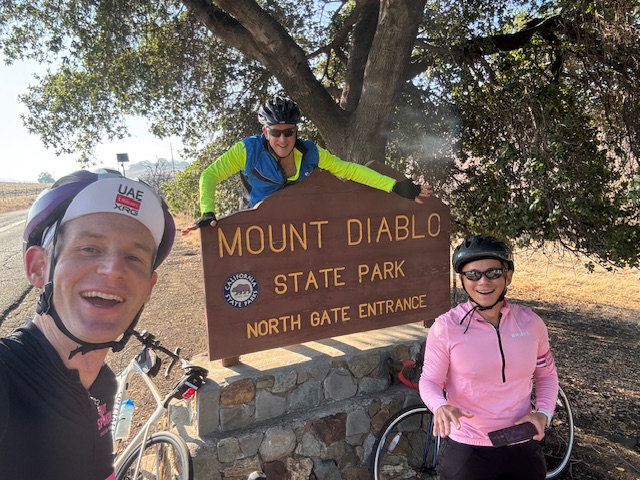
from Scott Lechert; East Hampton after their bike-a-thon.

AIDS Lifecycle, the annual fundraiser for the San Francisco AIDS Foundation and the Los Angeles LGBT Center, recently ended its last iteration. The fundraiser was first offered in 1994 and back then was called the California AIDS Ride (CAR), and it was organized not by the two non-profits but by Pallotta Teamworks, a for-profit corporation. Apparently unhappy with the proceeds from Pallotta, the two organizations eventually ended their relationship with the company and then went about organizing the same fundraising ride but now under their own auspices starting in 2002. It was rebranded the AIDS Lifecycle.

But did you know there was an earlier “LifeCycle”? In 1986, eight years prior to the AIDS Lifecycle, a man named Scott Lechert from New York organized a cross-country bicycle ride to raise money for AIDS organizations and to increase awareness of the AIDS crisis at a time when there was no concerted national action was taking place. Scott, taking inspiration from the 1985 AIDS Bike-A-Thon “Pedaling for Pride”, first organized an ad hoc bike-a-thon fundraiser in New York, which took place in September 1985. Interestingly he got 62 riders to do the one-way, hundred mile route on Long Island out to East Hampton and netted about $30,000. Those stats are almost the same as our first Bike-A-Thon.

Following that coup Scott apparently was inspired to organize a bike ride that would be much more challenging: a cross-country, self-contained ride from New York to San Francisco. He called the ride Life-Cycle ’86. But at other times it was referred to as Cycle For Life.

Here is an interview with Scott published in the March 1986 ChainLetter:

Interview: Scott Lechert (March 1986 CL)
Different Spokes/San Francisco is not the only organization planning a major fundraiser this year. Diff’rent Spokes/New York has an ambitious ride planned for this year—Life-Cycle ’86. The ChainLetter talked with Scott Lechert, DS/NY member and organizer for this event.

CL: Why are you doing this ride?
SL: The purpose of Life-Cycle ’86 is to raise money for a national AIDS foundation, educate people on AIDS-related issues and display a healthy, positive response to the AIDS crisis. And most importantly, for the participating bicyclists, the ride will be a lot of fun, a chance to meet a lot of very giving and caring people, and an opportunity for some personal growth. I, myself, think it look great on a resume as well.
CL: I understand you are planning on getting across the country and be in San Francisco in time for Gay Games II. When are you beginning?
SL: The starting date is May 26th, Memorial Day.
CL: What will the route be?
SL: We’ll be going through major cities along the way—Cleveland, Chicago, Madison, Minneapolis/Saint Paul, Des Moines, Lincoln. We should be in Denver July 7th. We’ll be arriving at the Youth Hostel in Sausalito on August 2nd and crossing the Golden Gate Bridge sometime in the afternoon on August 3rd.
CL: What support will there be on the ride?
SL: Life-Cycle ’86 will not have sag wagons except for maybe a selected one- or two-week segment. As I said before, one of the goals of this ride is to display a healthy response to the AIDS crisis. By having people carry their own gear, being totally self-sufficient, a certain strength and determination is conveyed to the public. So participating bicyclists are required to be self-sufficient—carrying their own sleeping bag, tent, and other necessary supplies. Not everything is needed though—stoves and other group-use equiupment need not be carried by every person.
CL: Riding loaded across country. How are you going to manage that?
SL: Bicyclists are not required to stay together, ride pacelines or anything. Some people are going to want to be alone on the road. But we will be sleeping and eating dinner together. A typical day will start with everybody being given the route for the day, the finishing point, and potential stops for lunch. We will be riding 65 miles a day, six days a week. Realize though that 65 miles is not a real lot when you start early and go to sleep when the sun sets.
CL: Some people might accuse you of being insensitive about the riders.
SL: I don’t mean to sound like we are not going to be concerned about the welfare of the people on this ride. We want people to participate! The whole concept of Life-Cycle ’86 is to give people the opportunity to participate in a major fundraiser for AIDS organizations. We will help and encourage you during the ride. There will be a contact phone number if anything goes wrong during the ride, and we will try to accommodate people as much as we can. We just want bicyclists doing the whole route to be fairly independent, and to realize that the ride is going to be strenuous at times—and that you may not have a shower for a week sometimes.
CL: You mention fundraising. Will you be doing some?
SL: A lot of the local events will be determined by the involvement of the local communities. We will probably have press conferences in all the major cities, and hopefully benefits as well. Since funds raised in local cities will be split 50/50, we expect a lot of organizations to become involved.
CL: How do you plan on covering the expenses of the ride?
SL: We are trying to arrange to have funds raised to cover expenses of bicyclists riding the entire route. Probably about $700 a head, which really is plenty of money.
CL How many people have expressed interest?
SL: So far there are about 8 people who want to ride the entire distance. This will probably grow as we start to get publicity. The number of people doing segments is hard to determine. Certain segments will be very popular—Madison to Minneapolis, Los Angeles to San Francisco (Ed. note: being planned by members of LA Spokesmen [now renamed Different Spokes Southern California]), and New York to Philadelphia. One thing, this is not a gay event. We have had responses from many non-gay bicyclists, and so far there are more women interested in the ride than men. We’ve also sent soliticitation overseas, so Life-Cycle ’86 will be international in scope.
CL: Any last comments?
SL: I’d like to invite San Francisco riders to join us anywhere along the route. We’ll be staying at the hostel outisde Sausalito and you’re welcome to come spend the night and ride across with us on Sunday the 3rd.

The September 1986 ChainLetter documents the arrival of Life-Cycle in San Francisco:

“CYCLE FOR LIFE SAN FRANCISCO WELCOME
On Sunday, August 3, a contingent of 35+ Spokers met to ‘welcome home’ the 19 cross-country bicyclists who participated in ‘Cycle For Life’, the New York to San Francisco trek. The 55 bicyclists were met at Twin Peaks by 20 members of Leather and Blues MC Club and the Eagles MC Club. With plenty of flash, honking of horns, blowing of whistles and cheers along with some tears, the crew took off down Market, through the Castro, past the AIDS vigil to the finish point at the Ringold Alley Street Fair. The cyclists were welcomed to San Francisco by Board of Supervisor President, John Molinari, who presented them with a proclamation from the City. San Francisco was the only city to officially welcome and acknowledge ‘Cycle For Life’. The welcome ended with a party hosted by the Raw Hide II, the country and western dance bar.”

When Life-Cycle/Cycle for Life was announced, my reaction at the time was along the lines of, ‘this is a crazy idea’. To spend over two months on the road with the prospect of a small amount of money being raised seemed like a lot of bang for a little buck. But the same could be said of the first AIDS Bike-A-Thon. I mean c’mon, ride a hundred miles in a day to raise, what? $33,000? But a spark can light a fire.

I don’t know how much money Life-Cycle eventually raised nor who directly benefitted from their fundraising. Remember too that AIDS wasn’t well-known then except as a source of fear. So Life-Cycle’s awareness raising in the communities through which it rode was equally important. You can read more about the ride in the Bay Area Reporter. In the article the writer Jim Sutherland mentions that four of the seventeen participants were from the Bay Area. By the way two of them, JT Blazer and Jill McIntyre, were members of Different Spokes!

By the way, Diff’rent Spokes/New York disappeared a long time ago. I’m not sure why but probably for the same reasons that Rainbow Cyclists in San Diego, River City Cyclists in Sacramento, and Different Spokes Seattle all eventually folded: the initial leadership cohort moves on and there isn’t a new generation of energized members to take over and direct the club. I can’t find any online references to Diff’rent Spokes, which suggests that it died well before the Internet became a reservoir of ephemera. But gay cyclists end up getting together even in the absence of an existing club and before you know it there’s another club. New York now has Outcyclists and perhaps Fast ‘N Fabulous is still alive although largely moribund after Bob Nelson, the figurative heart of the club, died in 2019.

Ride Recap: City Ride with Twin Peaks

A report from Nancy Levin, the ride leader of today’s ride:

Super fun ride today. It felt like a big hug to SF – from the bay to the ocean, to the Presidio and Twin Peaks, lots of coastline and views. The ride was just listed a few days ago but five of us signed up including Al and his young son Elliot, who just got his cool Trek road bike a month ago. Hats off to Elliot for his great attitude and strong cycling! What a climber. Larry and Chris rounded out the fabulous fivesome. 
After we made our way from Peet’s down to the bay, it was a tourist’s delight. We enjoyed the views of the bay while cruising by a marina, the Valkyries and Warriors arena (aka Chase Center) and Giants (aka Oracle) stadium, past the bustling Ferry Building, down to Ghirardelli Square, then to Fort Mason and Crissy field, with a snack at the warming hut and a “money shot” in front of the Golden Gate Bridge. It was a reminder of why so many people visit S.F.  We took in the close-up of the bridge at the Fort Point turnabout and began the climbing part of the ride into the Presidio. After regrouping at the Legion of Honor (that darn hill!), we headed towards Lands End and a spectacular view of Ocean Beach heading down from the Cliff House. We deviated from the route a bit, stopping at Java Beach Café rather than Java Beach at the Zoo. After lunches of bagel+cream cheese+bacon, ice cream+ hot coffee, and wrap sandwiches, father and son headed towards home, and Larry, Chris and Nancy made their way to Vicente and the slow gradual climb to West Portal and the grind up Ulloa. Whew. Then a coda up Twin Peaks (where the leader somehow lost track of the guys). But all got home, safe and sound.

Ride Recap: September Happy Hour in the East Bay

This was the second time that Roger and I offered our Happy Hour in the East Bay ride. By club standard’s it’s an outlier of a ride because it’s quite short—just ten miles, takes place midweek, and barely after work hours. Oh, and it’s in the East Bay rather than San Francisco and by “East Bay” I don’t mean Oakland or Berkeley but the other East Bay, i.e. the other side of the Berkeley/Oakland hills. Not a lot of Spokers live east of Berkeley and if you drive over there’s a congested tunnel you have to drive through if you do want to enjoy the best of Contra Costa. (More the reason to take BART…if you can squeeze you and your bike into a train car!)

This ride was originally offered as a lark. Is it that hard to post a post-work ride or gathering? Nobody since Aaron and to some extent the late Will Bir has done it with some regularity. There have been occasional one-off attempts. So I thought we’d give it a try. Kind of a demo—see, anyone can do it. That’s kind of what we did with our Social A Rides a decade ago: throw something up on the wall and see what sticks.

Last month there were five of us and this month there were the exact same five! I guess we’re the “Outsiders”. Lamberto and Joe live in Contra Costa, as do Roger and I, and it’s easy for them to make their way to Lafayette for a ride. Chris is from the other side of the hills but a BART ride over is all it takes for him to join us.

The ride was the same as last month: start at the Lafayette Public House, go up the Lamorinda trail to Moraga Common, and then turn around and head back for post-ride refreshment. Unlike last month it was hot—90F at 5:30 PM when we left. In other words it was a typical summer day in Contra Costa during a surprisingly atypical summer in which this was only the second heat wave. Unlike last time when the trail was well populated, it was quiet and mostly deserted and that allowed us to move a bit more quickly.

The Lamorinda Trail—officially, the Lafayette Moraga Regional Trail—is my favorite local ride. It’s a rails-to-trails multi-use path that despite being well-used is great for a relaxing ride. When Roger and I want to get in a quick and easy ride, this is where we go. The trail climbs very gently up to St. Mary’s College and down to Moraga Common.

Last time we had an ad hoc confab at the restrooms at Moraga Common—not that kind of “confab”!—that had us getting back to the Public House late. We were so lost in gabbing that time got away from us. Because sunset is coming earlier we were more cognizant of getting our business done and then heading back. Even though we did gab a bit, we were able to make good time down the trail since it was so devoid of the usual walkers, doggers, and fellow cyclists. Plus, it’s a gentle downhill almost all the way back.

Back at the Public House we were greeted by a huge group of women with name tags. It looked like two groups of refugees from “Sex and the City” were holding court and hogging most of the outdoor tables. Lamberto went inside and reported back that the sole server/barista/bartender was holding the fort against a long line of customers. Time for plan B: we jumped across the street to Tutu’s, which also has outdoor tables. We immediately snagged a table where we could conveniently watch our bikes.

Tutu’s used to one of the Chows. Maybe you recall Chow? This tiny chain had four restaurants. The first was at Church and Market just around the corner from where I used to live. The owners opened another one in the Inner Sunset and then two over the East Bay, one in Danville and in Lafayette. Chow crumbled about ten years ago for unknown reasons. But the Lafayette Chow was, I understand, sold to its employees who mostly kept it the same—the organic market, the menu, the vibe, and the look. The only thing substantial that changed was the name.

This turned out to be a fortuitous turn of events because although the Lafayette Public House has a really nice biergarten feel and the food is decent, it closes early being mainly a breakfast/lunch venue and the menu is limited. Tutu’s on the other hand does a real dinner service and the menu has a variety of comfort food. Oh, and they do fish really well and it’s almost always my go-to choice. We got there just in time because within 15 minutes the outdoor tables went from less than half-filled to brimming with eager diners.

Our casual post-ride refreshment turned into a two-hour dinner. Chris got the lamb burger—the “Silence of the Lambs” fav—which is always a good choice; Roger got the Cobb salad—they do an excellent version ; I got the petale sole, natch’; and Joe and Lamberto both got pasta dishes. They also got real post-ride “refreshmant” aka beer. Hey, we weren’t riding anymore and they were gonna catch BART back to Walnut Creek so no harm no foul.

Our ride and dinner conversations were one of the more wide ranging ones I’ve had in a long while. Joe and Lamberto recently got back from a two-week road trip in the Southwest; Joe got new cycling shoes that he was trying out on this very ride. Other topics included: getting the latest Covid shot, the number of older men who are coming out later in life; the pros and cons of revocable trusts and wills; touring Taiwan; gluten intolerance; prediabetes; filipino restaurants in Lafayette (there’s only one); real versus dumbed down Chinese restaurants (cough PF Chang’s cough), the US Bicycling Hall of Fame in Davis; cycling in the Delta; and pet insurance. Was there any talk about the club? Strangely enough, almost none.

It was very dark by now. Then our very helpful waitperson naturally offered us dessert. Despite their best efforts to eat better, J&L requested a raspberry crumble. With a lot of ice cream. Some people just can’t skip dessert! After it arrived they offered some of it to us, which we declined despite its very appealing nature. Whoever said “nothing tastes as good as the way thin feels” was obviously demented.

That was one enjoyable ride and dinner.

Next month we’re starting an hour earlier, at 4:30 PM instead of 5:30 PM and starting just down the street at Batch & Brine instead. Or maybe we should go back to Chow- I mean, Tutu’s…

Tire Hell 2: Back to the Future

I don’t know if any of you have had to suffer through mounting an intractable tire on your bicycle wheel. I wrote about one person’s experience here. Well, here’s another one on thewashingmachine.post blog: “Suffice it to say, after two and a quarter hours of tyre wrestling, i still had a six centimetre section of tyre that point blank refused all persuasions to seat itself on the rim. despite possessing a Koolstop tyre jack, designed to ease the fitment process, i made no headway whatsoever, and gave up in order to make my tea.

Pray that this never happens to you. In the writer’s case he was trying to mount a Challenge Chicane clincher tire, a tire intended for cyclocross. As you may know, cyclocross tire pressures are very low compared to road riding hovering in the mid-20s to even just below 20 psi. Those pressures are low enough that unless the tire is secured firmly to the rim, you could roll a tire enough sideways to burp the air in the case of tubeless or even roll the tire off in the case of an inadequately glued tubular. It goes without saying that you could roll a clincher tire off as well if you flatted your tire. The manufacturer is probably cognizant of these possibilities and has made its tires as tight as possible while still adhering to ETRTO guidelines. Furthermore in a cyclocross race you’re not going to be concerned about demounting or mounting your tires–you’re running to the pit to get your other bike.

Nonetheless the majority of these tires are not going to be used in race situations but in real life. Which is to say you are going to be replacing your own tires and probably while out riding when you flat. You’d better hope you’re using sealant rather than an inner tube and that your sealant works to plug up whatever puncture you incur.

I have a Koolstop tire jack and I’ve had to use it. But I have yet to encounter a tire that didn’t yield to its leverage. So the writer’s tire must have been incredibly tight, tighter than anything I’ve seen. If this had happened to me, I would have returned the tire and switched to another brand. But the writer loves those Challenge Chicane tires and so he persevered. (He did manage to get it on but by a completely different method you can read about in his post.)

All those caveats aside, one has to wonder what the Bike Industrial Complex is thinking. How are ordinary cyclists supposed to deal with ridiculously tight tires that one cannot repair while on the road and only can be remediated by using specialized tools in a workshop?

The other side of the equation is demounting a tight tire and I have encountered that experience as well. Roger has a gravel e-bike with reasonable Schwalbe tires. I have fixed flats for him twice and both times I was not able to get the tire bead out of the tire bead well either with my bare hands or with regular tire tools. (Note that a Koolstop tire jack is for mounting tires, not demounting them.) I had to resort to using a tool I counsel others never to use, a screwdriver. Using a screwdriver to unmount a tire is asking to damage your tire, your rim, your inner tube or all three at once as well as your belief in any higher power except the devil. I couldn’t budge the damn bead. I needed Roger’s help even to insert the screwdriver blade between the rim wall and the tire to begin the process. The second time I struggled alone for about 20 minutes and then realized it was déjà vu. With Roger’s help our four hands were finally able to pull the tire sideways enough to nestle a screwdriver in there to begin to pop the bead out of the bead well.

If this had happened out on the road–both times we discovered his flat tire before going out for a ride–it would have been game over and I would have had to go home to get the van for him.

You might be thinking, “What’s a bead well??” This is a more recent “innovation”. It didn’t exist back in the day with traditional road rims. Those rims were pretty narrow, 14 to 17 mm inner width, which seems crazy narrow these days. Those rims didn’t need bead wells. I presume the addition of bead wells was due to tubeless tires and rims getting wider for gravel. The bead well is an indentation on both sides of the usual rim well so that the tire beads can drop into them and be held more securely; they will not pop out easily. And that’s why it’s hard to demount them, so it’s a mixed blessing. If you look at the diagram below, the rim on the left is a traditional rim: it’s got hooks, and nothing but a rounded inner surface. The middle and right images are rims with bead hooks as well as a rim well. Both the rim well and the bead wells assist with tubeless tires, the former for demounting the tires and the latter for locking the bead in place and keeping it from blowing off the rim.

From Enve

I’m all for safe wheels but this is taking things to an extreme and making flats user unfriendly. Of course you all know that you never have to deal with a flat when you use tire sealant, right? You can stop giggling now. You can chalk this up to the “pro-ification” of cycling, i.e. we should be emulating what professional bike racers use for equipment (or are told they must use). If you don’t have a pit crew, a personal mechanic, or a support car following you, well, good luck!

Ride Recap: Cañada Road and Portola Loop

I developed a hip injury almost three months ago that has mostly kept me off the bike. I tried selling my soul like Dorian Gray but I got a bum deal: not only is the picture hideously aging but so am I. The record of my sins is in every niggling overuse injury I seem to be incurring with increasing rapidity the older I become. I finally got into PT and am making progress and the pain is diminishing. So what better than to lead a club ride and thereby either proclaim my miraculous youthful recovery or reveal the broke-ass nature of my old body, one or the other?

Relatively last minute I picked a ride I like, wasn’t long, and didn’t have much climbing: head out on Cañada Road on a Bicycle Sunday and then loop through Portola Valley and back. Roger is also slowly getting back into shape after a crash and broken collar bone in late spring. Cathy, Nancy, and Roger S. deigned to accompany us. Ironically Cañada Road and Portola loop were my “Tiburon loop” when I lived in the Midpeninsula to the point that it became boring just like the Tib loop when I lived in SF. I haven’t lived in the Palo Alto area since the very early 80s and every ride down there has now happily recovered its luster. I relish every chance I get to get over a bridge quickly and do a ride in my old stomping grounds.

If you’ve done this venerable route before, you understand its appeal. Woodside and Portola Valley have “semi-rural” environs. So even though you’re actually riding through a suburb, it doesn’t feel like it, or at least it doesn’t feel like your typical suburb with nicely trimmed green front lawns and houses lined up on the street like bowling pins. Most everything is concealed amidst trees and back roads giving you the false impression that no one lives there. Anyway it’s generally nice and at times feels like being out in the faux countryside. And they sure haven’t changed much in 55 years, which is remarkable for the Bay Area. (Because $$$$!)

Bicycle Sunday didn’t begin until just before I moved to San Francisco in 1982. I remember doing one of those very first Bicycle Sundays and what a crowd it drew. The idea of closing off what was a major thoroughfare for the hippie granola riffraff was like opening wide the asylum doors; everybody was there—skaters, bikes of every kind, xc skiers, walkers, buggies, you name it as long as it didn’t have an engine. Things have calmed down a lot over the years but Bicycle Sunday still brings out the masses just not in moshpit quantities anymore. It was pretty sedate when we started off. By the looks of things—the large number of cars parked at the north end—there were a lot of cyclists. But it sure didn’t look or feel like it was a typical bike event being fairly quiet. After a quick pit stop at the Pulgas Water Temple we headed south deep in conversation. Nancy and I gabbed about lubricant…bike lubricant! and the pros and cons of oil and wax. We also talked about loss and how long it takes to recover, i.e. a lot longer than everyone else thinks it should. I also quickly realized in talking with Nancy about chain maintenance that it’s been a slow, downward slide in my enthusiasm and diligence in taking care of the bikes. I used to clean off my bikes after every ride. Not anymore. That train left the station a long time ago. Hearing squeaky or crunchy sounds is the whip it takes for me to do anything about my chain and even then my declining hearing is helping me ignore that as well. Next I’ll be living in a van down by the river.

Chatting with Cathy I learned that the day before she did a metric century in the same area, the Tour de Menlo. I’d never heard of it. It’s run by the Menlo Park Rotary and the metric does most of what we were riding today. My curiosity piqued, I made note to include it in the list of centuries for 2026 and I sure hope Roger and I can do it then. Cathy observed that although the ride was great, the food was not. Whether it was due to inexperience in putting on a bike ride, or the intention of putting on a minimalesque event, the food provided sounded like the results of a pro forma trip to Costco. Eventually these nonprofits like Rotary and Lion’s Club, which are turning to bike events to fund their charity fundraising, are going to realize that if you want a good turnout (= $$$), you’d better provide good food. There are enough good centuries out there with great food that phoned it in is not going to cut it these days especially when you’re charging $85. I like to support good charities but if your event sucks, why don’t you just forego the hassle of putting on an event and just beg for $85? It’s like buying ABC cards from the Deaf guy on BART: here’s the money, keep the manual alphabet card and go away, please.

Roger S. and I got to share our latest medical ailments. That’s what happens when you old. All that coy gay banter about hunky boys and fabulous parties is replaced by commiserating about your gradually failing body.

After a really nice roll through Portola Valley—it was sunny and the temperature was perfect—we zoomed down Alpine to Amigo’s Grill. This is quickly replacing Robert’s as my preferred stop on the Portola loop. Robert’s is okay if you want to pick up something really quick and rush out. But stopping for a proper lunch is definitely the way to go. (Touring habits die hard.) The Ladera Shopping Center has other places to eat including a somewhat pricey Greek place and a bistro. It also has “Konditorei”, which should be a bakery, but instead sells bagels (huh??) and sandwiches. Not a cake in sight. Maybe we’ll try it out some day despite the misnomer. Amigo’s is a Mex place with reasonably priced lunch choices given that it’s in a luxe suburb. When the rent is high, there is no such thing as a budget Mex restaurant, so I’m not complaining! Going in to order, the regulars were pinned to the bar counter watching a football game. Not a bad place to watch sports and get restaurant quality noshes so you can forego the Cheetos and potato chips. Cathy, Nancy, and I opted for the usual midride go-to: a burrito. They were of course huge. (Is there any other size?) Roger got a quesadilla with what looked like a homemade tortilla. Roger S. got a huge, sizzling mound of fajitas. The odor of the crackling meat set off my carnivore gene and I was beginning to regret my choice of a veggie burrito.

Lunchtime conversation veered about: upcoming trips, riding with “mainstream” (=non-LGBTQA+) cycling clubs, where we buy bike clothes–is the Pearl Izumi outlet store really closed??, the OPP, watching the Vuelta on TV, why club kit is less than fetching, etc. Hearing remarks about what it’s like to ride with straight cycling clubs made me laugh because ten years ago Chris Contos was blaming the dwindling membership of the club on the world being post-gay, i.e. we’re so accepted by the straight world that gay clubs don’t matter anymore. Yeah, right. Then I hear about being harassed by members of straight clubs by thoughtless—or maybe intentional—verbal macro-aggressions. I was sorry to hear it but glad to have Different Spokes to ride with. You should too. The world is still fucked even here in the “enlightened” Bay Area. If I hear another clueless remark about us being post-gay I’m going to scream.

Most clubs are probably like us in having no written or even understood code of conduct and this is what you get. You do know we don’t have a code of conduct, right? Maybe we should. Back in the day there was an infamous ‘fish’ comment made by a male Spoker at a Decide ’n Ride that horribly offended some women attendees. I’d like to say it set off an uproar. But my recollection was that nothing much happened. That he didn’t like women members was patently obvious and he took multiple opportunities to voice his opinion. Instead of being talked to or expelled he was allowed to wallow in the disdain and snubbing that ensued. No concrete action was taken as I recall but he did stop coming to Decide ’n Rides (or at least the ones I attended). What a jerk. And the club at the time was wondering why we didn’t have more female members. Yeah, of course you want to hang with a club that has members who actively hate you. What a nice way to feel welcomed.

After a long lunch break we waddled over to our bikes and headed down Alpine to Menlo Park. Cathy and I had managed to inhale our burritos but Nancy being wiser ate only half of hers. I’m not sure how Roger S. survived his mountain of fajitas. We needed to get going or else I was going succumb to food coma. Down Alpine we went past where I used to live—it was a hippie dump but it’s now the site of a trophy home. We also discovered since the last time we rode here that Santa Cruz Avenue and Alameda de las Pulgas are getting some love. Not only are they repaved but they are putting in bike lanes. The usual return route is to head up Sand Hill and then up Whiskey Hill. I actually like riding up Sand Hill, which is actually two hills, but you then have to avoid the cars accelerating across your path to enter I-280. Alameda de las Pulgas to Woodside Road has fewer cars (and fewer cyclists). Instead you get one longer uphill on Woodside Road back to the center of town.

As usual the northward leg on Cañada Road had a headwind. No one was in a hurry so it didn’t matter. Bicycle Sunday was still in effect but there were hardly any cyclists in mid-afternoon. We were back at the cars before 2:30 PM and more gabbing ensued before finally saying our goodbyes. Nice day, great company, good food, and my hip didn’t hurt. I call that a win on all fronts.

Ride Recap: Marin Headlands

Ten Spokers headed out to roam the roads of the Marin Headlands last Saturday. What follows is the recap from Kate Dresher, one of the ride leaders.

“The ride was good. We all rode together (with regroup spots) to the top of first planned Hawk Hill summit. Then folks proceeded in mini-groups or by themselves based on route preferences. There were lots of individual preferences so I’m not sure how many subsets there ended up being. No one rode the double Hawk Hill option. Chetan, Milo (William) and I did Battery/Rodeo Road loop and climbed back up McCullough. At the crest where the traffic circle is, there wasn’t any interest in doing a second Hawk Hill climb. Nancy, Cathy, Anish, Chetan and I all finished at Peet’s—and four of us had a fun lunch at Duboce Park Cafe afterwards.”

But…Chris chimes in: “If inquiring minds wanted to know…I did the double Hawk Hill to the peak again and turned for home after getting to the traffic circle on McCullough.” So there!

A cool, scenic bike ride that’s not too long, not too short; hanging with the Spokerati; then a delicious post-ride lunch al fresco–sounds like a great day to me! See you all on the next Different Spokes ride!

Different Spokes Goes to Yosemite

Friday September 21, 1984

Fancy a cycling trip to Yosemite? The club went there at least twice in the early days. The first time was in September 21-24, 1984 and it was organized by Michael John. When I think of a cycling trip to Yosemite it’s either starting somewhere in the Bay Area and riding all the way or driving to Yosemite and doing loop rides from the Park. MJ split the difference and started his tour in Mariposa. He also had the wisdom to start on a Friday and leave on a Monday thereby eluding some of the weekend crush motoring in. Cycling up the Merced River on Hwy 140 can be merciless with car and RV traffic. He also had the wisdom to have the trip sagged rather than force everyone to haul all their stuff on their bikes.

I’ve talked with MJ, Derek Liecty, and ‘Rex Flash’ aka Kevin Anderson and of course 41 years later clear memories of that trip are far and few between. This trip was one of two Yosemite club trips I am aware of, the second one being organized by Kevin it seems in 1986 although his recollection is that MJ organized that one as well.

The first trip had a short ride report and the second none at all. MJ thinks that there were nine participants and that’s what his brief trip report says even though his ride listing set a limit of eight. To confuse things further a nose count brings up nine with an additional reference to Derek, which would make ten. But that would contradict his own report. Derek does recall being on a Yosemite trip with Rex but doesn’t know which one it was. We have the photographic evidence that Derek and Kevin/Rex were on the 1986 trip. I have no idea if Derek is conflating two Yosemite trips into one or that he actually attended only one.

Nevertheless thanks to MJ’s relentless documentation and his wisdom in digitizing his collection of Different Spokes photos we have some interesting pictures giving us a glimpse of what the club was like “back in the day”. You can view the entire album here.

Unless you’re a club old fart you won’t recognize any of these Spokers. Three of the nine riders neither Kevin, MJ, or I recall their names; the other six were club stalwarts. That the unnamed riders were wearing the original Different Spokes sweatshirt probably indicates they were members. Other than Kevin and MJ (and Derek) they are deceased, three of them due to AIDS and one a car collision.

The trip started in Mariposa on Friday with a 40-mile ride up the Merced River into the Valley. Saturday was a hike up the Four-Mile Trail to Glacier Point supposedly with a ride down. Sunday looks like the group was ferried up to Tuolumne Meadows and then rode back down to the valley. On Monday it was a ride back to Mariposa.

The lunch stop was in Briceburg

The first four photos are ride up to the Valley; the next six are on Saturday of the hike to Glacier Point; the next six are the ride back to the Valley; and the last pic was on the ride down the Merced to Mariposa.

Things to notice about the era.
For the most part bike drag is absent. Cycling clothes was no different than gym or exercise clothes: t-shirts, muscle shirts, gym shorts (or “short shorts”, which were just “shorts” back then), and tennis shoes with white athletic socks. Cycling gloves—leather with crochet backs, ‘natch—were spreading. Jerry Basso was one of the few early members who had “real” cycling clothes: a cycling cap, a cycling jersey (short zip because full zip jerseys didn’t exist back then), and leather cleated cycling shoes. Tom Walther is sporting Sidi cycling shoes. But my recollection is that he didn’t use cleats back then. Bob Munk appears to be wearing black cycling shorts and back then even cycling shorts could be pretty “short” probably were wool; Jerry in contrast has spandex cycling shorts. Although Lycra spandex cycling shorts first appeared in 1976, it took some time before recreational cyclists adopted them.

Notice the helmets. Not everyone is wearing a helmet because the club didn’t have mandatory helmet policy until the early 1990s. Helmets on club rides were not common. But the helmets you’d see were hardshell helmets, the most common of which were various Bell helmets. You’ll see most are using a Bell touring helmet with only Jerry using a V1-Pro, Bell’s “racing” helmet; it was designed to mimic the looks of those very old-school leather “hairnet” helmets.

The bikes are unassuming. They all appear to be steel and lugged. Racks, panniers, and handlebar bags were common. Leather saddles, probably Brooks, were common too. Nobody is riding anything special or racy— no surprise since the club in the early days was primarily casual recreational and touring cyclists. No one is riding a traditional steel racing bike of those days.

MJ commented to me that in the early days of the club there was very little—for lack of a better term—class difference between members. Nobody was dressed fancy or riding expensive bikes. They may not have been ‘beater’ bikes but members’ bikes were mostly run-of-the-mill. The change to increasingly more expensive clothing and bikes didn’t accelerate until much later. A few members had bikes more in line with top end racing bikes of the time. Abel Galvan, an early member rode a bright red DeRosa racing bike. It was lovely! Luis Dufau, another early member, took delivery of a fantastic Italian Scapin from City Cycle. The first really custom frame I recall was a Sam Cotten frame that Walter Teague had made for him in the late 80s. When Ron Wilmot showed up on Merlin titanium road bike we all swooned. Mostly it was Fujis, Bianchis, Centurions, a few Raleighs and Peugeots, mass produced but good bikes, along with a slew of much cheaper bikes such as an occasional Schwinn. (Bob Humason is riding a Schwinn.) Mountain bikes didn’t start to spread until the latter half of the 1980s. By the mid-Eighties proper cycling clothes was starting to spread in the club. I recall that the Bicycle Outfitter in Los Altos opened a cycling-clothing-only store in Sausalito and it was a regular stop for a lot of Spokers looking for the latest stuff. Tony Tom’s A Bicycle Odyssey was a block away and his crammed and cramped apparel area was chock full of Euro cycling wear that we regularly marched through hunting for more goodies. But that was later as the touring crowd dwindled a bit and the fast recreational cyclists started to come into the club.

The mystery sag driver.
MJ thinks that Derek may have been the sag driver; Derek doesn’t remember. Looking at the first two photographs you will see a car parked with a bike on top. That was the sag car, a pickup truck, that neither Kevin, MJ, or I recognize. Was it Derek’s? No. Whose vehicle is this? It’s not Derek’s, MJ’s, Tom’s, or Kevin’s. As far as I know Derek has never owned a pickup with a cab. In the listing MJ mentions possibly renting a car to be the sag. He doesn’t recall if that actually happened. (I doubt it did.) Notice that in the first photograph Jerry Basso is dressed in street clothes, in jeans no less, but in the second photograph taken in Briceburg which is beyond Midpines Summit on the way to Yosemite he is in cycling clothes astride his bike. My guess is that either Jerry was a passenger to Midpines or he was the sag driver and then switched with someone else. Notice in the second photograph Bob Munk appears to be getting ready to put his bike on the roof rack; he was either calling it quits for the day or else he may have been getting ready to drive.

Four Mile Trail.
If you’ve done this hike, you know it’s not easy. It’s 3,200 feet of gain over about four and a half miles. At the start no one appears to have a daypack or any water! That is not a hike you want to do without water. MJ mentions in the listing that they were to ride back to the Valley. Although there is now a shuttle bus that you can take from Glacier Point back to the valley, that did not exist in 1984. But MJ specifically mentions cycling back. That means that those who did the hike would have to have their bikes brought up. The last photo of the day is the hikers posing at Inspiration Point in the late afternoon/early evening and they are still in their hiking clothes. MJ and I have discussed this and although he doesn’t remember anymore, he thinks they must have hiked back down the Four Mile Trail and later gone up to Inspiration Point. He said he never would have cycled “in those heavy boots!” That makes sense because whoever might have hauled the bikes would have to load them all into one car along with cycling clothes and then they would have had to switch back into hiking clothes afterwards. There would also be the logistics of getting all those bikes up to Glacier. The sag vehicle appears to have three, maybe four roof rack mounts. Perhaps a couple more might fit in the back? Possible but unlikely.

Tuolumne.
This day’s photographs seem to reflect the ride listing. Everyone went up to Tuolumne in the morning in their regular clothes and had a picnic in the meadow. Later they apparently changed into cycling clothes and rode down.

Near Lake Tenaya
Getting ready to ride back to the valley

The ride out.
There is but one image that appears to show some of the riders resting on their way out of Yosemite.

The photographer.
Who was the photographer? MJ claims the pictures don’t appear to be his and thinks maybe that he got them from either Derek or Kevin or both. Bob Humason, Bob Munk, and an unnamed rider appear in some photos with their own cameras. Were some of the images from them? But there had to be a fourth photographer then.

Much of the details of this trip are lost. The known survivors can’t recall more and even if they did, the reliability is shakey. Nonetheless the photographs are a delightful record—at least to me!—of one of the earliest club trips that was NOT a camping trip and was more in the spirit of what we now call getaway weekends. There were so many of these back then and they have almost faded away entirely. The last effort was the Marvelous Monterey Weekend in 2019; a follow up trip in 2021 was killed by the Pandemic. We had sort of a getaway weekend in 2022 when a lot of Spokers decided to go to the SLO Wildflower century and Adrienne and her husband threw a dinner party for everyone at their house in Santa Margarita. Since then no one has stepped forward to lead a weekend trip. There are rumblings of a possible trip to Moab, Utah next year. That’s a lot further away than Yosemite but it might make a lovely adventure for the club and keep a tradition alive.

Orinda Pool Party Recap

We had a packed house for the Orinda Pool Party last Sunday. I’m not sure what provoked more people to sign up this year—we had 30 people express interest in attending. The typical number is somewhere from 16 to 22 but we did have one year when 28 came and boy, was that crowded and hectic. Part of the reason we had a big turnout this year may be the mild summer. For Contra Costa that’s fantastic because in recent years summers have been inferno-like. Having a summer that is actually cool has been weird but also soothing. Of course “cool” for us is 75F, which would be a warm day in San Francisco. I understand that it’s also been cool and overcast a lot over there. We lucked out this year because the ride was in the low 70s and by the time people were at the house it was low to mid 80s making it a very hospitable day to jump in the pool and paddle around.

We also had a turn-around this year: 15 people did the ride. In the distant past that would have been unremarkable because other than the bike widows everyone rode. For the past few years the trend has been to skip the ride and just come to the pool party. Not a problem for Roger and me but this *is* a cycling club. Last year was the nadir with just six riders, or just one-third of the whole gang. Nonetheless this year we had a smattering of non-riders, due to injury, surgery, indolence, or because they’re bike widows.

Unfortunately several people who had registered had to cancel last-minute due to illness. And yes folks, Covid is still out there! We appreciate that those who felt sick declined to attend because exposing us might have led to ugly consequences. Also the slightly reduced number took some of the pressure off of Roger and me. We had only so many folding chairs and scrounged pool and patio chairs and tables in order to have enough places for people to nosh and carry on. The patio deck was still pretty crowded.

The menu this year was a repeat of last year. Roger gets great satisfaction smoking pork ribs and each year he gets better and better at it. Last year they were fall-off-the-bone tender, maybe a little too tender. This year they were perfect. The vegan riblets seemed to go over well again and were a good break from veggie burgers. Maybe next year we’ll get really creative with a vegan/veggie main dish. (But don’t hold your breath.)

Making food for 25 people is stretching the limit of what our kitchen can do. We just don’t have enough large pots and pans to make it easy. So there is always a lot of shuffling of pots and bowls to contain everything. At university I lived in a coop where we cooked our own meals for the 50 of us every night; I wished I had those pots and pans! Alas, we had to make do by preparing dishes repeatedly, i.e. instead of just quadrupling a recipe we made the same recipe four times. Fortunately our smoker can accommodate enough pork ribs to feed a big crowd and that’s good because smoking them takes over five hours.

Adding all our food—ribs, pesto pasta, green salad, brown rice salad—to the food that everyone else brought meant everyone left well sated. Roger in a fit of excess decided to bake a large ricotta peach cake to add to the mass quantities. This year’s peach harvest was more than ample and it happened to coincide nicely with the pool party.

At lunch Roger and I finally got a chance to sit down and enjoy the whole thing. I wished we could have spent more time hanging out with you all. For us playing Perle Mesta has us bouncing between preparation and greeting folks. I did get a chance to catch up with Karry, Jordan, and Tim even though my time with Gordon and Doug, whom I made an effort to persuade to come to this year’s party, was much more limited. (Anyway I’m glad you both came—I hadn’t seen either of you in literally years.) We had several newer members attend this year and I’m glad you all got a taste of a longstanding Different Spokes tradition as you never know when these things collapse and fade away. (Maybe that’s “when we collapse and fade away.”) We wish we could accommodate you all. But unless others also want to cook up a storm, the Pool Party is going to remain a limited attendance event. And for those of you who missed out, be sure to register in advance next time. Tim missed out last year and, lesson learned, this year he was one of the first people to sign up!

Tim (middle) looking happy he signed up in time!

Interview with Peter Jenny: The First AIDS Bike-A-Thon

Peter Jenny (left) & Jamie Moran (right) at a rest stop on 1985 Pedaling for Pride in ’85

Introduction
I first met Peter Jenny in 2015 at Derek’s “Old Farts” gathering. Derek managed to round up about 25 or so of us going back to the very early days of the club and up to the early 90s. I knew almost all of the attendees—some of whom I hadn’t seen in decades—but there were a few I did not know. We took turns introducing ourselves and Derek asked who among us had done the AIDS Bike-A-Thon especially that first one in 1985. Peter raised his hand. I took notice and introduced myself to him and we had a brief chat. I mentioned to him that I had been mulling over interviewing the surviving riders of the first BAT about their experience and he responded positively and said he would participate if I ever got it off the ground.

I first interviewed Bob Bolan shortly thereafter mostly because he’s a good friend. Then I put the project on the back burner when I became involved in other club business.

When I revived the idea this year as part of the 40th anniversary of the 1985 Pedaling for Pride Bike-A-Thon, I contacted Peter again and he was game. This interview was conducted by phone.

It’s possible that Peter and I may have ridden together or were at a club meeting. But I do not have a distinct recollection of having met him in the early ‘80s. I was riding very infrequently with the club. Also some of the rides in those days had a dozen or so riders and the monthly club meetings always had a good turnout so it’s entirely possible we just didn’t get a chance to talk to each other back then. Peter was quite young when he hooked up with the club, about 21. I recall only one other member who was younger than Peter back then. The population of Different Spokes was young but mostly late twenties to early forties with a scattering of older members such as Derek Liecty, who was in his fifties.

Peter like the previous interviewees recalls only snippets of that ride, not a surprise since it’s been over forty years. But Peter like the others does recall the era and what the club was like at that time and the impression it made on him. Unlike MJ or Jim King, Peter wasn’t involved organizationally in either the Bike-A-Thon nor the club; he was “just” a member and perhaps better represents the typical experience.

AM: I realized that one thing I didn’t really have about you is a little bit about your personal history like when you lived in SF or how you ended up in SF, and all of that. Just tell me a bit about that.

PJ: Sure, brief overview: I grew up in the East Bay in Piedmont and I graduated from high school in 1980 and came out then. I lived in the city for five weeks in 1983 in a sublet. But otherwise I was crossing the bridge a lot. Friends and I would go hang out, walk around the city and go to bars and things, underage and- I don’t know if I can say that?

AM: Sure! [laughs]

PJ: So growing up in the Bay Area and San Francisco was not too far away, so I didn’t feel isolated as a gay kid growing up in kind of a conservative town.

AM: Okay. But basically you’re local. You’re a Bay Area person.

PJ: Oh totally. Yeah.

AM: Okay. A common story is: you move to San Francisco from someplace else because you’re gay. But that didn’t happen with you. You were already a local.

PJ: Right. Yeah, I was very lucky to have that.

AM: Okay. How did it happen that you came to join Different Spokes or find out about Different Spokes?

PJ: Well, I was very shy and was trying to meet people. I wanted to have dates and I was working in cafés and in a produce market and was kind of bumping around in junior college. This was age 19, 20, 21 and I found Different Spokes and I was a cyclist and so I thought, “oh that sounds fun”. You know It’s always fun: you meet people easily when you have a common interest like that. So I started going to meetings over there near the Panhandle [AM: the Page Street branch library] and in I guess like ‘83, early ’83 and then kind of started riding with them more in ’84 and ’85.

AM: Okay. Presumably you joined the club around that time besides riding.

PJ: Yeah.

AM: Is that how you heard about the BAT was through the club?

PJ: Oh yeah, it was through the club. It was through the club, not through the community because I wasn’t really involved with the gay community in the city at all. But just through people in the club because I’d do the Decide ’N Rides and things like that. [AM: the Decide ’N Rides were leaderless rides. People would show up at McLaren Lodge at 10 AM and decide where to ride.]

AM: Okay. You know that first BAT happened really quickly. I’m not sure when it was announced to the club as a whole. It was after the beginning of February, I think, [AM: It was more like late February.] and it happened April 6. So it was an extremely short period of time. There was a club meeting once per month so there were at most two club meetings where people could have heard about it.

PJ: Oh wow. That’s amazing.

AM: Yeah, It’s pretty astonishing.

PJ: Well, I think there was such a grass roots thing going on in the city and then in the gay community people could organize pretty quickly and to get the participation. I think it was the Woods where we stayed. I know where it is but I can’t remember the name, and then I don’t know how much help they had but it seemed like a pretty organized ride.

AM: Yeah, I got more of the back story when I interviewed Jim King who was another rider but he was also very involved in subsequent BATs and then of course I interviewed Michael John who was one of the principal organizers of that very first BAT. Basically the division of labor was that the club handled recruitment and getting riders and organizing much of the stuff on the first day, the ride up on Saturday. And then Sunday was the AIDS Foundation with their volunteer appreciation event and providing lodging and the buses back to San Francsco. But then subsequent BATs it was all the club that did everything. It wasn’t split up, the AIDS Foundation and the Different Spokes.

PJ: I see, that’s really interesting. I did the ’86 one too but then I got busy with other stuff and didn’t do any ones after that.

AM: So what led you- you did the first BAT. That was a hundred miles. What led you to do that?

PJ: Well, I was a strong cyclist and I liked the idea. It was participarting, I just liked participating in these things. I think you asked me something about some relationship between me and the AIDS crisis and was that something that spurred me on. I suppose there was some of that. I mean ‘cause we were completely freaked out. You know! [laughs]

AM: Yeah, I lived through it. I went through that same era.

PJ: So you know, and I don’t know if you were living in the city. It was a little different in the city.

AM: It was. I was living on Haight Street in the lower Haight. But I was so busy I don’t think I did a ride for like a year or a year and a half after I joined [the club]. But anyway then the AIDS thing happened and it was pretty freaky.

PJ: Yeah, it’s interesting to see on Facebook the AIDS memorial thing and they profile all these different people. At this age it really hits home how many people were infected and died. I was just a young kid kind of bumbling along being careful. But you just don’t grasp it and you think “Oh my god, we lived through that! What a time!” So when you ask me about the BAT, it’s like god I wish I had something more, there was some deeper drive to do this. [laughs]

AM: Well I wouldn’t say it’s a common thing but people think you did the BAT because you were a Different Spokes member and maybe because you knew somebody who had AIDS. It was more than simply an abstract issue. The common thing you hear is that we were all helpless and we wanted to do something and this was something to do: raise money. We couldn’t get rid of AIDS but we could raise money to help people who were infected and dying.

PJ: Well right and that’s the thing. That was probably the basic thing where it was doing something, something. I didn’t think where the money went or what the money was necessary for. I mean I heard about the different projects and things that were trying to help people and the scrambling to provide services and I didn’t really know anybody then. I mean you mentioned Hal who had been the librarian. So Hal was the first one and then I just remember being in the Castro and seeing guys who were not well and then a year or two later guys that I knew and guys in the club were getting sick and things. So then it become much more…

AM: Real.

PJ: Yeah, real. Yeah, I was just sort of a dumb kid goofing around in college and in cafés and things. I later inherited a house in the East Bay and so I started redoing that in ’85 and that’s why I ended up not really participating in Different Spokes much after ’87 because I was just literally up to my waist in stuff.

AM: I see. So your period of being more involved in the club was really from what ’83 to about ’87.

PJ: Yeah, ’83 to about ’87, probably ’87. I did some rides then. Yeah.

AM: Did you by any chance know Jerry Basso?

PJ: I didn’t know him very well but I really liked him. He was such a nice guy. And very friendly. Were you friends with him?

AM: Yeah, I rode with him a fair amount. He and I liked to do the same rides. Hal was someone I knew of but didn’t know personally. I knew he was the librarian and I probably met him at a club meeting but I don’t have a distinct recollection. I never rode with Hal but I rode with Jerry quite a few times and so when Jerry…I don’t know if you know that Jerry died of AIDS.

PJ: Yeah, I knew that.

AM: He showed up on a ride. He was gone for a while, wasn’t participating in rides and we thought oh y’know people come and go and he’s just really busy. And then he showed up and talked about having vision problems.

PJ: Oh man!

AM: And of course my first thought was: I wonder if he has multiple sclerosis because that’s not uncommon. I wasn’t even thinking of HIV [laughs]. But then you start talking. I remember talking to Dennis [Westler] and probably others, “Gosh I wonder if he’s infected or not”. And then he just didn’t come back. He was like dead two months later. He was sick and apparently what happened was his family lives in Atherton, and he went there, and they took care of him. And when he died there was such stigma around AIDS they didn’t want, they wouldn’t admit the fact that Jerry had AIDS. But we all thought “hmm, interesting timing”.

PJ: Wow, so that wasn’t given as the reason. I mean was there a memorial?

AM: No. Nothing, nothing. There was nothing public.

PJ: That’s so terrible.

AM: Michael John told me this: when the quilt was being developed and we wanted to make a panel for Jerry, his family just no no no no no. No, they didn’t want that.

PJ: Really! Oh god.

AM: He was really the first person in the club that I knew personally who died of AIDS and then after that there were a slew others that came. But he was the first.

PJ: And Jerry was sweet. And there was somebody else…I dunno there was like a little group of those guys and there was another couple of guys who were racers and I rode with them.

AM: Who raced? Huh. People in the club who raced? That’s a really small group!

PJ: Yeah, I think there was just a couple of guys.

AM: Yes, Chong. Did you know Sam Chong?

Yes! Again not very well. Like I talked to people on rides but I was just- I lived in the East Bay. I made some friends though Different Spokes and dated some of the guys and things. But I wasn’t like super social with everybody. But I remember him. Yeah, I know that there weren’t a lot of racers and actually I don’t know if they were doing criteriums or if they were just wearing the garb and had racing friends. I would ride with them because I was a strong rider and I kind of thought about racing but I was kind of spacey and would hit people! You know when you’re riding in a pack, I didn’t want to get injured. I crashed enough on my own!

AM: What about Bruce Matasci? Did you know Bruce?

PJ: Bruce…

AM: Bruce was the strongest rider in the club. He was an ex-pro and he had raced against Greg Lemond. When Greg was a junior, Bruce was racing in the seniors and Greg was kicking everybody’s ass. Greg was like 16 or 17 and beating everybody. I remember Bruce telling me that. And Bruce actually had a stint as a paid rider with Specialized Bicycles. Bruce was incredibly strong. He’d just dance up those hills and wait for us. He was incredible to watch. I think at the time— this would have been about ’85. He wasn’t racing at that point, he was car mechanic by then. He had raced before that. And Sam I knew was interested in racing. Mike Cannon, Mike was probably a little bit later. I don’t know if you knew Mike. He was an electrical engineer working for I think HP and living some place on the peninsula. And he raced. I think he was Cat 3. He was very strong.

PJ: No, I didn’t know him. I think Bruce sounds really familiar and he knew one of the guys I’m thinking of…yeah, throwing names out, some of them I can come up. In the photos I’ve been seeing- someone posted a bunch of stuff through Instagram from ’84, ’85, ’86 and I recognize a ton of people in there.

AM: You said you were a strong cyclist. Had you ever ridden a hundred miles before?

PJ: I’d done a couple of centuries and I rode 60 miles lots and a hundred miles wasn’t that more. I think I’d done a double century that year. So yeah.

AM: Wow, okay! Some people who did BAT their standard ride was 20 miles, and then there was Bruce who did it and he was an ex-racer and then Bob Bolan did it too and was doing centuries as well. So for those guys it wasn’t a big deal to go to Guerneville. But for a lot of other people it was. There were some riders who didn’t make it. They didn’t have the stamina to make it all the way to Guerneville.

PJ: Oh yeah! I think they had a sag wagon? I think someone was sweeping.

AM: Yes, there was ! [laughs] We’ll get to that in a bit!

PJ: I was living- before this, for the two years before this I was going to City College in SF and I lived in the East Bay and I would ride my bike to Macarthur BART, put it on the bike shuttle, go over to the city and I would ride with my books up Market Street and over Market and down Teresita to school and then I would ride back up over Market or sometimes over Twin Peaks and ride back to the thing. So I was riding with two panniers full of books every day and that was kind of my training for everything, rain or shine.

AM: That’s good training!

PJ: I mean I know there were people who kind of struggled. But it was a great thing because everybody was embraced. It wasn’t like us and them. It wasn’t divided up that way [on that first BAT.]

AM: Do you remember what bike you rode that day?

PJ: Yeah, I had a Miyata 610.

AM: Did you have a triple crank or was it a double?

PJ: It had three rings, yeah.

AM: That seems to be pretty standard for people who did that ride, the ones who made it.

PJ: No one-speeds.

AM: Yeah, no! Any other ways that you were involved with the LGBT community at that point in time? Were you doing any sort of HIV or AIDS work or any kind of political work? The cafés what you worked in were they gay cafés?

PJ: Yeah, they were very gay. I mean it was in Oakland and I was working at more of a lesbian café or very lesbian-centric, on College Avenue. I wasn’t involved in any HIV stuff I think because I was just terrified. I would volunteer for things. I grew up sort of volunteering for stuff. We went to the First Unitarian Church in Berkeley and volunteerism and protest was a big deal. So it wasn’t a foreign thing. I wasn’t like heavily involved in anything. I might have gone to some protests and stuff and I would go to Gay Freedom Day and things. And I worked in these communities but I had a big mix of friends. So I wasn’t really immersed in the gay community that much. I felt like I didn’t fit in really because I was like…I drove a truck [laughs]. Mark [Paez] said someone saw my truck parked in front of his apartment once and said, “He can’t be gay and drive something like that!” That was my reality. [laughs]

AM: The day of the ride, do you remember much about the day of the ride? Do you remember what the start was like when you left the Castro?

PJ: God no, I don’t remember it being particularly difficult. I saw your questions about this and people’s reminiscences like, oh my god I don’t remember much at all. I remember when we got to Guerneville and we were kind of hanging out there. I remember it was sort of a party. But it was like another hundred mile ride where we kinda connected with people along the way.

AM: Yeah. Were you riding with anybody? Were you riding with friends or were you just riding by yourself?

PJ: I’m not sure. I would ride with Jim Lindauer y’know. [AM: Jim Lindauer didn’t do the BAT. Peter must mean he rode with Jim at other times.]

AM: Oh, I remember Jim.

PJ: Yeah, he was a friend of mine. I’m afraid I kept in minimal contact with him over the years and then he died in 2019. But he and I would ride- it’s funny to see these pictures that were posted of me hanging out together a lot. He helped me a lot with my bike. He liked me and…a very nice man. I think I might have ridden with him if there was anybody. Actually I kind of made friends with Eric Johnson. [AM: another BAT rider] And he stopped- he kinda dropped out I think because he was studying diesel mechanics and he had been in the military, a very nice guy. But I think he may even have dropped out then.

AM: Okay, okay. Was there anything memorable about the ride, that stuck in your mind?

PJ: Well like I said it was mostly it was at the end. I don’t remember the route. I thought it [the ride] would be like I said, easy and it was pleasant and nothing sticks out as being much different from a regular century and then we got up to the Woods [AM: Molly Brown’s] and that was fun. I wish I had more to offer in terms of those kinds of memories for you.

AM: I was going to ask you a question about that. So the arrival is what sticks in your mind. But I was going to ask you: the club had actually led a couple of weekend rides from SF to Guerneville prior to BAT. Did you participate in any of those, either of those?

PJ: No I didn’t. I rode on a couple of rides to like Pigeon Point, overnight rides, but I didn’t know about the ones to-

AM: The Guerneville Weekend rides.

PJ: Yeah. Yeah, I wasn’t really like tuned into Guerneville. Mark Paez, we were friends then and he grew up there and so I would go up there with him. But it really wasn’t kinda my thing. So it wasn’t on my radar if there were rides.

AM: Okay. What do you recall about the arrival in Guerneville?

PJ: More again like ending up at the- is it the Woods?

AM: The ride officially ended at Molly Brown’s which doesn’t exist anymore. But that’s where the ride ended. But did you spend the night in Guerneville?

PJ: Yeah, so I think it was at the Wildwood or something. As you’re driving out of Guerneville it’s on the left. [AM: Peter is probably referring to Fife’s.] There were cabins and it was kinda wild what was going on there [laughs]. You could hear people going at it.

AM: How that worked out is that the AIDS Foundation arranged for inns in Guerneville presumably to donate lodging overnight for the cyclists. Basically everybody got spread out. You weren’t all staying in one place, like a few people were at this place, a few people were at another place. So when you mentioned the Woods I thought well maybe that’s where you were farmed out or where you chose to go to spend the night. But the event officially ended at Molly Brown’s. It’s on the left just before you come into Guerneville from the west and it doesn’t exist anymore. It’s now an Autocamp, I don’t know if you’ve heard of Autocamp.

PJ: Yeah yeah yeah. Well I drove through there. You know we lived in Sea Ranch for 18 years and so I was driving through there a couple times a week. So it’s familiar. The Autocamp may have happened since. We left in 2020.

AM: It’s just not there anymore. Anyway that’s where the end was, the finish point. Then people went and stayed at different places. But then Sunday it was the volunteer appreciation event that was put on by the AIDS Foundation and that included people who had been involved in the BAT. I know you were there because I saw your picture, the one with the people up on stage. Do you remember anything about that?

PJ: Kind of a vague memory of being up on stage. But I think it was up at the Wildwood or something.

AM: No, that was at Molly Brown’s. [AM: I was wrong. It was at the Woods and I may have confused Peter.]

PJ: Molly Brown’s…how weird. Okay. God, usually I have a better memory of things like that. It’d be interesting to see the photos.

AM: So when you got to Guerneville, how’d you feel? Do you remember?

PJ: Kind of overwhelmed. It was kind of a hard, heavy duty gay thing— maybe it’s my perception of being at one of the resorts in the Russian River ‘cause I was like 22 and kinda hadn’t really done anything like that. I think I pitched a tent or something and it was a party atmosphere and that’s kind of what I remember. I remember then the next day I wanted to get home and I don’t know if it was like the buses were late or something like that and I knew a woman who was up there and I tried to hitch a ride with her back to the Bay Area. And I ended up riding back [on the bus] and I sat with Eric and that was kinda fun.There was a bus. They put the bikes in like a Greyhound bus kinda thing.

AM: Yeah yeah yeah. Okay. The AIDS Foundation arranged to bus people back. But some people just got back on their own. They didn’t get back [by the bus].

PJ: Right. Yeah people who had- I don’t know if they were support and had driven up there or friends of people who rode up there.

AM: Yeah. So you got on the bus that was arranged for everybody.

PJ: Right, I spent the night and then got on the bus.

AM: Do you remember where you stayed that night in Guerneville?

PJ: I wanna say- I was thinking it was at the- and I have to look and see if I’ve got the name right. It was at the place on y’know if you’re driving west on 116 out of Guerneville, it’s on the left and it was…

AM: Driving west out of Guerneville, okay.

PJ: Well, kind of yeah I mean out of downtown but you’re still in kinda Guerneville.

AM: Was it Fife’s?

PJ: Yeah, I think that was it.

AM: Okay. The Sunday ceremony what I’ve heard is that that was a long event. Basically people were lolling about on the lawn.

PJ: Yeah.

AM: There was food there and people were lolling about on the lawn. Do you remember much about that?

PJ: No, just like I said, sort of a party thing. That’s sort of the vague memory I have. People were hanging out. I just don’t have really specific memories.

AM: Okay. So that’s mainly the questions I have about the event itself. So this was a pledge event. Do you remember how you got pledges?

PJ: Yeah. So that was tough because I tried to get pledges from friends and everybody [laughs] was kind of in the same boat: poor. And so I got a bunch of $5 pledges, not a whole lot. I kind of struggled with that. Some guys got thousands of dollars, I mean did really well. I was kind of begging from my friends! [laughs]

AM: Okay. So you didn’t do anything aggressive like go to stores or organizations and say,”Hey do you want to support me on my ride to Guerneville”? [laughs]

PJ: No, I wasn’t that resourceful. I did not do that. This was a bigger deal and I realize that people got big amounts of money that these guys were really organized and put it out there. But I just went to places I knew and friends and things.

AM: Okay. At that time HIV and AIDS were kind of either very scary and there wasn’t a lot of information about it or people didn’t know anything at all. They were totally in the dark about it. And I’m wondering to get pledges from people, what was their reaction when you told them “I’m gonna ride to Guerneville to raise money to fight AIDS”?

PJ: I don’t remember anybody being negative about it because like I said I posted something at the place I worked, which was this very gay café on College Avenue and then friends who were gay and my friends were- I think everybody was supportive. We were freaked out about it, young gay men, and we were reading what we could and then straight friends knew less as I came to find out, obviously as you can imagine. But there was never any bad resistance. It was more like people just didn’t have much money to give.

AM: The last thing I wanted to ask you was how old were you when you did that first BAT in ’85?

PJ: I was 23.

AM: 23 okay. Yeah, you might have been one of the youngest people to do it.

PJ: Oh really? I guess so. Mark’s a year older than I am, Mark Paez, but he wasn’t there and Eric was a little bit around my age. I guess Jerry Basso and those guys were – they wasn’t too much older than I was.

AM: I don’t recall how old Jerry was but my guess is that he was probably 30.

PJ: Oh wow. Yeah?

AM: He wasn’t 20. If he was, then he was a very old-looking twenty year old! [laughs]

PJ: [laughs] Well I know I was kind of the youngest one there and I think I was kind of treated like that, you know what I mean? Sort of like young and goofy [laughs]. Goofball. Yeah, well anyways it’s great to get to chat about this. It’s so interesting to sort of dust it off. I wish I had more to…

AM: No, actually what you’ve contributed so far is impressed me because first of all remembering something that happened 40 years ago is hard. It’s hard period and there’s absolutely no way that you can remember something unless it was something that affected you, you know like a traumatic event.

PJ: Right yeah. We’re old, yes, and there are certain things I remember more clearly from then and I just don’t know- I mean it was a fun- y’know it was…it was fun. I really liked Different Spokes but blank!

AM: I actually have one other question. Did either being a member of Different Spokes or doing the BAT or both have some- did it have an impact on your future or was it just one of those things that you did and then you moved to whatever, the rest of your life? Did it hold some significance for you or was it like “no no, I was just a cyclist and hung out with Different Spokes”?

PJ: Well, y’know I was never athletic growing up. I rode a lot and then to join a group where it was like “oh okay I can hold my own with these people”. It was significant. It was funny— these kinds of things happen to people at a younger age whether they did sports in high school.

AM: Maybe you got some confidence.

PJ: Yeah, that and then also meeting some really nice people, Jim Lindauer, and Mark Paez, I didn’t know Eric for very long, But there were some good friends made. It was a good experience. It wasn’t like anything else. I mean it was also a sense or community, I guess, you know being in the East Bay, and I worked and had gay friends and things. But being a part of a group like that that was in the city and then doing stuff like this, like the BAT where they were kind of diving into providing services for people and people were sick in the club, it was a really significant exposure for me that way and nothing else has been like that. So I suppose…so that’s what I would say.

AM: Okay, sounds good. Peter, thank you very much.

PJ: Oh sure Anthony, it’s great to chat and thanks. Good luck with it.

AM: Okay and thank you, Peter, I really appreciate it.

PJ: Oh no problem at all, alright take care.

AM: Take care.

PJ: Bye.

Epilogue
As with Bob Bolan, riding a hundred miles in a few hours wasn’t a dramatic challenge for Peter as it was for most of the participants. He remembers the ride as “easy”! I rode up to Guerneville several times for the club’s Russian River Weekend back then and I had also been doing centuries. Although I wasn’t wiped out upon arrival, I would never call that ride easy. Obviously all those commutes by bike made a difference in how he experienced the ride itself. Peter echoes comments by others that the early phase of the AIDS epidemic was on everybody’s mind—there was no escaping the fear, anxiety, and grief—and that reverberated through the club and was the incentive to ride the Bike-A-Thon: we had to do something. Although Peter grew up in the Bay Area, had been out for a few years already, worked at a gay business, and had a circle of gay friends already. Yet he found a community in Different Spokes based around common activity and eventually a common goal (Bike-A-Thon). These days kids are coming out earlier and earlier but back then coming out after high school still would have been very daring. The club was a way, as it was for many back then, to connect with other LGBT folks in a much less daunting environment than the gay bars.

Interview with Dr. Bob Bolan: The First AIDS Bike-A-Thon

Bob at the start of the first Bike-A-Thon (from the BAR)

Introduction.
This interview was conducted ten years ago and then put on the shelf until now. In early 2015 Derek Liecty organized a secret “Old Farts” of Different Spokes gathering where about 30+ former members from the 80s and early 90s convened to catch up with each other. It was immensely enjoyable and out of that gathering I became interested in documenting “the lost history” of the club and especially of the AIDS Bike-A-Thon. Shortly thereafter I interviewed Bob, who had been a member when he lived in the Bay Area. Although he decamped to Southern California in the mid-90s for professional reasons, we’ve been in touch through the years (and not through FaceBag!) I asked Bob to be interviewed first primarily because it was a good excuse to get back in contact with him after a two-year hiatus when he stopped riding or so I thought. Little did I know that he was back on his bike six months later—addiction is hard to beat!

Bob and I go back to the mid-80s although neither of us can recall exactly how we ended up being such frequent riding buddies. I have many fun memories of riding with Bob since our personae, riding abilities, and work ethic were very much in alignment. We always had a friendly competition! Then we jointly purchased a racing tandem probably because both of us realized that instead of beating each other up on the bike, we could work together and just slay everyone through combining our strengths. Bob and I rode a lot of centuries on that tandem and we were always doing it very fast. A ride with Bob on the tandem was always exciting. And fast!

Bob, as you’ll see in the conversation, was an unusual BAT rider because he was already fully involved in the AIDS epidemic even at that early time. As a practicing doctor in San Francisco with a predominantly gay male patient base, he was seeing AIDS make sick and kill almost every day. He was also already an avid cyclist. So the AIDS Bike-A-Thon may have been a challenge but it wasn’t a new one for him since he was already seasoned from riding centuries.

AM: When you did the Bike-A-Thon (BAT) in ’85 were you already a member of Different Spokes?

BB: I think I was not…what I was… well alright, I’ll just let you ask the questions and I’ll get to what I was.

AM: So I’m just wondering- the point of this: was doing BAT, was that a reason why you might have joined the club afterwards?

BB: Well yeah, I think so because it turns out that really the punchline is that I was already president and chairman of the board of the San Francisco AIDS Foundation. That was from June of ’83 to about June of ’86. So I don’t remember that my being in that position really had much if anything to do with having the BAT and having the AIDS Foundation be the beneficiary. But I think that the fact that the club did do it sort of prompted me to become a member. That’s how I remember it.

AM: Okay. Actually I just wrote an article about the history of BAT published on the club blog.

BB: Yeah, you sent me a draft of it.

AM: So my understanding was that the idea of BAT didn’t come from the club. It didn’t come entirely from the club, that the AIDS Foundation approached the club. They said “we wanna do some kind of charity event for the AIDS Foundation and we thought it might be cycling”, and then the club just went, “we can do that” and pulled it together in basically two months.

BB: I must have had something to do with the idea because the AIDS Foundation in 1985 was not that terribly…lemme see, where was our office? Were we still on…did we move to Tenth Street? I can’t remember. I mean we didn’t really have that huge of a staff and I would have been in close communication with our fundraising people, whoever they were. So I probably had something to do with- if not coming up with the idea although I don’t remember that I did, with at least nurturing it and saying yeah that sounds like a pretty good idea, let’s reach out to y’know… [AM: Bob did not come up with idea; it was Ricky Johnson according to MJ.]

AM: So the next question is obvious: how did you hear about the BAT? Obviously since you must have been involved in it, certainly through the AIDS Foundation you knew about it.

BB: Yep.

AM: Yeah, and the reason why I put this question is because this event was pulled together—the first meetings apparently between the club and the AIDS Foundation were in February and this event was April 6 and there was an information table put out on Hibernia Beach for the month of March. I’m thinking March, that’s like a month to get all the pledges and people to ride! [laughs] So it’s conceivable that you could have walked by there and said, “Hey that’s a great idea! And wait, I’m president of the AIDS Foundation. I should do this!” [laughs]

BB: I don’t think it happened that way. I think it’s much more likely that I had something to do with pointing them in the club’s direction.

AM: That makes much more sense. So why did you do the BAT?

BB: Well, I figured that if the AIDS Foundation was gonna be a beneficiary and I was a bicyclist, that it would be improper for me not to ride! [laughs] Y’know I just wanted to show support and gratitude to the bike club for doing it.

AM: Okay. What kind of cyclist were you before BAT?

BB: I was what I would call a ‘cycling enthusiast’. I mean I didn’t train for the ride. I was probably riding centuries at that point. I’d have to look through my old pile of…

AM: Maps and things, patches. [laughs]

BB: Yeah, patches and patches and patches. I still have a pile of those things someplace in a drawer up there. [laughs]

AM: So the BAT was a hundred miles. So you probably had done a hundred mile ride [already].

BB: Yeah absolutely, absolutely.

AM: There were definitely people on that ride who were like, “A hundred miles? I haven’t even done twenty!” [laughs]

BB: Right, right, right! Right.

AM: There were some people who actually didn’t make it all the way. Not many but there were a few. Do you remember which bike you rode? You rode a road bike, right?

BB: Yeah, I did ride a road bike. I don’t remember what bike I had. I was thinking about that after I read through the questions and probably I had a Bianchi.

AM: Yeah, I remember you having a Bianchi and I think that ended up smashing into a garage.

BB: That’s exactly right and I think it was exactly that Bianchi because subsequent to that I did the Davis Double century and it was when I came back from the Davis Double century I was so wiped out that I forgot to take my bike off the top of the car and went into the garage with it. It was all right around that time.

AM: Okay. So again this is a question I already know the answer: Did you know anyone who had AIDS before you did BAT?

BB: Sure!

AM: Yeah, you knew lots.

BB: I knew lots, right. I knew lots.

AM: And that was because you were doctoring these people.

BB: Yep yep. But interestingly at that point by the time of the AIDS BAT I didn’t have any personal friends or acquaintances. That came later.

AM: Okay. Now there was a doctor [in Different Spokes] who rode a bike with tri bars. He worked at the Davies Medical Center and he died of AIDS and I know you knew him. I think his name was Charlie but I’m not sure.

BB: Right! Yeah just- right, Charlie, exactly. Just as you said that, it was Charlie…what the hell was his name? He actually had hepatitis B or C as well because he eventually developed ascites and- what the hell is Charlie’s last name? But yes I remember him on his bike with the aero bars. Wow, that’s interesting.

AM: Yeah. That might have been well after BAT because I knew Charlie from doing club rides and I wasn’t riding that much in ’85 with the club. I was just starting to ride, I think, ‘cause I think I joined…the year before the Olympics and I was so busy with graduate school. I think the first ride I did with the club was in ’84 and then I didn’t really start leading rides until ’85. So I’m not really sure. I might have run into Charlie in ’85.

BB: Yeah. His name might come to me. When did you and I meet? We must have met-

AM: I don’t remember. You mentioned meeting up on Skyline and I do remember that, that somebody introduced us. I was on a club ride, I think, and somebody introduced us. You were either on that club ride or you were doing your own ride and we ran into you.

BB: Right, exactly.

AM: And it might have been Ron Decamp who introduced us.

BB: I don’t remember.

AM: But somebody introduced us and I don’t know when we started riding together but I knew that’s when we met. I had forgotten that but when you mentioned that it came back to me.

BB: Yeah. Good, cool cool right. So at least we share that memory!

AM: How involved were you in the LGBT community at that point?

BB: Oh wow, quite a lot because of the AIDS Foundation.

AM: So the BAT didn’t draw- you were already drawn in.

BB: Now, remember I was also a member of the Bay Area Physicians for Human Rights.

AM: Oh right!

BB: And in ’85…so my first connection with the gay community when I came to San Francisco in 1979 was with the Bay Area Physicians for Human Rights (BAPHR) and I eventually became the secretary and then president elect of that organization and I was the president elect at the same time that I was president and chairman of the board of the AIDS Foundation. That was my most manic year and I think it was probably ’84. That’s when I realized that I just didn’t have a life. [laughs] So I stopped the Bay Area Physicians for Human Rights and just devoted my energies to the AIDS Foundation.

AM: Okay, what I was trying to get at and I think I had that picture is that you were already a pretty enthusiastic cyclist. So the AIDS ride was not an incentive to draw you into riding you were already doing that. But you probably became a member because of the club, because of the ride. But you were already pretty well hooked into the gay community as well. You knew a lot what was going on with HIV and AIDS in the community at that point.

BB: Yep.

AM: So it wasn’t new to you at all.

BB: Not at all.

AM: Okay.

BB: At that time it was old, tired news.

AM: Do you remember the day of the BAT? Can you recall what it was like? Like did you ride down from your house to the start or did you drive down? Do you remember anything, the beginning of that ride?

BB: I don’t. Tell me where it started.

AM: It started in the Castro, in front of the Castro Theatre. And my suspicion is that it was a…it was a…

BB: A mass start?

AM: Yeah, a mass start.

BB: Yeah. I don’t remember that…yeah…the first thing- my first memory is actually riding along the- toward the coast. And it was probably up near what, Olema?

AM: Oh really, that far north.

BB: Occidental or something like that. That’s my first real memory and I don’t know if that’s because I was getting tired and hungry or exactly what the deal was. But I don’t remember any of the rest stops. All I remember is by the time I got there I was riding alone and I was chasing somebody. [laughs] Who I never caught. [laughs]

AM: Yeah, I’m pretty sure that person was probably…

BB: Probably Bruce.

AM: Yeah, Bruce was very strong in those days.

BB: Right and you know actually when I got your email about that, that’s possible. I subsequently met him on another ride after he was sick and I didn’t know that he was sick and he had probably had changed quite a bit. So even if I had- you say he died in ’91 or ’92?

AM: I can’t remember exactly when he died. [AM: He died February 2, 1991.] But it was before the accident [AM: Tom Walther and I were hit head-on while driving to Guerneville.] so it probably would have been- and I believe I was already living with Tom. So it would have been possibly ’90, ’91, maybe even early ’92 that he- ‘cause I remember going to his memorial service at that Irish mortuary right on Market Street near the Castro. Duggans, Duggan’s Mortuary.

BB: Oh yeah, right. Yeah, so my only real clear memory of him was a ride that we did and it was a loop ride and it was in Marin. And we did a loop and I don’t know how many loops we did or whether it was a criterium or what the hell it was. But I remember that I lapped him and I remember that he- I knew that he was a strong rider and I didn’t know that he was sick but he looked a lot older and I remember I said something, I was just making small talk with him while we were riding and I said something about oh this was a bitch of a ride and I said something about my age and I said so you’re probably my age and at that point I was in my late 30s. He said he was like 30 or something like that. So I mean obviously he was sick and had aged. So it was entirely possible that that was him who was ahead of me.

AM: Yeah. I can’t remember. In fact every road ride, there’s a not a single road ride that I did with him that I ever beat him up a hill. He just was like ‘bye’ [laughs]. I’d just see him pull off on the front, just like disappear up the road. It was like, okay I guess I’m chasing Bruce, sigh. [laughs]. So he was pretty awesome and I remember him telling me he used to race with Greg Lemond and I said, “Yeah I can believe that!” [laughs]. “Yeah yeah, I think you raced with Greg.” He was probably Cat 1. Pretty strong.

BB: So yeah I don’t really remember anything else about the ride itself except pulling into the parking lot. So how many rest stops were there? You said about every 20 miles or 25 miles?

AM: There was rest stop every 25 miles and a check point every 12 miles to make sure people were alright. I think because this was such an unheard of thing to go a hundred miles and there were a lot of people who had not ridden this length and they wanted to make sure that you were not in trouble and they would sag you out if you said I’m done, I’m out of here.

BB: So I’m really not getting any more memories. I mean it was one of those kind of rides, that it was hard work and when I’m on a hard work ride, I just kind of put my head down and work and I don’t really look around and enjoy much of it. [laughs]

AM: I know you well enough to know that any ride you do is a hard ride [laughs]. But I would have thought that the camaraderie of the start would- it wasn’t a race but it somehow it turned into another race for you and I’m wondering how that happened. [laughs].

BB: Well, I’ll tell you, it really is the story of what cycling was to me during most of the ’80s and that was a response to my frustration over not being able to really do much or accomplish much of anything that I could see for my patients and then we weren’t making any significant headway in the AIDS crisis and we were struggling to get money for it. We were always struggling. It was always just an ever building crisis of more people dying, more people getting sick, less attention, little attention on the part of governments, and not enough funding and so on and so forth that I was constantly frustrated and cycling became a release for me. It was something that I could excel at, I could be strong, I can look at a hill and I can say I can get myself up to the top of that hill and I can get there fast and strong. You know it was a compensatory mechanism. So when I got on the ride, it was like okay here I am, I’m the president of the AIDS Foundation and I’m going to burn through this ride! I wasn’t trying to a hero or anything. It was just like that was my element.

AM: Okay okay. So if Bruce or somebody had not been in front of you, you still probably would have been going pretty hard. It wasn’t just chasing Bruce but you just-

BB: Oh yeah, yeah yeah yeah.

AM: Okay, that makes more sense to me now. So the next question is: did you ride with friends or by yourself, and obviously you rode by yourself.

BB: [laughs] I think so.

AM: The next question is what was memorable about the ride and it sounds like you don’t really have strong memories of it except that you were busting your gut trying to get to Guerneville and catch this guy [laughs]!

BB: [laughs] Yep, that was pretty much it!

AM: Okay. What was the hardest part of the ride or of the day. Did you have a moment where you like had a cramp or something- you said why am I doing this or you just…put your head down and did it?

BB: I do remember that- actually I just flashed: I remember the last—either a check point or a rest stop, I don’t remember which—and it was the last one before Guerneville and I remember pulling into it just as Bruce was pulling out and I knew that I had to stop because I was fried and so my ‘nemesis’ was in my sights and I thought that if I just stopped for a few minutes I’ll catch him before the end. That’s the clearest memory that I have. [laughs]. So this isn’t turning out to be a really good camaraderie story for you.

AM: Yeah, it says a lot about you though [laughs]!

BB: Yeah, [xxxxx]

AM: So this experience of doing BAT as you look back on it now…was it a positive experience, a negative experience, a mixed experience and why?

BB: Oh, it was a positive experience. I mean it was a positive experience because it was…I remember it was really uplifting and really- it was really cool to be part of an event that so many people participated in enthusiastically and pulled together so quickly and that had the same focus. It was the first time of actually doing something that was…I don’t know…I wanna say altruistic but…like people were doing it for a cause, you know. It was a shared cause experience. It felt incredibly affirming. I just remember feeling very proud of not only my accomplishment on the ride but proud that I was doing the work that I was doing and a part of something big.

AM: Okay. Yeah, I know what you mean. I think it’s one of the reasons why Lifecycle- I think all these events have sort of a cult feeling to them-

BB: Yep.

AM: -is that there is something about when you realize- or you have a revelation of the efficacy of concerted group action. There’s a collective action that has a desirable, positive effect especially when you’ve been doing something that seemingly doesn’t have a reward, like fighting AIDS. What I didn’t mention in the online article is that this was when Reagan was president. [laughs] Do you remember what that was like? That totally sucked!

BB: Yeah, that totally, totally sucked. That’s absolutely right. Right. He never said the word AIDS.

AM: We were pretty much on our own. That’s what I remember is: if you’re expecting any help or sympathy, give that one up right now, you’re gonna do this on your own.

BB: Yep.

AM: I think the BAT was a response from within the community, y’know people who were sick, some people who were sick, some people who weren’t sick, a lot of us who were afraid we were going to get sick, to do something when nobody gave a fucking damn about what was happening.

BB: Yep, that’s exactly right.

AM: I get why I hear back from people who fall in love with Lifecycle of why they do it. It’s like yeah, y’know, it feels good to be part of something where there is a goal, you accomplish the goal not only in terms of the ride but of your fundraising and guess what? That money goes to do really good work. It’s just like a win-win-win all the way around. So I get why people get into that, like ‘I’m going to do it again, I’m going to do it six times, ten times!’ Because it has a really positive- I wouldn’t call it endorphin-like but the reinforcement is very good.

BB: Yeah, it’s very potent, very, very potent.

AM: Yeah yeah yeah. So did doing BAT change you in any way? Or do you think it did. Or didn’t?

BB: I think it just affirmed what I already knew, that bicycling for me was a very powerful…compensation, a way of feeling strong, and it just felt really good to sort of marry that own personal feeling of accomplishment and compensation with kind of an objective knowledge that I was turning it into something that was benefitting more than just me. And I think that feeling kind of persisted after that. Though it probably was important to me and changed the way I looked at things.

AM: Did you do any subsequent BATs or was that the only one you did?

BB: I think that was the only one I did. Yeah, How many did you say there were?

AM: There were a total of ten that were sponsored by the club and 11th one was done only by Project Open Hand.

BB: Yeah, I did one here in Southern California…actually it was a club century. It wasn’t a bike-a-thon.

AM: Okay. Um…but you subsequently did Lifecycle.

BB: Yeah, I did the California AIDS Ride…

AM: Oh, you did the California AIDS Ride?

BB: Yeah, I can’t remember which one I did. I did that a couple times and I think I’ve done a total of- I think I’ve done a total of three times, maybe four.

AM: Okay. So these other questions are: did doing the BAT, was that an incentive for you to do other charity rides or activities. Or did it encourage you- the other way to look at is did it encourage you to cycle more?

BB: I don’t think it encouraged me to cycle more because I was already doing cycling. Yeah, I don’t think it encouraged me to do more charity events because by that point I was pretty much consumed with doing the work with the AIDS Foundation and keeping my private practice going.

AM: Do you remember what it was like to arrive in Guerneville?

BB: [laughs] Yeah, I was happy and tired and I rolled into that big parking lot and I remember the big parking lot from once I got off the road. I remember ‘oh my god I gotta go all this distance to the front door!’ [laughs] and this was after I’d ridden a hundred miles. [laughs]. I was fried by the time I got there I couldn’t even barely get across the parking lot!

AM: Oh okay [laughs]. Um there was supposedly as I understand it there was a ceremony at the Woods the next day. Did you hang around for that?

BB: Probably yeah. I saw in the blog that you did. I don’t remember that. Yeah, I mean I probably did but I don’t remember it.

AM: Okay. Actually there is one surviving picture that I have. It’s a panorama shot. You know, it was shot on film and apparently Tom took the images and tried to overlay these 2.5×4 inch print photographs of the people who were there at the ceremony. [AM: It was probably MJ, not Tom who did this part of the album.] Of the course you can’t see everybody’s faces because of the way it’s cut and people are standing behind other people and I looked through that group and I tried to see your face and I didn’t see it. [AM: I overlooked Bob. He is actually in the photograph.] And it wouldn’t surprise me if you had decided, like you had done the ride and you were gonna go home.

BB: Yeah, ‘cause I really don’t remember how the hell I got home. I know that I didn’t ride my bike. I know that much.

AM: [laughs]. So Timmy [AM: Bob’s late partner] didn’t pick you up, you have no recollection of that or?

BB: I don’t remember that.

AM: Okay. They were gonna bring people back from Guerneville.

BB: Right, yeah, right. I saw that you mentioned that and…I mean it’s possible. You know what? It’s probably more likely that I met Tim up there and that we peeled off. That’s probably much more likely although I don’t remember it clearly because whenever we would go places that’s typically what we would do is, you know, I’d bring my bike and we’d drive and we’d get a certain distance from whatever our destination was and he’d stop and I’d get my bike out and I’d ride the rest of the way. That was pretty typical.

AM: Okay. Do you remember what it was like to get pledges and raise funds?

BB: [laughs] I don’t remember that part at all!

AM: Okay. And you didn’t do any preparation or training for the ride. You did it. But you were already in pretty good shape.

BB: Yep.

AM: Okay, well that pretty much ends all the standard questions that I have here. I’m just wondering if you have any other recollections or musings on BAT.

BB: No, I was hoping that as you described more that it would spark more memories. But I’ve given you the only ones that I really have. [laughs]

AM: Okay, well you’re the first I’ve interviewed, and I suspect that a lot of people are going to be in that position because going back 30 years to this event [AM: It’s now 40 years.] is—unless it had a really profound impact, you know “the event that changed my life”—the recollections are probably going to be mushed up with all the other things that were going on at the time.

BB: Right exactly, yeah yeah, I think that’s exactly right because as I said for probably the first…I would say from about 1982, which was when I really first started seeing [AIDS] patients in my practice- I mean I had seen a few people before that time who were sick but we didn’t know what they had yet. But from about 1982 through probably 1988 or so, it was- that six years was just a blur. It was just awful and you know there was very little uplifting during that time. I mean it was just meeting after meeting after meeting, disaster after disaster, patient dying after patient dying. It was an awful time. And so it’s hard to have any really strikingly good memories come out of that.

AM: Yeah, well you were unusual because you were really on the front lines. In terms of people who were involved in BAT, you were really on the front lines. You were in the foxhole.

BB: Yep, I was in the foxhole, definitely.

AM: I guess that’s about it. I really don’t- I can’t think of anything else that I wanted to ask people about the event.

BB: Well, if I think of anything else, I’ll shoot you an email.

AM: Surely, you know if something comes to you later either a memory or something you wanted to share with people about the whole experience of having done the BAT, please let me know. But it sounds like the main thing I got from everything you said was that particularly for a person in your position that it was the one positive experience where you felt empowered because of the collective action of the group, to do something positive- I mean it didn’t end AIDS but it was something you could do that, a group of you could do, as opposed to just you alone were doing in your practice.

BB: Yeah, exactly.

AM: Okay, well Bob thank you very much. I very much appreciate you giving me your time.

BB: Well thank you. Oh yeah thank you for doing this. It was fun. It was really, really good talking to you.

Bob and I at Hibernia Beach for the 40th Anniversary ride in 2022.

Epilogue.
Bob’s narrative show how stressful it was to be a doctor during the early years of the AIDS epidemic. This was all pre-AZT, meaning that there were only palliative and experimental treatments of unknown efficacy; AZT, the first pharmaceutical that dulled the impact of the HIV, wasn’t approved for treatment until March 1987. Along with his private practice Bob was involved with the creation of the SF AIDS Foundation while simultaneously involved with BAPHR. How distressing it must have been to feel helpless every day in the face of an onslaught of burgeoning illness and death. Cycling became his primary release valve for all that stress and he channeled that energy into becoming an even stronger cyclist. Cycling like other endurance sports is an endeavor in which diligence and hard work do lead to improvement in bitter contrast to the early days of the epidemic when everyone, doctors included, were at a loss about how to stem the flood that was coming. Every day was a rearguard retreat in a battle when you had no ammunition. When Bob and I started to ride the tandem together, which was probably around 1988, we would often ride to Marin across the Golden Gate Bridge and he was so agitated/aggressive/angry from his work that when we went around the towers he barely slowed down. He steered the bike like we were slaloming around the tower and I recall at least two times when he nearly scraped me off the back of the bike because he didn’t slow. We were going so fast that he had to lean the bike over to round the towers forgetting that he needed to turn wide in order for the back of the bike to make it through the curve! One year at the Tierra Bella century in Gilroy on the descent of Hecker Pass Road he had us going so fast that in a righthand curve he couldn’t keep our line and we bounced across the oncoming lane into the opposite dirt shoulder. Fortunately there wasn’t a car coming and we didn’t crash. Every ride with Bob was at 110% That certainly helped me be a better cyclist in order to keep up with him! Not long after, Bob was doing intervals on the Marin bike path and popped a vessel in his brain and ended up in the hospital: a stroke caused by insanely high blood pressure during an interval. Only then did Bob finally start to slow down (at least on the bike!) A little. Maybe that experience helped him see that his work albeit meaningful was also such a psychological stressor that it could kill him.

The other notable point of Bob’s story is how that first BAT—as I’m sure it was for many other riders—had a positive impact on collective helplessness. It was collective group action to do something about AIDS that gave so many people a path out of despair; it certainly strengthened many people’s resolve to get involved and do something! When you are alone, despair comes easily; but when you’re fighting together, hope returns and inspires resolve in the face of a seemingly hopeless situation.