It’s almost time to turn a new leaf! For your delectation here is the preliminary listing of century rides. April is when the calendar really starts to get packed. Note that a couple of longtime rides, the Tierra Bella and the SLO Wildflower have moved their rides into early May.
January 1 Wednesday. Resolution Ride/New Year’s Day Up Diablo. 39 miles. No fee. This isn’t a century but it’s the first “big” ride of the year and a club tradition. See the listing in the club calendar.
February 8 Saturday. Tour of Palm Springs. 102-, 85-, 56-, 36-, 24-, and 7-mile routes. $134-$39. This is by today’s standards a huge ride—many thousands of cyclists. It’s a long drive south but hey, it’s Palm Springs! Registration is open. Day of event registration opens Friday 2/7 from 12 to 8 PM and Saturday 2/8 starting at 6 AM. 16 Sunday. POSTPONED. Velo Love Ride. 60 miles. No fee. This event had been put on by Chico Velo since at least the mid-Aughts if not earlier. It’s a much lower key event than their Wildflower, attracting only a couple hundred cyclists in a good year. It’s pleasantly flat and tours the scenic valley area around the Sutter Buttes providing an excellent early season metric. Unfortunately Chico Velo hasn’t been able to find a member willing to organize this long held ride. Note that the previously annual Ride Around the Buttes is no longer offered. So Different Spokes is going to go up there to ride it anyway as long as it doesn’t rain. See the listing in the club calendar. If you’re unfamiliar with the Velo Love Ride, you can read about it here, here, and here. 22 Saturday. Pedaling Paths to Independence. 65- and 25-mile routes. $69 and $53. This benefit for the Community Center for the Blind and Visually Impaired is their annual fundraising ride out of Linden, which is just east of Stockton. It’s a small event of about 250-300 riders and feels more like a friendly small town gathering. It tours the rolling ag land south and east of the town. If you’re unfamiliar with this ride, you can read more about it here. Registration is open.
March 8 Saturday. Solvang Century. 102-, 68-, and 52-mile routes. $159-$129. Limit of 1,000 riders. This event changed after Planet Ultra took over from SCOR over two years ago. Under SCOR the event food was worse than forgettable. Registration is open. 8 Saturday. Blossom Bike Ride. 60-, 40-, 20-, and 7-mile rides. $66-$29. A metric century starting in the flat orchards outside of Fresno and east into the hills and back. Sponsored by the Lions Club. Reedley is about a 4-hour drive from San Francisco. Registration is open. Online registration has closed. No mention of day-of-event registration.
April 5 Saturday. Cinderella Classic & Challenge. 60-, 39-, and 21-mile routes. $85-$55. Limit of 600 riders; women/girls only. Girls 8-17 are free when accompanied by an adult. The Classic starts at the Dublin Senior Center this year and hence a new route through the San Ramon valley. Registration opens December 1. is open. Online registration closes April 3. 13 Sunday.Primavera Century. 101-, 63-, and 28-mile routes. $110-$50. Starting at Ohlone College in Fremont the 100-mile route again reverses direction this year and heads out Niles Canyon to Palomares before heading out to Altamont Pass and then back around Calaveras Reservoir before returning to Fremont. Registration opens December 1. is open. Registration closes April 8. 10-13 Thursday through Sunday. Sea Otter Classic. 90- and 50- mile road routes. $205-$155. There are also gravel, MTB, and road races. If you’re into a party scene and lots of new cycling product on display, this is your event. Registration is open. If you just want to attend the festival and not ride, a ticket is $35. 19 Saturday. Levi’s Gran Fondo. 138-, 117-, 86-, 68-, 46-, 28-, and 11-mile routes. $330-$110. Registration is open. 26 Saturday. Devil Mountain Double. 205/195- and 105-mile routes. $150-$75. Registration is open. 27 Sunday. Chico Wildflower. 127-, 102-, 100-, 62-, 60-, 30-, and 12-mile routes. $111-$79. This used to be the ‘must do’ club ride qua getaway weekend. Terrific riding despite the incineration of Paradise seven years ago during the Camp Fire. Registration is open.
Til one day I returned And found they were the victims of the vines Of changes —Phil Ochs
Here’s a bit of recent bike equipment esoterica that likely escaped your attention: Shimano, the world’s largest supplier of cycling components, is revamping its lower lines of components and replacing them all with one new line called CUES (“Creating Unique Experiences”). If you’ve had to work on Shimano components (rather than having your shop do it), then you know Shimano has a rat’s nest of differing specs that make opaque which components are compatible with others. This is true not only between component line types—mountain bike versus road—but also quality and price levels such as Tiagra vs. Claris vs. Alivio etc.; and between e-bike and regular bikes. It’s also true between generations of the same component line. The purpose of throwing them all out and replacing them with CUES is to make mountain, road, 9-, 10-, and 11-speed CUES components intercompatible. The components are also less expensive than Shimano’s upper component tiers such as Dura Ace, Ultegra, 105, XTR, XT, etc. and they are supposedly more durable.
It certainly sounds like a good idea and it should make replacing Shimano parts a less confusing task should you need to do so. From personal experience I can tell you that replacing old Shimano parts is a semi-nightmare because newer stuff is not often compatible with older stuff. The most obvious example is the seemingly inexorable increase in the number of cogs in a cassette. I have old bikes and wheels going back from 5-speed up to 11-speed; rear derailleurs, shifters whether downtube, barend, or brake/shifters, chains, and obviously cassettes are not interchangeable. Even with the same number of cogs, Shimano has changed its shifters and front derailleur pull ratios so that an older 10-speed shifter may not work with a newer 10-speed front derailleur. Since 9-speed cogs Shimano’s mountain bike and road derailleurs have not been interchangeable because the pull actuation ratios are different; and even pull ratios in newer groups are different. I’m often forced to go onto EBay or prowl the dim recesses of the Internet looking for an older part and sometimes I’ve failed to find one. I’ve bemoaned this situation before.
If I were a shop owner, this change would be welcome if only because stocking an inordinate number of just slightly differing parts should diminish by having just intercompatible CUES parts. Furthermore not having to mentally keep track of compatibility between hundreds of parts will eventually be a relief. But I’m not a shop owner and I know that with all things tech—and that includes bicycles now—everything is changing constantly with the adoption of model year upgrade cycles and the need to dazzle cyclists with shinier, newer stuff to throw dollars at. On top of that it is only the CUES line that is interchangeable. For road cyclists, mountain bikers, and gravel cyclists who like lighter equipment, this won’t have an effect. Shimano XTR is still not going to be compatible with Dura Ace nor with Ultegra or GRX. CUES is also not going to be helpful for any existing Shimano components that it is replacing because they will mostly or entirely not be compatible with CUES. So it’s only going to be a benefit moving forward and if you buy the less expensive bikes that will have CUES as standard equipment.
Note that this interchangeability and replacement mess has been less of a problem with Campagnolo and SRAM. Yes, the number of cogs makes shifters, cassettes, chains, and hubs non-interchangeable. But both Campy and SRAM seem to have held to consistency in pull actuation ratios over generations. And in SRAM’s case its mountain bike and road bike components are mostly interchangeable. (Campy doesn’t make mountain bike components.) So this change by Shimano is really, to some extent, just playing catch up with the other producers.
There is one change in particular that caught my eye. Shimano’s lower lines are currently the only place where you can still find a triple crankset. Over time Shimano has stopped making Dura Ace triples, then Ultegra, and recently 105 triple cranksets. Tiagra was until now the highest road line that still had a triple crank. But now Tiagra is being replaced by CUES and there will be no more triples from Shimano: no front derailleurs, shifters, and cranksets. If you want to use a triple crankset or shifters or replace a worn out ones, in the near future you will either have to look for used or NOS Shimano parts or move to specialty component makers such as Rene Herse, Velo Orange, and maybe TA or Stronglight in France. Campagnolo stopped making road triples years ago and SRAM never made one at all. If I had to drop down to Tiagra for a triple crankset, the only real disadvantage is some additional weight. In exchange I would keep Shimano’s crank alignment and its excellent chainrings that are not only strong and longlasting but also have shaping that makes its front shifting so good. But Shimano is now driving the final nail in the coffin. At one point Shimano even made a Di2 electronic shifting system that worked with its top end mountain bike group XTR. What I had predicted in 2015 is now coming to pass.
There are a lot of cyclists still using triple cranksets but they’ll have to transition to a wide ranging double. As I’ve written about before, triples are not more difficult or complex to use and they allow you to shift in what I call “serial one-by”: the middle chainring is the one you use for most often since it provides a good run through the gears you use most of the time with small jumps between cogs; the big ring is for high speed flat or downhills sections; and the granny is for climbing steep inclines. Each chainring can provide a good run by just shifting the rear derailleur. Wide ranging doubles on the other hand have a weird transition between big ring-big cogs and small ring-small cogs. On the flats and rolling terrain I find I have to be a repeated cumbersome shift of both the front and rear derailleurs to move to the next higher or lower gear. However if you’re looking just for a wide gear range, then modern doubles and older triples cover the same ground and either will work.
Of course the compatibility issue that CUES solves with lower line Shimano parts will only hold true as long as Shimano doesn’t change the CUES specs as time goes on. That’s a bet I am very skeptical of given Shimano’s track record.
Do you ever pay attention to the club ride code? No, it’s not some code of conduct á la Velominati (“HTFU”) and no, it’s not like the (Boy) Scouting Code of Conduct where, for example, you promise not to possess any booze, fireworks, or porn. Every Different Spokes ride listing has what amounts to sage advice to the ridelorn, a pocket summary of how difficult or easy a club ride is as rated by the ride leader. A ride listed as 70-4-D is very different than a 25-1-A!
Go The Distance Each ride has a Distance-Terrain-Pace rating so that you know what you’re getting into, you know, kinda like that hankie thing (“Let’s see, he’s got a blue hankie in his left pocket—ah, he’s into randonneuring!”). In our previous website when you listed a ride you were prompted to enter something for distance, terrain, and pace. Jerome’s template actually didn’t prevent you from entering text such as “sorta short” or “hella long” for Distance. But I don’t ever recall anyone ever doing so—we all thought you had to enter a number. Putting in text would have defeated the purpose of the ride code, which is to transform something subjective into something “objective”—your “short” may be someone else’s “way too long” but everyone understands miles (and maybe even kilometers too). But our current website is more open-ended: we no longer have specific fields for distance, terrain, and pace—you have to remember to include the information when you create a ride listing. In that respect it’s less user friendly even if you can now enter any text you want for Distance. But a number is the most helpful. (But see below.)
Mechanical map wheel
Hard Numbers While the Distance part of the ride code might seem like a fact, it too is sometimes just an estimate (or worse, wild speculation). Prior to the Internet we would use road maps—AAA was a godsend—to estimate the mileage. Do any of you remember map wheels? These were like mini-mechanical cyclometers. (How many of you even remember the first mechanical cyclometers?) A map wheel is a ‘ruler in a wheel’: you rolled the small wheel on the tip of the tool along the route on your map and it measured the distance in inches, which you converted to miles according to the map legend. Sometimes we drove the route to get the mileage or consulted books like Grant Peterson’s Roads to Ride. Estimates on mileage could be anywhere from spot-on to being off by several miles. Ride leaders were encouraged to err on the high side since almost no one liked to do more miles than advertised. The Internet has made estimating route distances a lot easier with tools such as Google Maps, MapMyRide, and RideWithGPS. Using these tools you can hit the mileage spot-on almost all the time.
The ride code presumes a ride has a defined route and a definite distance. But what if you like to do open-ended rides, riding as long as you want (or get forced by circumstance to endure)? You may start a ride with no definite route: you’ll just ride where you feel or as long as you feel. Ride leaders may prefer to talk to whomever shows up on their ride and work out a consensus on the route. Our previous website presumed your ride had a defined length (more accurately, it presumed the ride leader would give it a definite length). The current website is less constraining and you can clearly put down a number or leave it as a text description, eg. “Probably about 60-70 miles depending on how I feel” or “We might go to X, Y, or Z and we’ll decide at the start”, because we no longer have a numeric field for distance; it’s just text embedded in the description of the ride. If you’re the kind of ride leader who likes to meander rather than “follow the dotted line” or your style is more spur-of-the-moment, now you can with a clear conscience post this kind of ride on our website.
Terrain Terror Things are less clear when it comes to Terrain and Pace. Terrain is rated from one to five, with one being “mostly flat, easy grades, suitable for beginners” and five “many steep hills and climbs, for strong riders”. Including a terrain ranking intuitively makes sense: a ride’s difficulty or ease is correlated not just with length but with how hilly it is. But hilliness has at least three components: the total elevation gain, the steepness or grade of an elevation gain, and where the elevation gains takes place during the ride. Two rides with the same elevation gain can feel quite different if the overall steepness of the climbs is not the same; a steady 5% grade even if longer may feel a lot less stressful than a shorter one with a 13% ramp. Yet If you’ve ridden up Mt. Hamilton, you would likely agree that its relatively tame 5% grade gets wearisome after eighteen miles.
Making matters even more complicated is the nature of the climbs: for example, a ride that has all the elevation gain in one climb often feels less hard than a ride with the same gain split between two climbs. There is just something psychologically challenging about having to do that second climb even though it’s physically no harder than doing it all at once. Going over La Honda to San Gregorio and back is about 1,700 feet each way and it always feels more draining to me than just going up Mt. Diablo, which is quite a bit more. Is it losing your “climbing rhythm” or your body having to get revved up to climb again after the descent? It’s the same amount of calories burned regardless of whether it’s one 3,400-foot climb or two 1,700-foot climbs. Where the vertical gain happens also seems to affect how difficult it feels. A ride with a big climb towards the beginning and a long flat section afterwards feels easier than a ride with the reverse order. That shouldn’t be too surprising since we are often fresher at the beginning than at the end of a ride. In addition the most recent part of an experience tends to color our recollection, so a final climb may make the ride seem harder than it really is.
Even the road quality has a significant impact on the difficulty of a ride. Climbs on dirt or just an uneven surface literally are harder than the exact same grade with smooth pavement. But our ride code doesn’t include that except to indicate whether the ride is road, dirt, or mixed. Yet all of this is folded into just one number for Terrain. The point of the terrain rating is to provide guidance on the level of climbing difficulty for a ride. But a single number has to encompass several variables and so it will never be able to do it justice. Ride leaders may need to explain in detail what riders will confront such as the number and type of steep climbs and where they will occur.
Although there isn’t a requirement to include total elevation gain for a ride listing, tools such as MapMyRide and RideWithGPS routing can generate a close approximation for a known route. Of course if you’ve ridden the route in advance with a cycling computer such as a Garmin, then you already have that number. The total elevation gain in combination with the Terrain rating can provide a good estimate of the overall level of difficulty for a ride.
Pace Posers If the Terrain rating is vague, consider Pace. Just about every cycling club in theory and practice ends up using a subjective pace rating. For example, what exactly is “moderate” or “touring” pace? It’s really based on one’s perceived exertion. As your conditioning increases what was moderate before feels easy now. (One hopes.) Then try to interpret that across a wide range of cycling ability in a club and you have a virtually meaningless rating. Your “moderate” might be another member’s “easy” or “strenuous”. In an attempt to make the Pace rating more interpretable a Spoker in the distant past thought there should be average speeds for each rating. You probably had no idea there actually were “objective” speeds for each Pace rating, did you? In the previous website it was hidden away; if you just looked at the Ride Calendar you had the Terrain and Pace ratings at the bottom, and for Pace it was just Leisurely-Moderate-Brisk-Strenuous. If perchance you looked at the “About Our Rides” section you would see a hyperlink to Pace and Terrain that took you to the detailed ride key. There you would see, for example, that Leisurely mean an average speed of 5-7 mph and a moving average of 8-10 mph. As helpful as this is to provide objective speeds for different paces, most cyclists have no idea of their typical riding speed, which one presumes is their most comfortable pace. It also presupposes that you have some objective means of measuring your speed, i.e. a cyclometer, and that you pay attention to it.
Grizzly Peak Cyclists has an interesting take on pace. In order to find rides with a pace you can keep, riders are asked to “calibrate” their pace by doing the Three Bears loop at your regular riding pace and then compare your time against a table. For example, if you can do the loop in 1 hr 40 min this is what GPC calls “Touring” pace. Presumably this is also how ride leaders advertise their ride pace, ie. they do the Three Bears to learn their “normal” speed and then use that in their ride listings. I like their attempt to ground the pace ratings in something objective that any rider can then use. But I wonder how many GPC members or ride leaders actually go through the motions to calibrate their pace. My suspicion is that they just show up on a club ride and see how fast the ride is under that specific ride leader and make note; if a ride leader usually lists rides as “moderate” and you can’t keep up, then you know that you shouldn’t attend that ride leader’s rides because they’re too fast for you. So it is with Different Spokes: if you aren’t familiar with a particular ride leader—not that we have so many—you check them out to see if you can keep up or if they lead rides too slow for your taste. Of course, ride leaders also improve or lose their conditioning just as you do. So next month’s “moderate” may feel like “strenuous” or “leisurely” to you. Even with calibration pace rating is still relative and ever changing!
A mitigating factor in pace is group size. A larger group is going to have more variation in ability to keep the pace. So slower/faster riders are likely to have others to ride with and not get left alone regardless of the posted pace. So even if a rider strictly speaking isn’t holding the listed pace, the ride will still be social. The Pace rating is supposed to be the pace that the ride leader(s) plan to follow, not what other riders may choose to do.
And there is nothing to prevent ride leaders from adjusting the pace to match the participants’ wishes. I’ve certainly led B-paced rides where all the participants were capable and preferred a faster pace and we ended up going faster.
Promises, Promises For ride leaders listing a pace and keeping to it are two different things. Just because a ride leader advertises a “B” pace doesn’t mean it actually turns out that way. In the early days of the club there were frequent admonitions to ride leaders and riders to keep to the advertised pace: ride leaders should lead a ride at the pace they announced and participants should take note of the pace and either adjust to the listed pace or if too strenuous then give that ride a pass. “A” pace riders who showed up at “C” pace rides risked slowing the group either by bringing the average pace down or by inordinate waits at regrouping points. Slower riders typically didn’t have the greatest time because they felt pressured to keep up and may have ridden harder than they liked; the faster riders may have been irked because the ride was supposed to be a “C” ride but ended up being something slower.
A few years ago Roger and I led Social A rides. They weren’t the same as Aaron’s Relaxing Rides but they had the same goal: to offer a club riding opportunity for slower or casual cyclists that also took in a serious dose of yakking. While “animals” may like to ride in a breathless state, this is not conducive to easy conversation. And while you may want to get in your HIIT workout on a club ride, the point of the Social A and the Relaxing Rides was to get some cycling in and enjoy human company rather than get in an anaerobic workout. The Social A rides differed from the Relaxing rides in being “avid cyclist” length rides, about 25-45 miles typically, rather than short city jaunts. What I learned from leading these rides is that it is oh-so-easy to intend to do an A pace and another thing to do it in actuality. Yes, the pace was “slow” and many of the attendees could go faster, and we definitely had riders who took off. I had to actively monitor my cyclometer and force myself to slow down in order to keep to the A. I’m sure it’s the same with B and even C leaders: just because a certain pace is perhaps your most comfortable one that doesn’t mean you can’t go quite a bit faster when you are motivated. Keeping to the advertised pace is sometimes not so easy!
Asking ride hosts to “keep to the listed pace” can be a discouragement. Ride leaders aren’t employees required to do their “job” according to work rules. They’re getting in their weekend fun time too and they want to ride however they ride. If they want to go fast or slow at any moment, why should it be of concern? Well, it does have an impact on the participants, specifically whether they feel welcomed or not and a part of the party. Being dropped and riding alone is probably not what they thought they were getting into.
I must admit that my thinking has evolved over the years. I used to be pretty libertarian: if you came on one of my C or D rides, then I presumed you did a self-evaluation as to whether you could keep up or not. That was your responsibility and not mine. I wasn’t merciless but I also wasn’t concerned if you got discouraged (because I was going either too fast or too slow for you). That was your problem, not mine. I now think about the impact this has on the club as a whole. Riding with others is, whether we realize it or not, a shared task that everyone on the ride engages in. We do have a responsibility to know our abilities but once we’re on the same ride then we’re in it together. For me leading a ride is not about me riding indifferently to those around me—it’s the one time I down-prioritize how I want to ride and put the group first. That’s easy for me to do because I have the luxury of being able to do lots of rides during the week in whatever way I like. So occasionally leading a Different Spokes ride at a preset pace that I don’t feel like doing at that moment is not a big deal.
Crashing The Party In the early days of the club fast riders frequently showed up on slower rides and slower riders showed up on brisker rides (maybe unwittingly). Part of it was the newness of the club as well as not knowing how to interpret the ride code since it was so vague. Also faster riders would think it wasn’t a problem to show up on a slower ride. That would be true if they indeed kept to the advertised pace. But a couple of things tended to happen. If enough fast riders attended, they were in essence hijacking the ride: seeing them bolt down the road affected the behavior and expectations of the other riders especially if the ride leader tried to keep up with the fast riders—sometimes unconsciously—and the ride ended up being faster. I and a few others would crash slower rides thinking we’d just do the same ride faster and start with the group and maybe have lunch with the group too (if we didn’t get tired of waiting). I don’t think we ever thought how our actions affected everyone else. I don’t ever recall a ride leader reprimanding me for this behavior but they probably should have.
Secondly some people soon got the impression that this was the normal situation, i.e. all our rides were “fast” and all the club members were “fast”! Over the years I’ve heard over and over, “Oh, Different Spokes is for fast riders” when really it was only a small part of the club, the so-called “animals”, who were blazing off the front. In the Bike-A-Thon era this unfair reputation probably did not affect membership because so many in the community wanted to support the club. (We had hundreds of members who never showed up on a ride and just wanted to support the club.) But I wonder if part of the decline in the club post-BAT was partly due to our unfortunate reputation.
Mind The Gap It also works the other way: slower riders can hijack a ride. It takes a pretty callous ride leader to ignore a group of slower riders who aren’t in a position to say, “Go on, we’ll be fine!”. Perhaps they don’t know the route or it’s their first Different Spokes ride. Our ride leaders are put in a difficult situation when the ride really needs to split into two groups. If the leader stays back, then those who came expecting a certain speed might get turned off. If the leader follows the advertised pace, then the risk is discouraging the slower riders and of them not getting the camaraderie they clearly want. Even if ride leaders discussed this at the beginning, e.g. “Hey everyone, this is a B-pace ride so you should be able to keep a moving average of 10-12 mph”, the reality is that hardly anyone would know what that means. Most of the time you only find out after you’ve started the ride and someone starts to lag behind. Furthermore lots of riders can keep a “C” pace on the flats but then slow down considerably when it’s hilly. Even when they pay attention to the objective pace listing, how are they to figure out how fast they’ll actually be able to ride if they don’t know the terrain? Having led Social A rides, I’ve heard enough stories from A-pace cyclists about attending a Jersey Ride or another club ride and having to race to keep up, usually failing to do so. I suppose if they didn’t understand the ride code one could say it was their own fault. But you can’t really fault them because the ride code is so imprecise, vague, and ignored in practice, and they’re looking for companionship on rides too. It’s just unfortunate we usually don’t have more rides to offer to casual, novice, or slower cyclists.
Even longtime members who should “know better” attend club rides regardless of the listed pace and I’ve come to the conclusion that it’s just human nature. Most cyclists ride alone most of the time and we LGBT cyclists get to socialize with our own ilk infrequently. So naturally we’re drawn to any club ride no matter the advertised pace. When the club was bigger we had 130-150 rides per year. But now that we’re quite a bit smaller we have maybe two-thirds as many rides. Although riding together is perhaps the best way to be welcoming, there are other ways to welcome and include all riders when they can’t keep up such as more frequent regrouping, checking in with slower riders, or advising them about other ride possibilities such as the Short & Sassy rides. And perhaps that is what ride leaders need to think about when some riders need to keep to a different pace: the attitude we display rather than the pace itself.
Hostesses With The Mostestest Despite ride leaders being called “leaders” they actually don’t need to be at the front. Even before cycling computers, RideWithGPS, Komoot, etc. the club encouraged ride leaders to provide paper maps and/or cue sheets. Anyone who could read a map could go as fast or as slow as they preferred and still stay on route. Ride leaders didn’t actually need to “lead” or be at the front at all.
More properly ride leaders should be called ride hosts. David Gaus is a perfect example because he almost always is either in the middle or even at the back rather than the front. As a host he posts the ride, shows up to ride it at the advertised pace, and gives direction when necessary. If there are faster riders he’ll make sure they know where to regroup to wait for the rest. He’ll even ask for a volunteer to lead one of the two groups and he often leads a ride by being the sweep—yes, you can do that! If a ride has more than one leader, then as long as they don’t mind riding at different paces they can accommodate riders who are slower or faster than the listed pace.
Size Matters When a cycling club is large enough to support enough rides at different paces, riders will usually self-segregate. But when the club is small—as we are—then the sole club ride on a weekend is the only opportunity for Spokers to ride together, so they may come out regardless of the listed pace. Clubs like Western Wheelers or ACTC, which have over a thousand members, have the luxury of offering several rides at different paces, lengths, and terrain types on a typical weekend. In the early days of the club it seemed like there was such hunger for socializing among LGBT cyclists that mixed groups were more the norm. Of course that led to some conflicts. Rides would split up sometimes with unhappy consequences and that led to a steady mantra for ride leaders and riders to “keep to the ride code!” in order to avoid disappointment. The idea was truth in advertising: no one likes to be sold a false bill of goods. Every time a ride deviated from the listing increased skepticism of the ride code.
The smallness of our club combined with trying to reach out to as many riders as possible led to another tendency: rides got listed as B pace no matter how fast they actually were. Why did ride leaders pick B? Besides the vagueness of the ride code I think it was partly modesty, partly wanting to get a good turnout, and perhaps a good dose of social pressure. Lots of people think their normal riding pace is “moderate”. Interestingly without anyone saying anything it became a common understanding that listing B rides was the “Goldilocks” choice: there were usually better attended and the ride wasn’t slow and it wasn’t fast—it was just “right”! Except they often weren’t. They were sometimes C or D pace. I think it was the Den Daddy way back in the day who coined the term “the animals” for the Spokers who liked to ride fast. So if you didn’t ride like a slowpoke and didn’t ride as fast as “the animals”, then you must be in the middle and hence a “B” rider. If you led a B ride and you got a good turnout, guess what pace you’re likely to list your next ride? I recall a club ride listed as a “B” where we were pacelining uphill on Foothill Boulevard in Palo Alto at over 20 miles an hour. That was an eye opener for me.
Swept Away Although it’s not a formal part of the Ride Code, indicating whether or not you have a sweep or how you’ll manage to keep the group together can make a ride listing more informative and allay concerns in advance. If you don’t have a sweep or your ride is not a no-drop ride, then instead explain generally how you will handle regrouping and waiting for slower riders. At the beginning of the ride the ride leaders can go into detail on where and how often they intend to regroup.
What it ultimately boils down to is that the ride code is merely proffered guidance and there is no hard guarantee that the ride will turn out exactly as the ride host intended (if their intention is even clear). Hopefully no one goes away terribly upset or disillusioned. After a while ride hosts become known quantities and those that continue to attend rides learn with whom they can or prefer to ride. In other words if you know the ride leader, you’ll know how they ride and if you don’t, then you take your chances. Although it certainly helps to provide the most accurate guidance, ride hosts need to remember that it’s ultimately about having a good time, which depends not just on the ride itself but also on the quality of human interaction during the ride. And don’t forget: if you want clarification you can always contact the ride leader! The ride listing is a short summary of their intention and you can always ask them to elaborate.
The Marin Pizza Run was, to be honest, a rip-off of last year’s Fall Social. Roger and I had such a great time, the members who showed up were jazzed, and Janet’s backyard was the best. And Janet was all-too-happy to have us back again. This time we thought we’d do it with a slight change in emphasis: cut the ride short and cue up the food ASAP!
It turned out so much better than we had anticipated. The route was less than 30 miles. That was ten less than last year. The route was mostly flat and slightly rolling with just one steep hill towards the end. And that hill was short if challenging. The ride ends with a relaxing flat ride back from Fairfax, a route we all know well. This meant that instead of arriving grumpy and wasted, we were warmed up and in a most excellent mood to chow down on some pizza.
Last year’s Fall Social didn’t have Phil to barbecue a turkey for us, so we ordered pizza from Cafe Verde, which is just across the street. It was awesome. We weren’t going to mess with a proven formula so we did it again. Anyway we know that producing meal quality dishes is, uh, stressful for a lot of Spokers. So people could instead wager their culinary reputations on the most fab items from Safeway or Trader Joe’s without shame. Pizza goes good with anything, and as David Goldsmith says, “Bad pizza is like bad sex—it’s still better than most everything!”
How’d the ride go? We had eight riders including three newer members: James, Troy, and Andrew. In fact Andrew got his new road bike just two months ago. Troy came on Stephen’s Fall Climbing Ride #1 and he must have had a good time because he decided to come back for more of the Different Spokes’s “secret sauce”. (You didn’t know we had a secret sauce?? Speak to me in private about a taste test…) Making everything extra fab was that Ann Dunn and Elia Meza showed up. Ann got hit by a car in SF in April and ended up with a totaled bike and two broken ankles. Recovery was long but she bought a new bike and she’s riding again. Ann’s an old fart who joined in 1990 and if you rode with her you know she was fast and strong. And she’s well on her way to getting strong again. Elia is another long-lost old fart who’s back for more. She raced back in the day and she still sports a corncob in the back, has the most seriously smooth pedal spin, and the posture of a body used to pumping out watts like she’s going for broke. The other attendees were Roger Sayre and a newer member Jamie Ramsay, who used to ride a lot but turned his bike into a clothes horse for twenty years. But he’s back on the bike and was getting ready for a cycling trip to Girona, Spain.
1994 NY Gay Games DSSF women’s racing team lives on!
What made the gathering extra special was that Janet, Elia, and Ann were all part of the DSSF/Team SF 1994 Gay Games New York cycling team. Plus Elia and Janet raced for the same team back in the day too. So it was a reunion of sorts for the three ex-teammates.
I won’t dwell too long on the ride itself, which was incidental to the food anyway. But highlights included super chill MUPs (multi-use paths) including the Cal Park Tunnel, which I always enjoy; a beautifully sunny and calm traffic-wise ride through China Camp; finding a restroom just in time at the Marin Civic Center; a chill ride through suburban Novato; going up Manuel Freitas Parkway to the very end; and then a whopping descent to Fairfax with a smooth, easy ride back to Janet’s. I certainly was in a good mood by then! The one hill was the climb up Manuel Freitas Parkway to a not-exactly-deadend. At the top where the road ends is a “secret” MUP, Mission Pass, over the ridge after which we dropped steeply into Fairfax. This allowed us to skip a boring, very urban run through San Rafael and instead take the standard route back from Fairfax. But afterwards Roger Sayre said, “The climb up Manuel Freitas kicked my ass!” and going up he recorded the highest heart rate he’s ever had.
The eating will continue until morale improves!
We were back at Janet’s before 12:30—time for lunch! I walked over to Cafe Verde and ordered pizzas and they were ready in 20 minutes. Janet and I hauled them back to her backyard to add to all the food that people brought. Janet has turned half of her backyard into an outdoor living/dining room replete with comfortable couches, plenty of chairs, rugs (!), and dining tables (!!). It turns out she’s not a paper plate kind of gal either: we ate on real dinnerware with real silverware. It was way too classy for a Different Spokes meal! We had plenty of food, so much food that I kept exhorting everybody to keep eating, “NO ONE GETS TO LEAVE UNTIL ALL THE FOOD IS GONE!” Don’t you know it’s impolite to leave food on your plate?? KEEP EATING! It was all delicious. I ate way more pizza than I normally eat. Cafe Verde makes a heavenly fig. goat cheese, & arugula pie; and their meat pies are damn good too. Then Janet brought out her pies, both freshly baked. She had an apple pie and a peach/apple pie, both made from apples from her backyard tree, of course served a la mode.
Judging by the time we spent at the dining table people had a great time gabbing and eating. Ann, Elia, and Janet made ample use of the time to catch up with each other. We didn’t leave until after 3 PM because it was so peaceful and relaxing in her backyard–a real garden party! And she had a most excellent Pandora playlist in the background—the French ambient/techno and disco was fascinating!
There’s something delicious about being able to do the meat of a ride without having to chew through the gristle. Stephen’s second Fall Climbing series ride is a great 34-mile loop: easy, flat, and pleasant suburban roads up to Fairfax to tackle White Hill and then exiting the suburbs into rural west Marin to climb up Nicasio Road and then Lucas Valley before a mostly flat return. It’s been a couple of decades since I had gone up White Hill and the hill at the beginning of Nicasio Road. When I lived in San Francisco I’d ride those roads only when I was out for a long day because I was starting from the City. Out and back to Fairfax was 45 miles for me; going out to Nicasio (or usually while on the way to Pt. Reyes Station) was significantly longer. Stephen’s ride started in Marin, not SF, specifically next to Marin General Hospital, which is practically in Ross. That cuts out the Golden Gate Bridge crossing, getting through crowded Sausalito and busy Larkspur—both ways! That means we’d whet our appetite with a short and flat warmup to Fairfax and be ready for the main course—climbs—rather than filling up on all the junk miles to get there and then be sated without being satisfied.
Stephen’s strategy reminded me of David Goldsmith’s take on Stage Road: cut the fat out by driving to Pescadero instead of slogging all the way down from SF. That way you get to enjoy the best part of coastside without feeling wasted and without killing an entire day. David’s move made the scales fall of my eyes and I now wholeheartedly endorse the heretical idea of driving to a ride start even if nearby. Aren’t bikes going to save us from climate disaster? Not when you drive a gas guzzler to get in your ride. Do I care? About as much as I care when I drive to go to the market, doctor, or haul junk to the county dump. I’m no Church Lady when it comes to getting to a sweet ride. Maybe it’s because I’m old and diminished and long rides are now only in my rear view mirror. But the revelation is: it’s alright to do the best part of a route rather than having to “earn” the privilege of experiencing it by working your ass off to get there. Yes, I’m now one of those tourists who wants to be driven to the top of the peak to see the views! Well, not entirely but almost. I’m definitely turning into a ‘eat dessert first’ kind of guy. Or maybe that should be ‘just eat dessert” kind of guy.
[Digression: Speaking of which, in 2006 we were on a hard-ass cycling tour in the Alps and we ran into a Trek Travel tour group. Our group and the Trek group just happened to be staying at the same hotel in Talloires on Lac d’Annecy. If you recall, that year Floyd Landis won the Tour de France. After losing a heap of time on Stage 16, the next day he attacked on a set of cols. Those cols were just outside of Annecy. So everybody was going to head up to the passes to watch the Tour go by and see what Floyd was going to do. Our group rode up to one of the passes, which was the hard-ass way to enjoy the Tour de France whereas the Trek Travel group got in their vans and got ferried up to the pass. We rolled our eyes and scoffed at their indolence. Yeah, I’m now one of those cyclists.]
Starting in Marin felt weird. I’m so used to riding to Fairfax by the well-trodden route from the Castro across the Golden Gate Bridge and Sausalito. We turned out to be only three or four miles from Fairfax. I was hardly warmed up to go up White Hill. Time plays tricks with one’s memory and I remember White Hill as being a short grunt but not particularly steep. Now that I’m in my 70s, every hill seems steep. Stephen obviously is paying a great deal of attention to each and every climb on his rides either out of a great deal of concern for riders or perhaps because he’s had a lot of time to think about each climb (perhaps while climbing them!) He mentioned that the climb up Nicasio was “three climbs I call alpha, beta, and gamma”. Huh? I thought there was just a climb up Nicasio Road to the intersection with Lucas Valley—what was he talking about?? It turned out he was correct. I had completely forgotten that there are two short breaks in the overall ascent. And it sure seemed a lot longer than I remember it. And did I mention it’s become remarkably steeper? In my younger days I didn’t have a rear cog any smaller than a 23 so every climb I did in the Bay Area was done in a 39×23. That seems insane nowadays. But I’m old, rigid and set in my ways, and refuse to acknowledge that time has slapped me across the face more than once. So I grunted up Nicasio in a 23. I earned valuable butch points by doing so and they’re redeemable for exactly nothing except more delusion and denial.
We had a break at Nicasio where unfortunately the store was closed. We had a long wait. Unbeknownst Jamie had missed the turn to Nicasio and Stephen had to round him up. In the meantime three of the ALC guys eventually left because they had another engagement while the rest of us chatted and passed the time. Stephen had apparently texted me as to what he was doing but the lack of cell service meant we had no idea what was going on. Eventually Stephen and Jamie arrived and we all headed up Lucas Valley.
Lucas Valley can be both heavenly and hellish. The western side is beautiful and its allure is enhanced by a large section cloaked in redwoods rendering it cool and pleasant all the time. There is almost no visible development along the road. It’s just two lanes with not much shoulder. It’s lovely to cycle up and even better to cycle down. However on weekends it’s a major route for cars heading out to and back from the coast. Riding it early in the day can be fine but by afternoon it gets busy. Today it wasn’t too bad but a temporary traffic control light in the middle meant that pulses of cars were being released to sweep by us. Perhaps that’s better than having solo cars pass us at 50 MPH and today they were well behaved. But the Corvettes, Ferraris, and Lambos out for a Saturday vroomfest are tiresome. I suppose they feel the same way about us sluggish cyclists harshing their speed vibe.
We stopped to regroup and for a photo op at Big Rock and then plummeted down to Novato. The descent is less sketchy than it was a decade ago because the county has widened the curves at the top. Plus the pavement is still fairly new. But a tightening radius turn that’s quite steep is still there that no widening can mitigate. A long, easy roll down to Novato meant the end of the good stuff. What was left was eking our way through Novato suburban streets back to San Rafael and the start. The last section was MUPs up to the Cal Park Tunnel and by Corte Madera Creek to Marin General. Before the Cal Park Tunnel and Pathway were built and reopened in 2010, we would get through San Rafael via Wolfe Grade, which is direct but very steep. Cal Park is a fantastic improvement and makes getting through San Rafael much easier and safer. Plus it’s hella cool in the tunnel and reminds me of cycling in Japan where they tunnel through everything.
Back at the start we kind of dissipated since everyone had parked in different locations. Nonetheless as with Stage Road I am fully embracing the idea of driving to Marin to ride rather than having to cycle there first. Thanks Stephen!
We had a very nice time on Stephen’s second climbing series ride in Marin and had driven back to the East Bay across the Richmond-San Rafael Bridge. We usually head home via the Richmond Parkway instead of taking I-580 to I-80 south. That may seem counterintuitive: going north is way out of the way plus it’s on a surface arterial rather than an expressway. But the Eastshore Freeway becomes impossibly jammed during the day and consequently taking the less direct way to Orinda is actually faster and less stressful.
After you exit I-580 in Point Richmond, you go underneath the expressway and start heading north through Richmond towards Pinole. If you’re familiar with this road, you know that much of the western side the Richmond Parkway is mostly Chevron property and there are only a few gates to exit the facility onto the Richmond Parkway. So several of the lights are really T-intersections.
We stopped for a red light at Barrett, which comes in from the right; there is no street from the left, just a gate into Chevron. The Parkway is two-lane each direction and we were in the right (#2) lane northbound. Another car was to our left in the #1 lane. As we sat there waiting at the light, two cars came speeding up behind us and swerved into the bike lane and went straight through the red light without even slowing down. I estimate they were going about 40 MPH.
People gonna do what people gonna do.
You may recall that club member David Sexton was killed by a hit-and-run driver while cycling in Richmond on his way to Napa in last summer. This was probably how he was killed as David was a careful cyclist. He probably had a green light and saw no traffic (or saw traffic and assumed it would stop) and went into the intersection only to be smashed by a car running the light.
Is this the first time we’ve seen a car run a red light? Unfortunately not. We’ve seen it several times in recent years. Sometimes it looks like the driver just didn’t see the light as was the case for a light that was mid-block for a trail crossing. A few other times drivers have looked directly at me and then sped up to go through the light. Another time a pickup truck ran a red light, which all the other cars had stopped for. The driver would have hit another car turning left across his path of travel except for that driver’s slamming on the brakes.
In this case it was clear the two cars deliberately sped through the red light. All the other cars had stopped and the miscreants had to swerve into and use the bike lane. They never slowed down.
The result of seeing so many cases of vehicular negligence, distraction, and sheer sociopathy is that I no longer assume that drivers will respect the law or rights-of-way. I generally don’t start to go through a light controlled intersection or a stop sign without a clear sense that the other users are going to stop or yield. That may slow everyone down but perhaps it’s also reducing risk to me. While we’re cycling on streets, we can’t function as if there are no understood rules otherwise we’d flinch at every intersection and everytime another vehicle came near. It’s also not conducive to a relaxing ride. So such behavior is destructive to the social fabric of our roads. Yet there is an increasingly overt savagery at work on our roads whether it’s freeway shootings, hit-and-run collisions, wrong way driving, or driving on the sidewalk. Well, we’re the mice and the cars are the elephants on the roads, and dancing with elephants is what we do every time we go out for a road ride. That might makes right on the roads, nay in general, punctures the illusion that laws mean something when in fact they are only tinsel to distract the sheep, ie. you and me, while the wolves go about their merry way devouring at will.
The police have abandoned us on the road. Enforcement is nearly impossible as the police can’t watch everyone. We don’t have the Panopticon yet (although Larry Ellison certainly wants us get there). Great, just what I want: Big Brother is watching us.
In complete contrast of Saturday’s chilly and uppity ride, Sunday’s ride turned out unexpectedly to be extra, extra hot even if flat as a pancake. The Iron Horse Trail is a well-used rails-to-trails route spanning the San Ramon Valley from Concord—almost the Delta!—all the way to Dublin, about 20 miles. At one point it was a club fave probably precisely because it was flat and thus a good introduction for newer cyclists. It doesn’t hurt that there are a host of amenities on or just off the trail including restrooms, water fountains, and plenty of places to get yummy food. We’ve led this ride ourselves multiple times and with different food stops. If we’re gonna ride the Iron Horse, we’re gonna take the opportunity to eat something special!
Riding north to south or south or north it doesn’t matter because it’s all pretty flat and the headwind, which you expect to be northwesterly, is less of a factor because of the protection of the trees. This time we decided to start at Walnut Creek BART and head south to Dublin; if folks wanted more mileage, they could turn around with us and ride back; otherwise catching BART in Dublin makes it a pleasant 21-mile ride.
The heat wave last week didn’t give us pause because it was forecast to end by Friday. But it didn’t. And then it was very hot on Saturday, which didn’t register because we were on Stephen’s ride in the chilly City. I was pretty confident that it would ‘just’ be in the mid-80s at worst on Sunday and also that would be by the mid-afternoon when we were already heading back to Walnut Creek. So no worries.
There were eight of us at Walnut Creek BART. That’s a good turnout for ride in Contra Costa that doesn’t involve going up Diablo or Morgan Territory. Coincidentally everyone had attended the Pool Party, so perhaps our cheerleading there convinced the naive that this would be a fabulous ride. It was a real spectrum of Spokers. Janet came from Marin, Peter from San Jose, Roger from SF, Jeffrey from Berkeley; and then Lamberto, Joe, Roger, and I were the “locals”.
It was sunny, bright, and warming at 10 AM, hardly ominous. Rolling down the Iron Horse, which is just blocks from Walnut Creek BART, we took it easy, strolling along. The abundant shade along the trail probably disguised what was to come. As expected the trail was busy on a sunny Sunday morning with joggers, tons of walkers, doggers, and other cyclists. It’s not exactly crowded but it is clear that residents love the Iron Horse and use it prolifically. The trail was conceived in the mid-1980s after Southern Pacific gave up its right of way. But it took some convincing for residents to finally see the benefit of having a multi-use trail through their neighborhood. Initially there was a lot of opposition—who wanted riffraff getting access to their backyards? In a way it was prescient because BART was also interested in extending a line south through the San Ramon Valley perhaps to connect to Dublin BART. Locals were even more opposed to that than a MUP. So they relented and accepted the lesser of the two evils and now we have the Iron Horse. Little did they know that they had dodged a serious bullet. The trail is now beloved. If a BART line had gone in, Alamo, Danville, San Ramon would have faced even greater pressure to grow and we’d have a continous phalanx of midrise condos lining the route. Every city with a BART station is being browbeaten to build, build, build or else. But I digress…
The ride wasn’t rushed at all—we cruised along at 12-14 MPH for most of the way. After the obligatory restroom stop at the Danville caboose we headed south and had our first surprise. The sections of trail after downtown Danville have for years been overrun with asphalt heaves due to tree roots and long cracks caused by earth movement and slumping. If you didn’t pay attention, you’d hit a bump and be bucked off your bike. Roger and I through the years were wondering when it would get bad enough that East Bay Regional Parks District would have to do something about it. Well, that “when” apparently had arrived: it was almost all gone. EBPRD, which controls the Iron Horse, finally repaved the trail and it was like buttah! There was another notorious section near Crow Canyon. Now it too was all flat and smooth!
Further south another major trail improvement is in progress at Bollinger Canyon Road by the new San Ramon City Hall: an overpass for trail users is midway in construction. When it opens we’ll be able to glide over Bollinger, which is a heavily used multi-lane arterial controlled by a very slow stoplight. In the meantime we had to divert off the trail to get around the construction. Our inconvenience now is going to pay dividends later when the overpass is finally ready for business.
In Dublin we left the trail for our lunch stop, Paris Baguette. It was noon and heating up. Even I was feeling it although perhaps less than those who don’t live over here. Since I ride in this weather all the time, it doesn’t faze me even if I don’t prefer it. But both Janet and Jeffrey, who live bayside, were wilting under the heat.
Paris Baguette belies its name. It’s actually from Korea. Croissants, pastries, and bread don’t have much of a history in Korea but somehow PB has gotten it down. Apparently it has it down enough to export their stores to California and do good business. Do we need more French bakeries in the Bay Area? This isn’t exactly a desert for baked goods but like bikes the correct number of bakeries to have is N+1. Besides being a lovely bakery serving classic viennoserie they also bake bread—Japanese milk bread!—and serve sandwiches. You wander among the stands with your tray and select your pastries before going to the cashier. Roger and I were modest and selected just one pastry each; others were…less restrained. I would have had an espresso to go with the pastry but it was so friggin’ hot that I opted for a cold drink. The AC in PB was heavenly!
While we dined and gabbed the mercury continued to climb. Like crabs slowly being boiled soon it was too late to climb out of the pot. (Well, actually we could have just spent the rest of the day inside Paris Baguette munching away.) Janet and Jeffrey threw in the towel and decided to cut it short and take BART back. Lamberto and Joe, who just moved back from Sacramento and would have considered this a cooler summer day, weren’t even sweating.
Dublin BART is just a couple of miles away so we all escorted Janet and Jeff there. Then we saw the newest improvement to the Iron Horse: a beautiful, new, white metallic overpass above Dublin Boulevard. Unfortunately it wasn’t open yet and making things worse the Iron Horse was blocked off without an obvious detour sign. So what did we do? We dove into the construction zone following the old trail and did a little cyclocross through the sand and gravel. Roger, Lamberto, and Joe had more sense and said, “We’ll wait for you here in the shade!” On the other side of Dublin Boulevard the trail was still closed off so we ended up getting to BART by Braille. After sending Janet and Jeff off in air conditioned comfort, Peter, Roger and I retraced our path through the construction zone to meet the others.
At this point it was well over 90F and nary a cloud in sight. Peter is made of stern stuff: he was dressed in knickers and a long sleeve jersey and didn’t complain at all about the heat. Roger Sayre had the right idea: he had a sleeveless jersey and merrily opined that he came over from SF because he wanted to experience a real summer day rather than the foggy shit they get on the other side of the Bay. Keeping moving was the secret to staying cool(er) or at least staving off heat exhaustion. So we rolled steadily at a faster pace back than we did heading out.
At the caboose in Danville we all doused ourselves with water from the outdoor tap and drank water like fish. A wet jersey does wonders on a hot day. We decided to get off the Iron Horse and onto Danville Boulevard because it was faster. Roger said it was 97F in Danville. It was only eight miles to BART and although I’d normally bolt like a horse for the barn, I was literally steaming in my own juices and decided that going steadily I’d at least make it back alive rather than speeding and then melting into a blob.
In Walnut Creek Lamberto and Joe peeled off back onto the Iron Horse to get home while the four of us went through downtown. Of course that meant stoplights and each one allowed us to stop and wither some more under the blistering sun. At BART we were alive and in pretty good spirits despite the Saharan heat. That people showed up at all to ride despite the forecast is amazing; that most of us rode the whole damn thing even more so. Even though I know that weather forecasts are only slightly better than guessing, getting the forecast this wrong makes me wonder if it’s a science at all. The predicted high was for about 86-89F in Dublin by 2 PM. It was already that hot at noon; Danville should have been cooler yet it was ten degrees warmer. What a contrast with Saturday’s ride.
We did two club rides this weekend, Stephen’s first installment of the Fall Climbing Series and our own Flat Earth Society ride down the Iron Horse Trail, and what a pair of opposites!
The heat wave that ended today was forecast to end by Friday. Wrong! Friday was another 90+ day. The only sane ways to survive these conditions is either not to ride, ride indoors, or ride early in the morning. Even riding early we’d get home midmorning and it would already be in the 90s. Since this was the Nth grueling heat wave of the summer over in Contra Costa, we had the brilliant idea to go to San Francisco to get relief from the baking hence Stephen’s ride. What a difference! Saturday it was breezy, 60F, and completely overcast in SF. I was in knickers, long sleeved jersey, and vest for a change.
I was sort of looking forward to cycling in the City. I lived there for many years and even after decamping for Contra Costa I was still commuting to work in SF by BART/bike and continued to ride until I left my job there permanently in 2011. Since then I’ve only very infrequently done a club ride that started in SF, usually the Jersey Ride. Everyone who has lived and cycled in SF has their own routes and preferred places to ride and there is more diversity in riding in the City than one would believe. It’s not all city and even the heavily urbanized parts have their quiet and pleasant neighborhoods. What would it be like to return there after a very prolonged absence?
Stephen’s first Climbing ride was relatively easy: a loop from Peet’s to the Bay, up around the Embarcadero to Fort Point, and then drop down the Great Highway with the only big climb, up Twin Peaks, a route Stephen says he’s done a zillion times. If you live in the City you’ve probably done it or something very much like it many times. But familiarity doesn’t always breed contempt: the turnout was unexpectedly high, 17. By Different Spokes standards that is a very large group. A “large” turnout for our small club is anything north of 7 or 8. But since the majority of members live in SF, a City ride is very convenient and perhaps that was one of the reasons for the unusually high turnout. (The other is obviously Stephen’s fabulous personality. Oh yeah, and hotness! That queen sports only the most fab cycling kit possible.)
Stephen took us east through the Mission and lower Potrero all the way to Mission Bay, a route involving lots of traffic, lights, and nervous behavior. Despite the cool and overcast, people were out in droves by foot, car, and bike/scooter. He had us stop at La Stazione near Caltrain just so he could get his espresso fix and to give his delayed route orientation. The ride through Mission Bay to the Embarcadero was surprisingly easy because of all the “new” bike infra since I was last there. Protected bike lane? What will they think of next! Having ridden very little there since 2011 I was pleasantly surprised at how well it works in SF. Whether there are fewer car/cycle crashes and fatalities is another question though. But at least it looks nice.
Cycling in the City versus Contra Costa is a different sport altogether. Friends from outside SF think that cycling in the City must be very dangerous—all those cars! Yet all those intersections with stop signs and lights mean that speeds are generally lower whereas in Contra Costa long stretches without any speed mitigation mean higher average velocities and deadlier car-bike collisions. I admit that after a long hiatus from any intensive cycling in SF I was nervous. What an irony! The level of traffic density and distractions is high; it’s not just cars and trucks but also errant peds and rampaging scooters “coming out of nowhere”. In the suburbs people don’t walk. Except to their cars.
What’s with all those stop signs? Cyclists in SF seem to deal with them by ignoring them altogether. I thought I was in a weird city crit: the group rolled through stop signs like buttah. Because I’ve become a traffic nazi and having a healthy respect for tons of steel I stopped at Every. Friggin’. Stop sign. I had to sprint repeatedly just to hold the group in sight. I got my workout! Poor David Millard, who had volunteered to sweep, kept waiting for me until I told him not to. I certainly worked up a sweat playing catch up most of the morning. But it’s all about how you frame the situation, right? Practicing track stands, popping a sprint, hunkering down on the drops—it all makes you a better cyclist.
Save Madeleine??
I thought routing us through the Embarcadero and Fisherman’s Wharf was cheeky. It was of course hella busy on a summer Saturday morning with tourists and locals out enjoying the sights and I didn’t know which way to look to avoid the next near-collision: peds crossing the protected bike lane to their cars; pedicabs; Lyft cars picking up or dropping off fares. All that was missing was an elephant seal in the street for us to bean. It stayed more or less that busy all the way to Fort Point, another tourist hotspot. We regrouped for the obligatory group shot. No one did a Kim Novak imitation by jumping into the sea a la Vertigo. But I could tell that some were thinking about it but had forgotten to bring the flowers and opera gloves. After visiting the tea room, it was off for the first real climb of the day: Park. This short climb in the Presidio used to be part of an interval workout I did regularly when I was younger. It’s short, maybe a third of a mile, which is perfect for hill intervals. Ostensibly Stephen routed us this way to avoid traffic but the steepityness fit the point of the ride. Then it was up the next climb to the Palace of the Legion of Honor where I took it slow as well as up Clement. Down Ocean Beach for another tea room and then over to Java Beach for the next caffeine stop. The only thing left was the climb up Twin Peaks.
People left Java Beach in dribs and drabs slowly heading up to West Portal. I used to ride a lot in the Sunset because it was on my way to and from work. I also had time to kill after work since in those days you couldn’t get on BART downtown with a bike until after 6:40 PM. It’s a chill neighborhood with little traffic and lots of pleasant bike-friendly streets. No one is in a rush. Heading east is a gradual stairstep climb with a few short, steeper grunts before arriving at West Portal. There we took Ulloa to the top of Portola. Stephen warned everyone that Ulloa was “fuckin’ steep”. That wasn’t my (dim) recollection but my Garmin hit 14% near the top, so perhaps he’s right. It didn’t seem steep when I was young…
We caught up with the group at Twin Peaks Boulevard and Brian Midili just had to wind it up to get to the top first. He sure puts out the watts. Roger and I held his wheel but I wasn’t about to go around him into the howling wind. Kudos to Brian for upholding the Different Spokes animal tradition: dash and smash. Slowly riders trickled up to the top of Twin Peaks while we huddled against a dumpster to avoid the freezing gusts. Our preplanned photo op was a bust with the marine layer blanketing the town. At that point folks more or less went their separate ways down to their homes, an anticlimax of sorts to a pleasantly cool ride. We coasted back to the Castro in absolutely horrendous traffic. Is it always that way on weekends now?
Chill ride. Maybe too chill!
Overall it was a good way to start the Climbing Series with a challenging-but-not-too-challenging set of climbs and a big crowd to share the fun. I’m still mulling over the changes I saw in SF. It’s definitely more congested, which makes sense because when I lived there it was about 750,000 and now it’s way over 800,000. That’s a lot more people! I’m sure that if I were living in SF, I’d get used to the more frenetic traffic particularly east of the Castro. It’s a different kind of cycling. In Contra Costa there is more open space, longer roads without lights or stop signs, and a lot less people and the result is that I no longer care for the urban kind of cycling that I used to do every day. Or at least I’m no longer inured to that kind of cycling!
They was a-splishing and a-splashing/Reeling with the feeling/Moving and a-grooving/Rocking and a-rolling, yeah —Bobby Darin
This year’s Orinda Pool Party and Ride continued a distressing trend from last year, namely the dwindling number of actual riders, just six. Oh, the Pool Party had a healthy number in attendance and showed no sign of declining interest. But those willing to grind up Pinehurst and Skyline on a fabulous 29-mile loop before the party was small. “Back in the day”, i.e. pre-Pandemic, the riders way outnumbered the non-cycling attendees, the latter usually comprised of significant others, i.e. “the bike widows”. Now we’re in a new era in which cycling is an afterthought to mojitos by the pool and having your brunch served to you al fresco. The profuse lack of biker tanlines amongst attendees was a sure sign that the Apocalypse has come. Peak cycling is well and gone and even Spokers are content to idly spend their afternoons reposing rather than chasing each other on wheels. The porch dogs are nigh. Sigh.
No matter. We had a mahvelous time!
We had checked the BART schedule weeks beforehand knowing that BART has a nasty habit of shutting down weekend service to Orinda—why is this section of track always affected??—and set the date for the OPP to August 18 in order not to coincide with BART’s plans. Unfortunately BART decided at very short notice to delay a planned service closure by one week and it now coincided with our event, causing us at late notice to have to postpone the OPP until August 25. Proving that no good deed indeed goes unpunished—at least by BART—that morning it had yet another one of its countless snafus killing service through Oakland and delaying trains to Orinda. (Side note: And why are we throwing more money at BART for service like this??)
Carl and Roger both got caught in the mishegos and arrived late. At BART we waited patiently for their trains to arrive. We delayed the start just long enough for Carl to deboard and join but Roger was still stuck in another train behind. So off the group went while I waited for Roger to take his clothing and food. He arrived on the next train and zoomed to catch up with the group.
Meanwhile back at the manse Roger and I hustled to get the pool and food ready. This year’s brunch was a riff off of last year: smoked pork ribs, pesto pasta, a green salad, and a vegan brown rice salad. We ditched the Impossible burgers and vegan pesto in favor of some vegan barbecued riblets. Oh, and we added gluten-free pasta too. Whew. Roger’s skillz with smoking continue to refine and improve every year; he was the master at work! To add some amusement to the pool, we got some inflatables for loungees to repose upon and they were a hit. Next year’s request is for a hunky cabaña boy to serve food and drinks poolside and, uh, give “backrubs”. (Don’t hold your breath.)
Since most folks drove over we barely managed to squeeze all the cars into our driveways and not park on the street so our neighbors wouldn’t show up with pitchforks. David and Chris came despite having just returned from the South land; Peter made his way up from San Jose; Joe and Lamberto, who had relocated to Sacramento a few years ago had just moved back to Contra Costa and promptly rejoined the club and showed up at the Pool Party with their mutt Oliver, a real cutie. Other indolent Spokers included Janet who had recently ditched the grandkids and was looking forward to some adult time—are we adults yet?—and Jeff Pekrul whose excuse was that he had done a big ride yesterday. Jeffrey from Kensington was the lone non-member to attend.
This year’s riders were Stephanie, who led the charge; ex-prez Cathy; Carl; Roger; Nancy; and Darrell, who couldn’t make the pool party because he had to rush home to meet the electrician. Cathy claimed to be slow so she left Orinda BART early to get a headstart. But the group never caught up with her and she arrived first. She definitely is a pro at sandbagging!
Miss Otis regrets she’s unable to lunch today.
She is sorry to be delayed.
—Cole Porter
One who was clearly missing was Will Bir, a regular at the Orinda Pool Party & Ride. But Roger had a huge picture of Bill made and hoisted it onto the wall on the patio deck. Appropriately it was of Bill on the back deck at the Pool Party in 2017. We put out all the various generations of beer Will had toted over but I think there was only one taker. Miss Otis regrets…
People trickled in and before too long the back deck was packed. Clearly Spokers are food motivated because no one went into the pool until they were well fed. Childhood warnings—“don’t go into the water after eating or you’ll drown!”—were heeded and most folks spent plenty of time gabbing after noshing before literally taking the plunge. I’d like to say the great issues of the day were discussed at length by all—or that juicy club gossip rolled off Spoker lips like drool—but the sad reality is that I was often too preoccupied playing Perle Mesta to pay much attention to the huddled whisperings. Maybe someone can fill me in! People must have had a good time because the last folks didn’t leave until 5 PM.
Those of you who’ve been under a rock recently may not be aware that longtime club member Will Bir passed away on Saturday August 3 while riding his bike. According to his longtime boyfriend Orlando he was found unconscious on the ground in the Presidio. Someone called 911 and the EMTs were not able to revive him. Apparently he died of a heart attack. He was only 59 years old.
Will’s sudden and unexpected passing shocked us all and has left a deep emotional hole in the club. Will has a long history with the club starting sometime in the early to mid-90s. Perhaps others have had more in depth conversations with Will and know more about his history. But from comments he’s made in passing over the years I’ve had the impression that he may have had two stints with us. He moved to the Bay Area to earn an MBA from UC Berkeley in the early 1990s and may well have joined the club at that time. I am under the impression that he moved away—or perhaps was just busy with work—and then returned later on.
Although I too have had a long history with the club, I had a hiatus from mid-1992 to about 1998 and probably only met Will when I started to cycle again; I have no recollection of him before 1992.
It’s funny what you recall about those who’ve passed away. I’ve known Will for maybe 25 years and in looking back he always appeared the same. I think he even rode the same bike, a titanium Serotta with a triple crank all this time. But the bike changed slowly and so did Will. He used to ride all the time with a Camelbak but in more recent years he ditched that for a more traditional setup. Maybe it was the mountain bike influence because I have a (faulty?) recollection that he did a stint (or maybe grew up) in Colorado. He certainly knew about Rocky Mountain Bicycle Boys. He had a preference for wearing jerseys from rides or events he had done and never succumbed to the hipster Rapha/Maap/Pas Normal plague that has afflicted so many cyclists. Unlike so many of us who go through bikes, bike fads, and equipment like junkies looking for a fix, Will was not at all about the bike and entirely about the riding.
I’ve ridden with Will too many times to remember them all. That he was a longtime regular on so many club rides is evident from the extraordinary number of photographs of him on club rides; you can see for yourself in the club’s Photo Albums area. Will liked to ride long, hard, and fast. Which was pretty amazing for someone with his build—more linebacker than gaunt, skinny cyclist. One time we were riding up Morgan Territory on a club ride. It’s a tough ride with a dauntingly steep climb. As the climb worsened below the summit, Will and I were still riding together. Usually guys as heavy as Will would not be able to climb very well. But Will was almost as fast as I and yet he outweighed me by 60 or 70 pounds! That isn’t to say he wasn’t suffering but he seemed to know his limits very well, hence the triple crank with low gears. Will was quite capable of suffering on the bike. He never seemed to go slow and never seemed to need a warm-up period. On that same ride we got down to Tassajara where it’s flat and he zoomed by me like a motorcycle. I barely was able to grab his wheel and it was all I could do not to get dropped; he had a BIG motor! It was rare that Will was behind. Always at the front. He certainly made me suffer more than once!
At some time in the early Aughts Will got the century bug, nay the double century bug, and he and Jerome ended up doing some pretty long rides. He’s got a Triple Crown jersey to prove he’d done three double centuries in one year; he also has a Triple Bypass jersey and I believe he’d done all the passes on the Death Ride. Truly a beast on the bike. He’s one of the few Spokers I know that has done the Canyon Classic up Del Puerto Canyon, a relatively obscure climb. He’s also one of the few Spokers to have gone to Mammoth for their Epic ride. The list of centuries he’s done is very long.
A couple of years ago I led a ride up Patterson Pass. Will joined and at the start we found out he was just getting over Covid and was coughing his brains out. Yet we could still ride strongly. This ride goes over Patterson Pass to Tracy and takes a little known trail along the California Aqueduct before heading back over Altamont Pass. Will knew about the aqueduct trail because he had ridden it years ago while training for a double century! He was always surprising me by his willingness to take on a challenging ride as if it were a walk in the park.
Will was impressive in other ways. I never saw Will get upset or angry. He was preternaturally calm; in fact he was almost always matter of fact. Nothing seemed to perturb him or make him histrionic. And I don’t ever recall him swearing or bemoaning his fate. There was never any drama around him. But he could get quite animated when talking about something he really enjoyed…like traveling with Orlando to Europe for metal concerts!
Will was also a regular to the Orinda Pool Party. He always brought a six-pack because he loved to drink beer as much as he liked to cycle. He knew we were a dry household; whatever remaining beers would still be there for next year’s party! But of course he would bring more. For a while there he was showing up at the OPP with a different boyfriend almost every year!
He was also a very loyal Golden Bears fan and was a regular at Cal football games.
In the Aughts Will took on being the events coordinator for the club. More than once he hosted the Holiday Party as his place in San Francisco. He also came up, planned, and led the Amador County Weekend, a three-day getaway to Plymouth CA to ride the Gold Country roads.
In recent years Will cut back on cycling and instead was spending time hiking with Orlando. A few years ago Will was diagnosed with a benign brain tumor, which he had surgically removed. I like to think that that scary event got him thinking about what was important in his life and that spending time with Orlando was more rewarding than an entire day on a long ride.


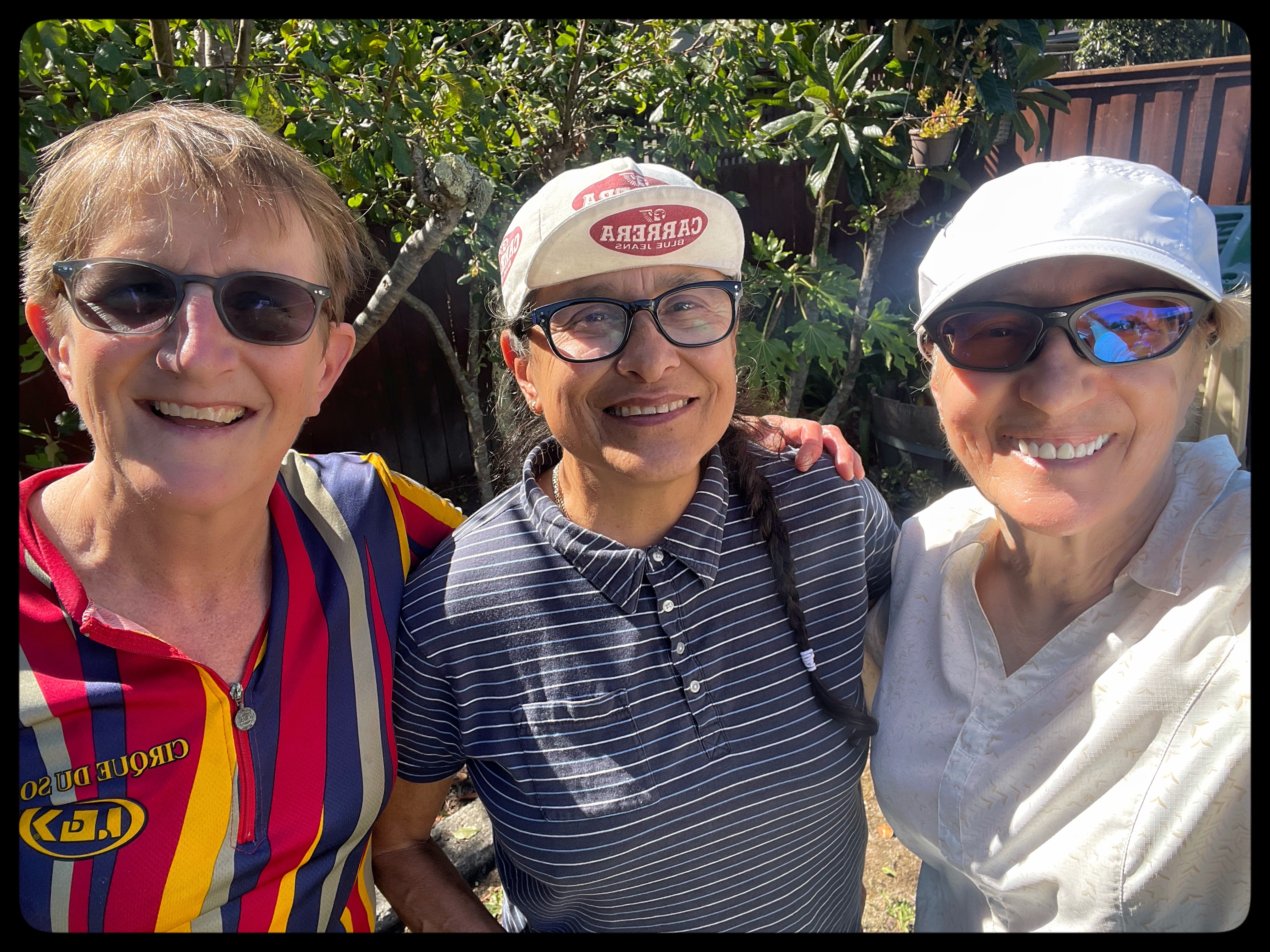


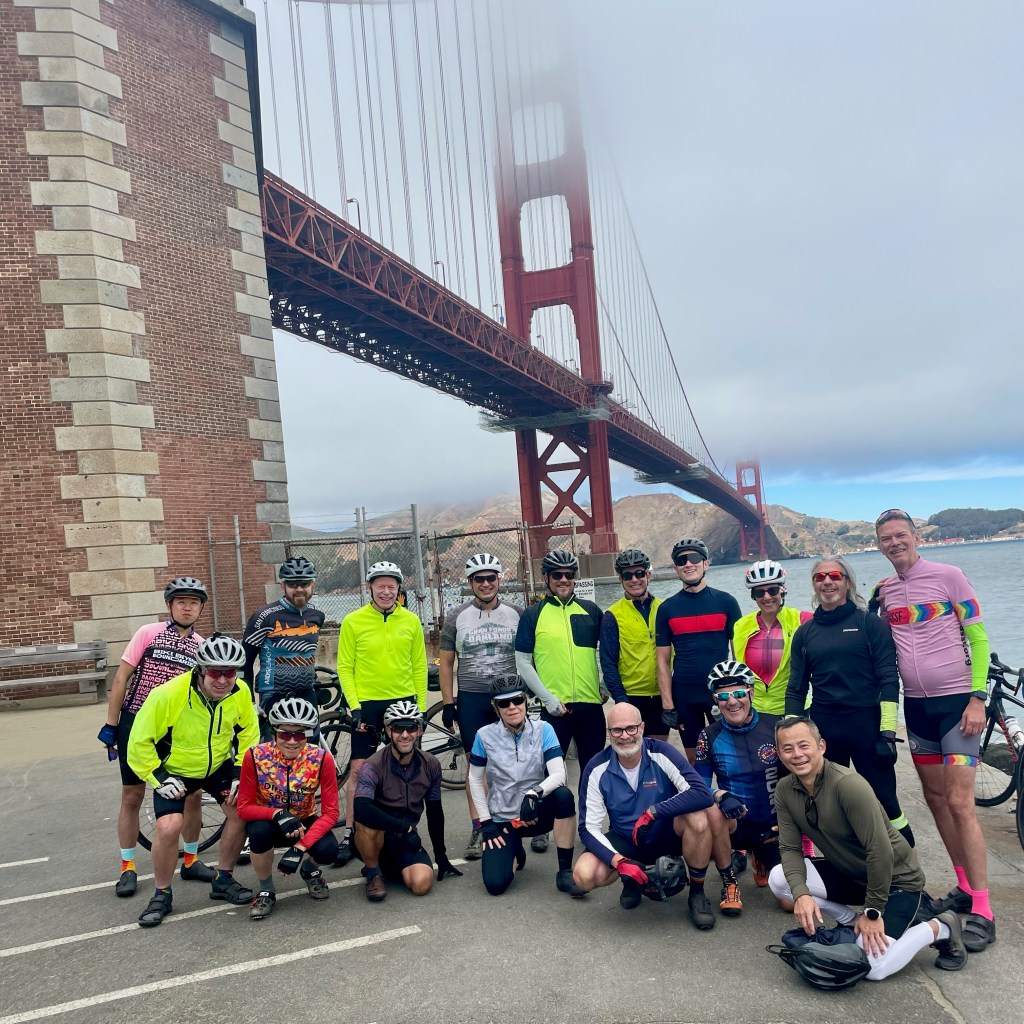


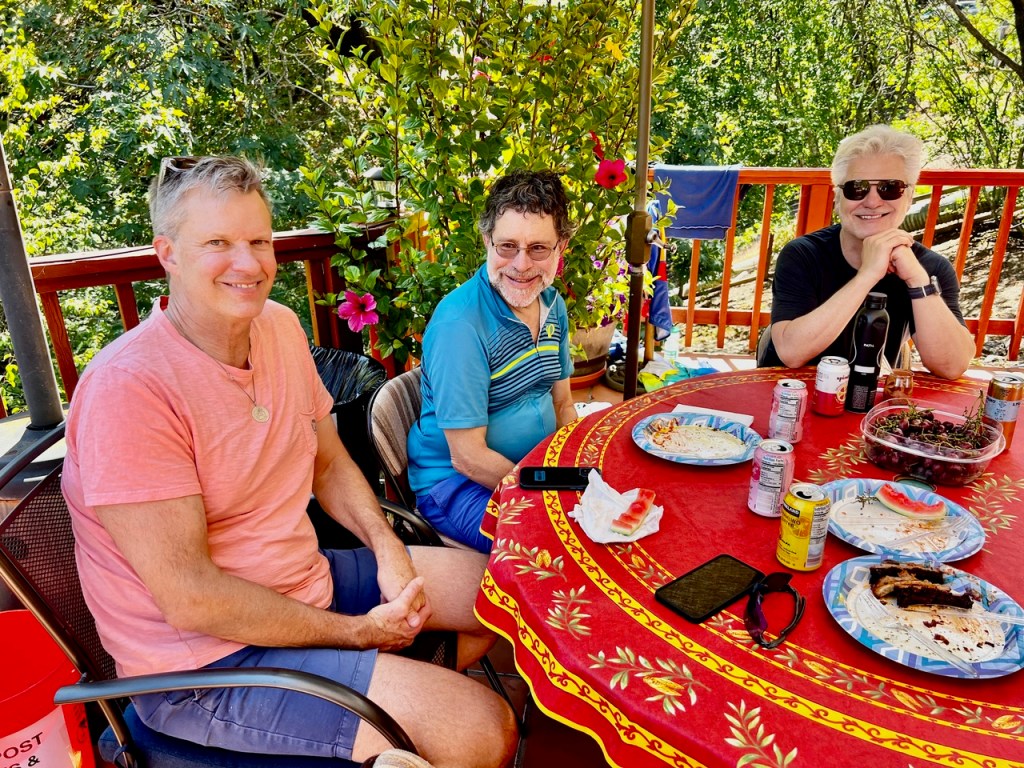

 The Chain Letter